
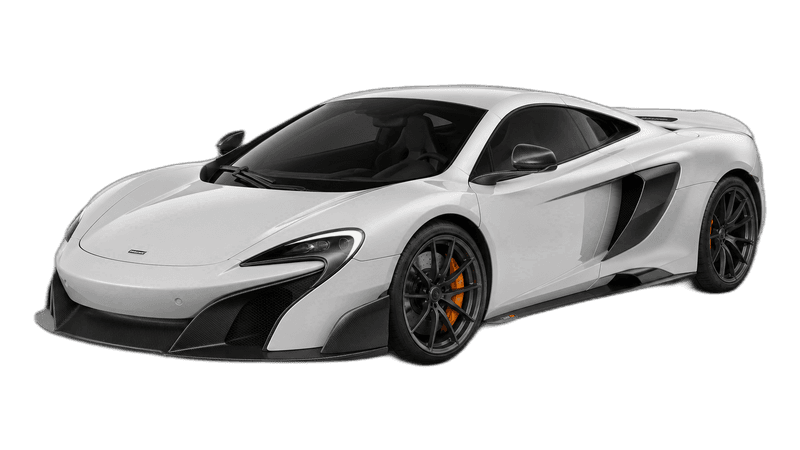
McLaren 675LT
£280,000
usedIndicative market price, updated periodically.
666bhp
Power
2.9s
0-100 km/h
330km/h
Top Speed
£280,000
Price Used
How hard it pulls.
Peak g-force the instant you bury the throttle, estimated from the car's 0–100 time and drivetrain.
McLaren 675LTEstimated peak launch g from the 0–100 time and drivetrain: an honest approximation, not a measured figure.
The McLaren 675LT is a 2-door coupe by McLaren, with 666 bhp, 700 Nm of torque, a 0-100 km/h time of 2.9 seconds and a top speed of 330 km/h. Indicative used value: approximately £280,000. Actual values vary with specification, condition and history.
Dream Car Garage Editorial · Last updated 27 October 2026
Overview
We have not driven this car. This review is based on published specifications and the sources listed below.
The first modern Longtail coupe
McLaren unveiled the 675LT at Geneva in 2015 and limited the coupe to 500 cars. Its re-engineered M838TL engine is a 3.8-litre twin-turbocharged V8 producing 675 PS, equivalent to 666 bhp, and 700 Nm. A seven-speed SSG sends drive to the rear wheels. McLaren quotes 2.9 seconds to 100 km/h and a 330 km/h maximum. These figures belong to the coupe, not to the later 600LT or 765LT despite their shared Longtail naming.
This is a desk-researched ownership guide. We have not driven this model for this article. The 500-car production run does not replace the usual need for identity, service history, measured condition and a McLaren-specialist inspection. The guide also excludes the 688 HS and other later derivatives, which have different specifications and production identities.
Engine evidence beyond the output figure
PistonHeads reports that roughly half of the V8's components were changed for the 675LT, including the turbochargers, camshafts, connecting rods and a higher-flow fuel pump. That makes generic 650S assumptions a poor substitute for model-specific records. Ask for invoices rather than a verbal description of a major service, and check that the engine oil level was assessed using the correct procedure and temperature.
Cooling deserves particular attention. The buying guide recommends checking the coolant itself, including its pink colour, and investigating thermostat behaviour. It also identifies the dry-sump catch tank as vulnerable to debris or careless tool damage, with replacement requiring substantial engine work. The water-pump seal, turbo feed pipes and hose clips belong in the same inspection. These are targeted checks, not a prediction that every 675LT will show those faults.
A warmed gearbox should be inspected with the undertrays removed. PistonHeads notes that transmission oil coolers can be punctured and that telltale seepage may appear on the casing. Record any evidence and its source rather than accepting a wiped-clean underside as proof of health. Annual or 10,000-mile servicing is the baseline described by the guide; long gaps need an explanation even when mileage is low.
Hydraulic suspension and geometry
The 675LT uses McLaren's hydraulically interconnected suspension rather than a conventional collection of passive parts. Damping was revised substantially relative to the 650S, the front track widened and the steering rack quickened. Those changes make alignment and hydraulic condition central to how the car should feel.
The ownership guide identifies accumulators and front lower-arm bushes as inspection points. A vibration or pull should not automatically be attributed to the steering rack; geometry may be the explanation. Ask for a printout and establish when the alignment was last checked, especially after wheel, suspension or bodywork repairs. TPMS sensors mounted near the front subframe can also be vulnerable to impact damage, so a warning light deserves diagnosis rather than a reset alone.
Carbon-ceramic brakes were standard. Inspect discs, pads and the braking record rather than judging them solely by pedal response during a short road evaluation. Tyres should be checked for correct specification, age and even wear. Uneven wear can support a geometry question, but it does not by itself diagnose a suspension failure.
Airbrake, exhaust and underside
The Longtail Airbrake is an active aerodynamic component, not merely a fixed rear wing. Confirm that it deploys and returns without warnings and that its visible surfaces and mounts are undamaged. The titanium crossover exhaust is another model-specific feature. Listen for abnormal noises when the system is cold and warm, and inspect for poor repairs or non-standard modifications.
Underbody condition matters because the deflectors and trays protect mechanical and aerodynamic hardware. Look for impact damage, missing fasteners and evidence of removal during previous work. A front axle lifter and parking camera were useful options, particularly given the low front bodywork, so their presence and operation should be verified rather than assumed. Any inspection that cannot safely access the underside remains incomplete.
Cabin, glass and fixed-seat options
Weight reduction extended to thinner glass and a polycarbonate rear screen. PistonHeads recommends checking the windscreen for stress fractures and examining aluminium panels for oxidation. Door soft-close adjustment, wind noise and detached scuttle drainage are also relevant. Water inside the cabin should be traced to its source, not hidden by drying the carpets before a sale.
The optional P1-style fixed carbon seats change entry, egress and driving position. A buyer should sit in the actual seats rather than assume that a sporty-looking option will suit them. Check for wear, damage and evidence that any seat or harness work followed the correct procedure. Cabin rattles, slow early IRIS infotainment behaviour and climate-control warnings should be recorded during an inspection without turning isolated reports into universal claims.
The coupe Clubsport package could include a rollcage, harnesses and fire extinguisher. That equipment was not automatically present on every car, and the Spider's option availability differed. Confirm the build sheet and the physical equipment rather than relying on a seller's trim label.
What the file should establish
A useful history file connects the VIN to the original specification, service invoices, geometry records, warranty or campaign work and any replacement glass, body or suspension parts. Stored cars still need evidence of correct fluids, battery care and periodic inspection. A recent detail is not a substitute for that record.
Independent inspection should cover diagnostics, cooling, dry-sump hardware, transmission seepage, hydraulic suspension, brakes, active aero and body drainage. The final report should distinguish measured findings from owner anecdotes and identify every area that could not be examined.
How this review was compiled
We have not driven this model for this article. McLaren's legacy specification page establishes the coupe's powertrain and performance. Romans International confirms the 500-car run and supplies model-specific option and ownership detail, while PistonHeads provides additional used-car inspection guidance. This guide makes no claim about transaction prices, future value or the frequency of a fault on any individual car.
Specifications
Engine
3.8L (3799 cc) twin-turbocharged V8
Displacement
3.8L
Power
666 bhp
Torque
700 Nm
0-100 km/h
2.9s
Top Speed
330 km/h
Drivetrain
RWD
Country
UK
Body Style
2-door coupe
Years
2015–2017
Production
500
Price Used
£280,000
Specifications are manufacturer-published figures.
More from McLaren
Featured in Carpedia
Frequently Asked Questions
What are the specifications of the McLaren 675LT?
The McLaren 675LT is a 2-door coupe by McLaren, with 666 bhp, 700 Nm of torque, a 0-100 km/h time of 2.9 seconds and a top speed of 330 km/h. Indicative used value: approximately £280,000. Actual values vary with specification, condition and history.
How much does a McLaren 675LT cost?
Indicative used value: approximately £280,000. Actual values vary with specification, condition and history.
How many McLaren 675LT were made?
McLaren produced 500 units of the McLaren 675LT.
What drivetrain does the McLaren 675LT use?
The McLaren 675LT is configured with rear-wheel drive.
What type of car is the McLaren 675LT?
The McLaren 675LT is a supercars manufactured by McLaren in UK. Production ran from 2015 to 2017.