

McLaren Senna GTR
£1,500,000
usedIndicative market price, updated periodically.
814bhp
Power
2.8s
0-100 km/h
335km/h
Top Speed
£1,500,000
Price Used
How hard it pulls.
Peak g-force the instant you bury the throttle, estimated from the car's 0–100 time and drivetrain.
McLaren Senna GTREstimated peak launch g from the 0–100 time and drivetrain: an honest approximation, not a measured figure.
The McLaren Senna GTR is a 2 seater fixed-head coupé by McLaren, with 814 bhp, 800 Nm of torque, a 0-100 km/h time of 2.8 seconds and a top speed of 335 km/h. Indicative used value: approximately £1,500,000. Actual values vary with specification, condition and history.
Dream Car Garage Editorial · Edited by José Teo Lorente Vallecillos · Last updated 3 November 2026
Overview
We have not driven this car. This review is based on published specifications and the sources listed below.
Scope of this guide
This guide is scoped to the McLaren Senna GTR in its 2019 production form: the 4.0L twin-turbo V8 petrol, mid-engine, rear-wheel drive, track-only car with 814 bhp that McLaren Automotive revealed on 8 March 2019 and built to customer order at the McLaren Production Centre in Woking. It is not a guide to the road-legal McLaren Senna, to the 2018 Geneva show concept, to the five Senna GTR LM special editions that McLaren Special Operations announced in September 2020 with 845 hp, to any other special edition, or to individual cars that a third party has converted for road use. Where those differ we say so below, because an advert that says only "Senna GTR" can describe any of them.
We have not driven this model for this article. Everything here rests on three cited sources: the McLaren press release for the Senna GTR as reproduced on supercars.net, PistonHeads' report on the production car of 8 March 2019, and the government recall checker. McLaren's own website returned only page furniture and no specifications to a plain request, and the press-site PDF we tried returned not found, so we use supercars.net, an archived copy of the release text under the title "The ultimate racetrack driving experience". That is a third-party copy, not McLaren's own page, and we could not compare it word for word with an original. We also read Top Gear's first drive and specification line (2 December 2019), PistonHeads reports from 7 March 2018, 3 November 2018, 18 September 2020 and 6 May 2025, and Wikipedia's page on the road-going Senna. We flag every point that rests on those. Prices are history, not valuations.
The figures at a glance
- Engine: 4.0L twin-turbo V8 petrol, McLaren's M840TR unit with electronically controlled twin-scroll turbochargers, mounted behind the cabin. McLaren's release says 4.0-litre; Top Gear prints 3,994cc, which is the figure we store as 3994 cc.
- Power: 814 bhp. McLaren prints 825PS (814bhp), and our own check agrees: 825 PS x 0.98632 is about 813.7 bhp. Top Gear prints 825bhp and early PistonHeads reports say 825hp, which look like the metric figure under a horsepower label. We use 814 bhp and treat 825 as PS.
- Torque: 800 Nm, which McLaren prints as 800Nm (590lb ft). Our check: 590 x 1.3558 is about 800.
- 0-100 km/h: 2.8 seconds is the figure in our catalogue, but it is not a McLaren figure for this car. See the next section.
- Top speed: 335 km/h is also in our catalogue and has the same problem.
- Drive: rear-wheel drive through the same seven-speed plus reverse Seamless Shift Gearbox as the road Senna, which PistonHeads calls a dual-clutch unit. Top Gear's specification line reads "7spd twin clutch, RWD".
- Weight: 1,188 kg in lightest dry guise, which gives McLaren's quoted 694 PS per tonne.
- Downforce: peaking at more than 1,000 kg, against 800 kg at 250 km/h (155 mph) for the road car.
- Built: 75 cars to customer order, with first deliveries from September 2019.
The 0-100 and top speed gap
McLaren's release for the Senna GTR gives no 0-100 km/h time and no top speed. Top Gear's specification line for the car prints N/A for both. The two catalogue figures of 2.8 seconds and 335 km/h match the road-legal McLaren Senna, whose Wikipedia entry lists 2.8 seconds for 0-100 km/h (0-62 mph) and 335 km/h (208 mph). We keep those numbers in the guide because the catalogue needs a value, but we do not present them as GTR claims. A car with more power, less weight and a different downforce curve will not necessarily repeat the road car's figures, and its top speed would depend on the aero setting and the circuit. Treat 2.8 seconds and 335 km/h as carried over from the road car, not measured on this one, and ask any seller for a source for any figure they quote.
Not road legal
The Senna GTR is not road legal. McLaren describes it as "unshackled by road or racing regulations", and PistonHeads notes that a car like this can only be used on track and cannot be entered into any competition. It has no airbags, polycarbonate glazing and race-spec controls, it is built in left-hand drive only, and McLaren removed the secondary catalyst to cut back pressure. Our stored category for the car is track-only, and we leave it as it is.
PistonHeads reported on 6 May 2025 that Lanzante, a British specialist, had converted Senna GTRs for road use, and that one for sale carried a conversion cost of about 230,000 pounds according to the seller. The work included additional catalytic converters, the road Senna's fuel system and seats, lights, a handbrake, an alarm and a nose-lift system. That is a different car from the one in this guide, built by a different company, so ask for the paperwork for every change and for the evidence of how it was registered. We found no source describing how many cars were converted, and we did not check the registration route ourselves.
What changed from the road car
The press release lists a long run of changes from the road Senna. The engine gained 25 PS by recalibrating the engine control unit and removing the secondary catalyst, which also makes it louder. The variable ride control suspension is replaced by aluminium double wishbones, springs, uprights and anti-roll bars from McLaren's 720S GT3 programme, with four-way adjustable dampers, solid bushes and adjustable camber. The wheels are 19 inch centre-lock, 10J at the front and 13J at the rear, with Pirelli slicks sized 285/650 and 325/705. The brakes are 390 mm layered carbon-ceramic discs with forged monobloc calipers, six-piston at the front and four-piston at the rear.
The structure is a Monocage III-R carbon-fibre cell with an integrated roll cage and harness mounting points. The track is wider than the road car's by 77 mm at the front and 68 mm at the rear, the car is 34 mm lower at 1,195 mm, and the rear wing moved back so that its trailing edge sits outside the car's footprint. There are three powertrain modes, Wet, Track and Race, pneumatic air jacks, a fire extinguisher, pit-lane speed control, anti-collision radar and a rear camera. McLaren says it aimed for 95 per cent of the performance to be reachable by 95 per cent of drivers. That is an aim, not a measurement.
Weight and the 10 kg question
McLaren says the Senna GTR is 10 kg lighter than the road Senna and gives 1,188 kg as the lightest dry weight. PistonHeads calls it 11 kg lighter at 1,188 kg dry. We do not know the cause of the 1 kg difference and have not seen a published kerb weight with fluids. Dry weight is a figure with no fuel, oil or coolant, so a car on the grid weighs more. Before the final specification appeared, PistonHeads guessed at savings of about 50 kg in March 2018 and about 100 kg in November 2018. Those were the magazine's own estimates, not McLaren claims, and the published saving is far smaller. McLaren points out that the track car carries air jacks, a fire extinguisher, a roll cage and wider bodywork that the road car does not.
How many were built
Seventy-five is a limit, not a count we have verified. McLaren's release says "just 75" will be built to customer order. At the Geneva concept stage in March 2018, PistonHeads reported a total of "up to" 75, and by November 2018 it said all 75 were spoken for. Top Gear said in December 2019 that the 75 cars were being assembled at the McLaren Production Centre and should all be built by January 2020, which is why our catalogue years run 2019 to 2020. We found no source that states the final number delivered, and we do not know whether the five Senna GTR LM cars of 2020 were part of the 75 or additional to them. PistonHeads also notes that not all of the 75 buyers were existing Senna customers, so a GTR owner may not have had a road Senna.
Price history
McLaren's release priced the car from 1.1 million pounds plus taxes at launch, and PistonHeads reported in November 2018 that a British buyer would pay about 1.32 million pounds including tax. Both are launch figures and tell you nothing about what a used car costs now. We did not find a current price from a source we could cite.
What to check before buying
- Confirm the car is a production Senna GTR of 2019-2020 and not a concept, a Senna GTR LM, a converted car or a different Senna. Ask McLaren Special Operations or an authorised McLaren retailer to confirm the chassis number and build date.
- Ask for the full history, including track use, any crash repair, and the service record kept by McLaren.
- Check the carbon bodywork, splitter, diffuser and rear wing for damage. These parts cost a great deal and a track car may have been repaired.
- Ask for the state of the slicks, carbon-ceramic discs, pads and the centre-lock wheels, and what the car will need before it can be used.
- Ask for details of any engine software updates or special operations work. The LM cars of 2020 had a limiter closer to 9,000 rpm and 845 hp, so a car that claims LM features needs documented evidence.
- Ask where and how the car has been stored and transported, and whether a trailer, tools and spares are included.
- Check the car's import, tax and ownership paperwork if it has crossed borders.
- Get an independent inspection from a technician who works on McLaren track cars.
Recalls and the DVSA check
We read the government page for the vehicle recall checker. It says you can check a car with its registration number, or without one by giving the manufacturer, model and year of manufacture, that non-safety recalls come from the manufacturer directly, and that it covers other vehicles, parts and accessories. It is a road vehicle service, and the Senna GTR is a track-only car that is not road legal, so it will usually have no registration to look up and was never type approved for use on the road. We did not run the checker, because we are not looking at a specific car, and we found no recall notice for the Senna GTR in any source we read. Absence from our sources is not a clean bill of health.
The checker cannot tell an owner about a service bulletin, a software update or a safety notice that a manufacturer sends only to the owners of track cars. Ask McLaren directly, and keep any letter or email it sends. A converted car that has been registered for the road may show up in the checker, but that tells you only what the road-car database knows, not what McLaren has told track owners.
About the photograph
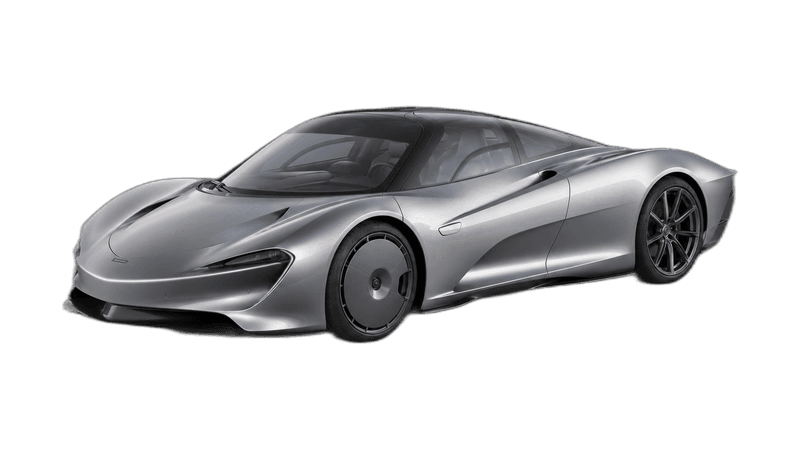
The picture at the top of this page is a photograph by MrWalkr, licensed CC BY-SA 4.0, taken at the Brooklands Museum in Surrey in October 2023. Its Commons file name calls it the 2018 Senna GTR concept, and its description calls it a 2018 McLaren Senna GTR. It is a show car in a museum, in the concept's orange livery with number 12 and a Richard Mille sponsor name, so we cannot say it is a customer production car, and its livery and details are not a delivered specification. We cropped it to a 16:9 frame and resized it to 800 by 450 pixels. No person or number plate is visible in the frame, and we did not blur anything.
Verdict
The McLaren Senna GTR in this guide is a 4.0L twin-turbo V8 petrol with 814 bhp and 800 Nm, rear-wheel drive and mid-engine, built in a run limited to 75 cars between 2019 and 2020, and it is not road legal. Its power, torque, weight and downforce are published by McLaren, but the 2.8 seconds to 100 km/h and 335 km/h in our catalogue belong to the road Senna and are not GTR claims. If you are shopping for one, confirm which version you are looking at, insist on the chassis number and the history, and treat every published figure as a claim with the caveats above. We have not driven it, so use the sources and a proper inspection to decide.
Specifications
Engine
4.0L twin-turbo V8 petrol
Displacement
4.0L
Power
814 bhp
Torque
800 Nm
0-100 km/h
2.8s
Top Speed
335 km/h
Drivetrain
RWD
Country
UK
Body Style
2 seater fixed-head coupé
Years
2019–2020
Production
75
Price Used
£1,500,000
Specifications are manufacturer-published figures.
More from McLaren

Frequently Asked Questions
What are the specifications of the McLaren Senna GTR?
The McLaren Senna GTR is a 2 seater fixed-head coupé by McLaren, with 814 bhp, 800 Nm of torque, a 0-100 km/h time of 2.8 seconds and a top speed of 335 km/h. Indicative used value: approximately £1,500,000. Actual values vary with specification, condition and history.
How much does a McLaren Senna GTR cost?
Indicative used value: approximately £1,500,000. Actual values vary with specification, condition and history.
How many McLaren Senna GTR were made?
McLaren produced 75 units of the McLaren Senna GTR.
What drivetrain does the McLaren Senna GTR use?
The McLaren Senna GTR is configured with rear-wheel drive.
What type of car is the McLaren Senna GTR?
The McLaren Senna GTR is a track only manufactured by McLaren in UK. Production ran from 2019 to 2020.