
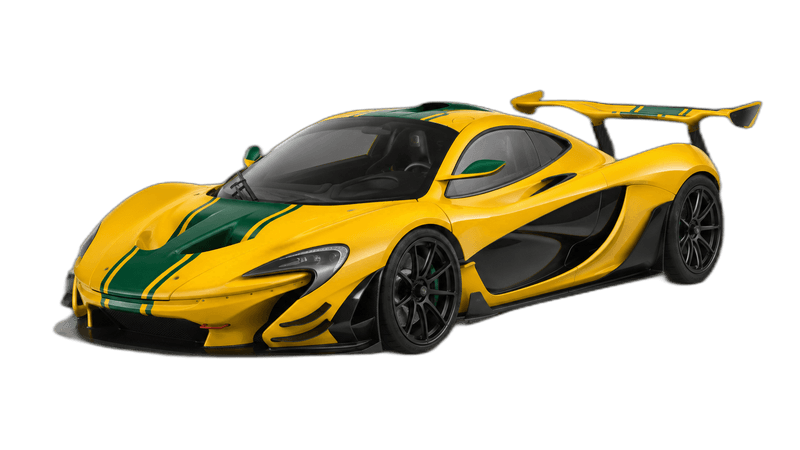
McLaren P1 GTR
£3,200,000
usedIndicative market price, updated periodically.
986bhp
Power
2.8s
0-100 km/h
349km/h
Top Speed
£3,200,000
Price Used
How hard it pulls.
Peak g-force the instant you bury the throttle, estimated from the car's 0–100 time and drivetrain.
McLaren P1 GTREstimated peak launch g from the 0–100 time and drivetrain: an honest approximation, not a measured figure.
The McLaren P1 GTR is a 2 seater fixed-head coupé by McLaren, with 986 bhp, 900 Nm of torque, a 0-100 km/h time of 2.8 seconds and a top speed of 349 km/h. Indicative used value: approximately £3,200,000. Actual values vary with specification, condition and history.
Dream Car Garage Editorial · Edited by José Teo Lorente Vallecillos · Last updated 3 November 2026
Overview
We have not driven this car. This review is based on published specifications and the sources listed below.
Scope of this guide
This guide is scoped to the McLaren P1 GTR, the track-only version of the P1 that McLaren Special Operations (MSO) built at Woking in the United Kingdom and offered to existing P1 owners from 2015. It has a 3.8L twin-turbo V8 petrol engine plus an electric motor, drives the rear wheels, and is a mid-engine, rear-wheel drive, two-seat coupe with a combined output of 986 bhp. It is not a guide to the road-going McLaren P1, to the road-legal P1 GTR conversions that Lanzante Motorsport carried out for owners who wanted to use their cars on the public road, or to the Lanzante P1 LM, which is a separate car built on new GTR cars. Where those cars differ we say so below, because an advert that says only "P1 GTR" can describe more than one thing.
We have not driven this model for this article. Everything here comes from three cited sources: a reproduction of McLaren's own press release of 16 August 2014 on zero2turbo.com, PistonHeads' used buying guide for the P1 (2 May 2021), and the government recall checker. We also read PistonHeads' Showpiece of the Week on the GTR (4 June 2018), GTSpirit's report on the first driver programme event (24 October 2015), Auto Express (25 July 2014 and 18 August 2014), Car Throttle and Wikipedia, and we flag every point that rests on them. Where sources disagree we say so rather than pick a winner quietly. Prices are history, not valuations.
The figures at a glance
- Engine: 3.8L twin-turbo V8 petrol, 3799 cc, mounted behind the cabin and working with a lightweight electric motor. The press release calls the engine motorsport-optimised.
- Power: 986 bhp, which McLaren states as 1,000 PS from the engine and electric motor together. The road P1 was 903 bhp, so the GTR adds about 84 PS. The same figure appears in every source we read, and it is a system figure, not an engine-only one.
- Torque: 900 Nm. We found no torque figure for the GTR in any source. The 900 Nm is the combined figure for the road P1 as Wikipedia prints it, and we use it only as a reference. See the next section.
- 0-100 km/h: 2.8 seconds as a ceiling. The only published GTR figure we found is "under 2.8 seconds" for 0-60 mph, reported by Wikipedia from an Autocar review, and the page itself says performance figures remain unconfirmed.
- Top speed: 349 km/h, which is 217 mph, electronically limited according to Wikipedia.
- Drive: rear-wheel drive, with the engine mounted behind the seats and a seven-speed dual-clutch gearbox carried over from the road car according to PistonHeads' guide for the standard P1.
- Weight: 1,440 kg kerb weight including the battery, about 50 kg less than the road P1, according to Wikipedia. PistonHeads also says 50 kg lighter.
Where the quoted figures come from
The stored catalogue row came from somewhere, and three of its numbers are weaker than they look. McLaren's press release gives the power and nothing else numerical: no torque, no acceleration time, no top speed, no weight and no price. Those figures reach the web through reviews and reference sites.
On torque, Wikipedia gives 900 Nm for the road P1 and 1,050 Nm for the Lanzante P1 LM, but nothing for the GTR. PistonHeads' buying guide lists 531 lb ft from the petrol engine at 4,000 rpm plus 192 lb ft from the motor for the road car, and PistonHeads' Showpiece lists 723 lb ft in total, which is about 980 Nm. The two road-car totals differ because peak figures from an engine and a motor do not simply add. We therefore treat 900 Nm as a reference rather than a measured value for the GTR.
On acceleration, Auto Express wrote in July 2014 that about 2.5 seconds to 62 mph was considered possible, and PistonHeads says the GTR is nearly half a second quicker than the road car, which implies about 2.3 seconds. Wikipedia says the Lanzante road-legal version claims 2.4 seconds. None of these comes from a McLaren document, so we keep 2.8 seconds as the cautious ceiling. A true 0-100 km/h time is slightly longer than a 0-60 mph time for the same car.
On top speed, Wikipedia gives 349 km/h and says it is electronically limited. PistonHeads' buying guide says the top speed was raised slightly to 225 mph, which is about 362 km/h, and Wikipedia gives that same 362 km/h for the Lanzante conversion, so we think the two figures may belong to different cars. A track-only car may also be limited differently depending on the circuit and the owner. We stored 350 km/h before; we now use 349 km/h because that is the figure the source actually prints.
What changed from the road car
The press release describes a track-focused car for owners who wanted something with no road-legal compromises: a fixed ride height, bespoke Pirelli slick tyres, 19-inch motorsport wheels and a large fixed rear wing with hydraulically operated DRS, all on top of a wider track and more aggressive bodywork. PistonHeads' buying guide adds a new exhaust and a racier interior. The Showpiece article says the steering wheel is based on the one Lewis Hamilton used in his MP4-23 Formula 1 car, with DRS, an IPAS button, a pit lane speed limiter and a full beam flash button. The name comes from the F1 GTR that raced at Le Mans in the 1990s, as Car Throttle puts it.
PistonHeads says the GTR was about ten seconds a lap quicker than the road car at Losail in Qatar. We could not check that claim against a McLaren source, so treat it as a magazine figure. PistonHeads also calls the road car's tyres its weak link, which is the gap the slicks were meant to close.
The driver programme and who could buy one
The car was never sold as a stand-alone product. McLaren's release calls it part of a bespoke driver programme, which it describes as ultra-exclusive. MSO built, maintained and ran every car and managed the programme. Auto Express said buyers were believed to need to be existing P1 owners, and PistonHeads says the same. GTSpirit reports that the first driver programme event was held over three days at the Circuit de Catalunya in Barcelona in October 2015 with seven cars, and that Bruno Senna was the programme mentor. PistonHeads says each buyer also got a dedicated race team with a head engineer and a driver coach, and was enrolled in a six-race series at Formula 1 circuits. Car Throttle says at least six drive events were planned, and also mentions access to racing simulators.
The launch price was 1.98 million pounds according to Auto Express and Car Throttle, and about 2 million pounds according to PistonHeads, including the owners' track day series. PistonHeads' buying guide adds that a cheaper version without the track day package was offered later. All of those are history, not a current price.
How many were built
The count is the weakest number in this guide. Wikipedia says 58 cars were made in total, and that is what the catalogue stores. PistonHeads' buying guide says the number is unclear and gives either 58 or 34, and its Showpiece article says a production run of just 40. The McLaren release we read gives no number, and Car Throttle reported that numbers were not revealed. So 58 is a reported tally and not a limit that we can trace to McLaren, and nothing we read gives the final delivery date. Wikipedia says production began in 2015 after all 375 road P1 cars had been built, and the stored end year of 2016 is a catalogue figure we could not confirm. Ask MSO for the chassis number and the build date of any car you consider.
Track only, and what Lanzante did
The GTR was designed to avoid road legality rules, so it was supplied without road registration. PistonHeads and Wikipedia say Lanzante converted 27 of them for road use, and that MSO built six more new GTR cars for Lanzante, which became the P1 LM. We have deliberately left those out of this guide. A road-legal car has had its running gear, lights, emissions and paperwork reworked, so its figures, its value and its recall position may all differ from a car in the original track-only specification. If an advert says "road-legal P1 GTR", ask who converted it and for the certification that goes with it.
What the road car tells us about costs
PistonHeads' guide is for the road P1, not the GTR, and we have found no equivalent for the track car. It says servicing the road car costs under 2,500 pounds a year, that the hybrid charger has been known to drain the 12V battery, that replacing the hybrid battery out of warranty would cost over 100,000 pounds, and that a set of carbon brake pads costs over 10,000 pounds. It also says some early buyers were investors rather than drivers, so mileage may be very low. Because the GTR shares its hybrid layout with the road car, these numbers are a reasonable warning about the order of magnitude, but they are not a price list for the GTR. We found no published service schedule or parts list for the track version.
What to check before buying
- Confirm the chassis number and build date with McLaren Special Operations, and ask whether the car is in original track-only form or a Lanzante conversion.
- Ask for the full service history, including any work done by MSO and the state of the hybrid battery and the electric motor.
- Ask how many hours the car has run and whether it has ever been crashed or repaired. Carbon structures need specialist inspection.
- Check the aerodynamic parts: the front splitter, the fixed wing and the DRS actuator, and look for signs of kerb and track damage.
- If you plan to use it on the road, ask what registration, insurance and legal checks apply before you buy, not after.
- Ask whether the driver programme, track events or any warranty transfer to a new owner. We found nothing that says they do.
- Treat any published performance figure as a claim and ask the seller which source it comes from.
Recalls and the DVSA check
We did not run the government checker, because it needs a registration number or the manufacturer, model and year, and we are not looking at a specific car. The page says the registration check shows safety recalls that have not been checked or fixed, together with MOT history, and that without a registration you need the manufacturer, model and year. It also says a manufacturer will tell you if a car has been recalled for any reason other than safety. The page does not mention track cars, race cars or imported vehicles. A track-only car is unlikely to have a UK registration or an MOT record, so the registration route is probably of little use, and we do not know whether the make, model and year search lists a GTR. A clean result would therefore tell an owner very little.
We found no recall notice for the GTR in any source. A search turned up two United States campaigns for the road P1, including a hood latch recall of 122 cars reported in January 2016, but we only saw those in search summaries and cannot say whether any GTR is covered. Absence from our sources is not a clean bill of health, so ask McLaren Special Operations directly whether any service bulletin applies to a particular chassis.
About the photograph
The picture at the top of this page shows a McLaren P1 GTR on display in the Classic Gallery at the Geneva International Motor Show in 2024, according to its Commons title. It was taken by Matti Blume and is shared under CC BY-SA 4.0 through Wikimedia Commons. We cropped it to a wide frame, resized it, and blurred the number plates of two other cars in the background. It shows a dark grey car with orange panels, and we have not checked whether that is a factory colour scheme or a later finish, so it is for illustration only.
Verdict
The McLaren P1 GTR in this guide is a track-only hybrid with 986 bhp, rear-wheel drive and mid-engine layout, sold to P1 owners with a driver programme, and built in a run of probably several dozen cars. Its headline figures are mostly reference values: McLaren's own release supports the power, while the torque, the acceleration time and the top speed come from secondary sources or from the road car. If you are shopping for one, insist on a full history and McLaren Special Operations' confirmation of the chassis, check whether it is a Lanzante conversion, and treat every published figure as a claim with the caveats above. We have not driven it, so use the sources and a proper inspection to decide.
Specifications
Engine
3.8L twin-turbo V8 petrol
Displacement
3.8L
Power
986 bhp
Torque
900 Nm
0-100 km/h
2.8s
Top Speed
349 km/h
Drivetrain
RWD
Country
UK
Body Style
2 seater fixed-head coupé
Years
2015–2016
Production
58
Price Used
£3,200,000
Specifications are manufacturer-published figures.
More from McLaren




Frequently Asked Questions
What are the specifications of the McLaren P1 GTR?
The McLaren P1 GTR is a 2 seater fixed-head coupé by McLaren, with 986 bhp, 900 Nm of torque, a 0-100 km/h time of 2.8 seconds and a top speed of 349 km/h. Indicative used value: approximately £3,200,000. Actual values vary with specification, condition and history.
How much does a McLaren P1 GTR cost?
Indicative used value: approximately £3,200,000. Actual values vary with specification, condition and history.
How many McLaren P1 GTR were made?
McLaren produced 58 units of the McLaren P1 GTR.
What drivetrain does the McLaren P1 GTR use?
The McLaren P1 GTR is configured with rear-wheel drive.
What type of car is the McLaren P1 GTR?
The McLaren P1 GTR is a track only manufactured by McLaren in UK. Production ran from 2015 to 2016.