
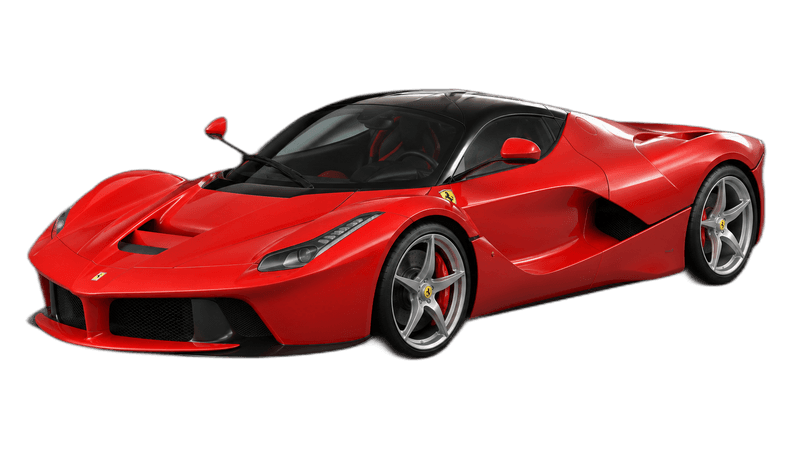
Ferrari LaFerrari
£2,800,000
usedIndicative market price, updated periodically.
963bhp
Power
2.6s
0-100 km/h
350km/h
Top Speed
£2,800,000
Price Used
The Ferrari LaFerrari produces 963 bhp, reaches 100 km/h in 2.6 seconds and has a top speed of 350 km/h. A representative example is worth about £2,800,000.
How hard it pulls.
Peak g-force the instant you bury the throttle, estimated from the car's 0–100 time and drivetrain.
Ferrari LaFerrariEstimated peak launch g from the 0–100 time and drivetrain: an honest approximation, not a measured figure.
Dream Car Garage Editorial · Edited by José Teo Lorente Vallecillos · Last updated 29 October 2026
Overview
We have not driven this car. This review is based on published specifications and the sources listed below.
The hybrid flagship
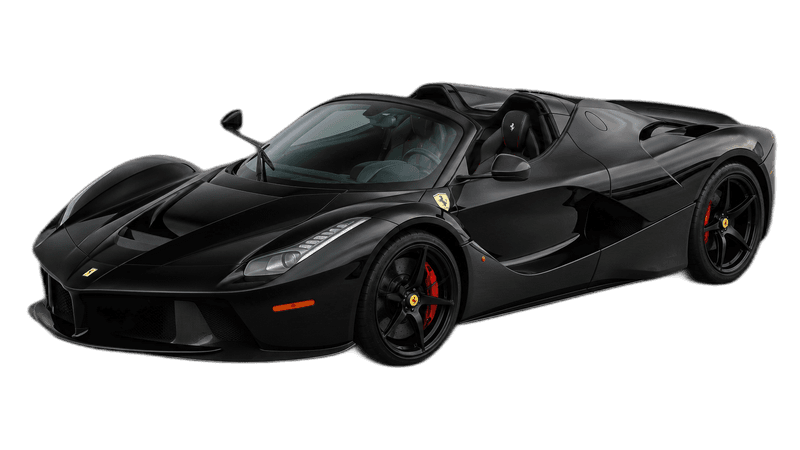
The LaFerrari was revealed at Geneva in 2013 as Ferrari's hybrid flagship, sold by invitation at around 1.5 million dollars and built until 2018. Its powertrain combines a 6,262 cc development of the F140 V12 family with the HY-KERS hybrid system: an electric motor contributing to a combined output quoted here at 963 bhp and 900 Nm, sent to the rear wheels through a seven-speed dual-clutch gearbox. The catalogue figures are 2.6 seconds to 100 km/h and 350 km/h. Ferrari's own testing put it around five seconds quicker than the Enzo at Fiorano, which frames the brief: the flagship formula electrified rather than replaced. The coupe was joined by the Aperta open version; this guide covers the coupe.
We have not driven this model for this article. This desk-researched ownership guide relies on Ferrari's official LaFerrari page, the Hagerty analysis of the hybrid hypercar market covering the LaFerrari, P1 and 918 and the DVSA vehicle recall service. Hagerty's article is a market study rather than a survey of one specific car, so treat its observations as context for the individual example, not as predictions that every LaFerrari will behave the same way.
The HY-KERS system and the battery question
The hybrid hardware uses Magneti Marelli electrics, with the high-voltage battery pack mounted low in the structure. It adds power and torque-fill rather than meaningful electric running: this is a performance hybrid, not a plug-in, and there is no eDrive mode. The system's character is best understood as an F1-style KERS for the road, sharpening response out of corners.
The defining ownership question is battery health. Ferrari guidance reported through specialist coverage holds that the battery should not be left unconnected for extended periods, and that a failed HY-KERS battery is a six-figure replacement. The well-known case of a high-profile example withdrawn from a Scottsdale auction over its high-voltage battery at the end of its service life, then re-offered with a fresh unit, shows both the risk and the remedy. Any purchase should include a main-dealer battery diagnostic with a documented state-of-health readout, and a clear answer on how the car has been stored and maintained. A car that has sat untouched for months is a car whose battery story needs proving.
Market position among the hybrid trinity
Hagerty's comparison of the three hybrid flagships of the era places the LaFerrari at the top of the group by value, with the P1 and 918 Spyder trading lower, and traces the LaFerrari's own trajectory from a strong peak at the end of 2018 through a correction and partial recovery. Roughly five hundred coupes were built alongside just over two hundred Apertas. The conclusions are descriptive, not predictive: this guide offers no investment assurance, and the market can move against any of these cars.
Storage discipline and battery maintenance
The storage guidance for this car is stricter than for a conventional Ferrari, and it should shape ownership before purchase. The high-voltage pack tolerates regular use and proper conditioning far better than long stillness, so a car exercised on a maintenance routine with a quality conditioner is materially easier to own than one kept as static art. Ask how the car has been kept: who connected the conditioner, how often the car ran, and whether the battery has ever been replaced or reconditioned. The answers are worth more than any assurance about mileage.
What protects an owner is the same as any halo Ferrari: a documented file, factory-backed servicing, storage history and the completeness of the car's specification. Ferrari's tailor-made programme means specification varies widely, and unusual combinations are part of the conversation at this level.
What to inspect
The carbon monocoque and body panels demand the same structural scrutiny as the Enzo. The V12 is a known quantity across the F140 family but hybrid integration adds high-voltage cabling, inverters and cooling circuits that only the dealer network and a small number of specialists can evaluate properly. The gearbox is a dual-clutch unit in the modern idiom, but clutch wear and software state still belong on the checklist. Carbon-ceramic brakes, tyre age and the condition of the active aerodynamics should all be inspected, and the car's electronics should be interrogated for stored fault codes rather than assumed clear.
A main-dealer pre-purchase inspection is close to essential at this level, and the car's software level should be recorded in the file alongside the battery report. Warranties and service plans on the car transfer with documented history, so match every invoice to the dates and mileages claimed and confirm what coverage remains before agreeing a price. A compression test on the V12 and a health report on the high-voltage system together complete the mechanical picture.
The ownership case
Running a LaFerrari is main-agent territory with main-agent costs, and the small specialist network that can service the hybrid system defines the practical ownership experience. The reward is the most developed expression of the naturally aspirated V12 formula Ferrari has built, electrified for response rather than economy.
We have not driven this model for this article. No present valuation, investment assurance or universal failure rate is offered. The LaFerrari's value as an ownership proposition is the combination of the F140 V12 at its ultimate development, genuine F1-derived hybrid response and a build run measured in hundreds. Buy on battery provenance, the integrity of the file and the car's storage story, and treat market comparisons between the hybrid flagships as context rather than destiny.
Specifications
| Engine | 6.3L (6262 cc) naturally aspirated V12 hybrid (HY-KERS) petrol |
|---|---|
| Displacement | 6.3L |
| Power | 963 bhp |
| Torque | 900 Nm |
| 0-100 km/h | 2.6s |
| Top Speed | 350 km/h |
| Drivetrain | RWD |
| Country | Italy |
| Body Style | 2-door coupe |
| Years | 2013–2018 |
| Price Used | £2,800,000 |
Specifications are manufacturer-published figures.
Frequently Asked Questions
What is a Ferrari LaFerrari worth?
A representative example is worth about £2,800,000. Actual values vary with specification, condition and history.
How much power does the Ferrari LaFerrari have?
The Ferrari LaFerrari produces 963 bhp and 900 Nm of torque.
How fast is the Ferrari LaFerrari from 0 to 100 km/h?
The Ferrari LaFerrari accelerates from 0 to 100 km/h in 2.6 seconds.
What is the top speed of the Ferrari LaFerrari?
The Ferrari LaFerrari has a top speed of 350 km/h.
What engine does the Ferrari LaFerrari have?
The Ferrari LaFerrari uses a 6.3L (6262 cc) naturally aspirated V12 hybrid (HY-KERS) petrol.
When was the Ferrari LaFerrari built?
The Ferrari LaFerrari was built from 2013 to 2018.
Is the Ferrari LaFerrari all-wheel drive?
No. The Ferrari LaFerrari is configured with rear-wheel drive.
More from Ferrari
Featured in Carpedia
The 10 Greatest V12 Engines Ever Made
A celebration of the twelve-cylinder engine, the most intoxicating configuration ever devised, and the ten units that defined it.
Ferrari's Racing DNA: From Maranello to Le Mans
Enzo Ferrari sold road cars to fund racing. Seventy-five years later, that philosophy still defines every car that leaves Maranello.
Hypercar Holy Trinity: LaFerrari vs P1 vs 918
Three manufacturers. Three philosophies. One question: when Ferrari, McLaren, and Porsche each build the ultimate car, which one wins?
What Your Dream Garage Says About You
The cars you choose when money is no object say everything about who you are, and nothing about what you drive.
Monza: The Temple of Speed
Autodromo Nazionale Monza has been defining outright speed since 1922. Its long straights reward horsepower above all else, yet its three chicanes and the Parabolica demand braking precision and mechanical balance. These are the fastest production cars ever recorded on the most storied circuit in motorsport.
What Cars Should I Put in My Dream Garage?
A comprehensive guide to building a dream garage at every budget. Five balanced 5-car garages, from under GBP 100K total to unlimited, each covering daily driving, weekends, track days, road trips, and special occasions.
McLaren F1: The Car That Changed Everything
The McLaren F1 was designed without compromise, built without cost constraint, and remains unmatched thirty years later.