The Case for Twelve Cylinders
There is no rational argument for a V12 engine. It is heavier than a V8, thirstier than a straight-six, and more complex than both combined. And yet, no other engine configuration has inspired such reverence, such obsession, such willingness to spend irrational sums of money. The V12 exists not because the world needed it, but because engineers refused to accept that perfection had a cylinder limit.
What follows is not a ranked list, to place these engines in a hierarchy would be to miss the point. Each one represents a different philosophy of what twelve cylinders can achieve. Together, they form the canon.
Ferrari Colombo V12 (1947-1988)
Gioacchino Colombo designed the original Ferrari V12 on a cafe napkin in 1946. At just 1.5 litres, the Tipo 125 S engine was absurdly small for a twelve-cylinder unit, but that was the genius, short stroke, high revs, a mechanical willingness to scream. Colombo's architecture survived four decades of evolution, growing from 1,497 cc to 4,823 cc in the 365 GTB/4 Daytona. Every single-cam Ferrari V12 traces its lineage to that napkin.
The Colombo V12 didn't just launch Ferrari. It established that a V12 could be small, light, and violent, not just a limousine engine with delusions of grandeur.
What made the Colombo special was its breathing. The 60-degree vee angle gave perfect primary balance. The single overhead cam per bank kept the heads compact. And the sound, a metallic, hard-edged wail that climbed from baritone to soprano across 8,000 rpm, became the defining voice of Maranello.
Lamborghini Bizzarrini V12 (1963-2011)
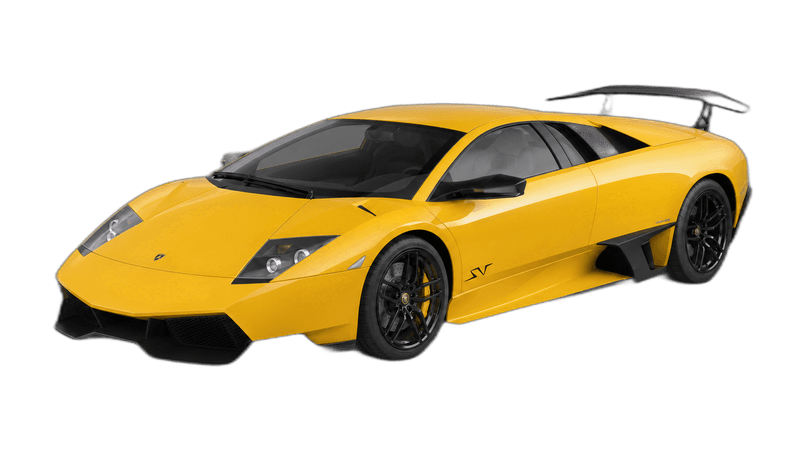
When Ferruccio Lamborghini poached Giotto Bizzarrini from Ferrari to design a new V12, the brief was simple: beat the Colombo. Bizzarrini delivered a 3.5-litre, 60-degree, quad-cam masterpiece that produced 350 bhp in its original 350 GT form, more than any contemporary Ferrari road car. The engine debuted in 1963 and, in evolved form, powered every flagship Lamborghini for nearly fifty years, up to and including the Murciélago LP 670-4 SV.
At 6,496 cc in its final Murciélago specification, the Bizzarrini V12 produced 661 bhp and a sound like tearing sheet metal. It was cruder than the Colombo, no variable valve timing, no lightweight materials innovation, but its sheer displacement and mechanical aggression gave Lamborghini an identity that no turbocharged replacement has fully captured. The Aventador's replacement V12 carries Bizzarrini's spirit, but the original casting is irreplaceable.
BMW S70/2: The McLaren F1 Engine (1992-1998)
Gordon Murray wanted a small-block Chevy V8. Paul Rosche, BMW M's chief engineer, talked him into a naturally aspirated 6.1-litre V12 instead. The S70/2 weighed 266 kg, lighter than most V8s of its era, and produced 618 bhp at 7,400 rpm with no forced induction, no variable geometry, no electronic trickery. It was, and remains, the purest expression of high-output naturally aspirated engineering ever bolted into a road car.
Paul Rosche didn't just build Murray an engine. He built the argument that settled every pub debate about naturally aspirated power for the next three decades.
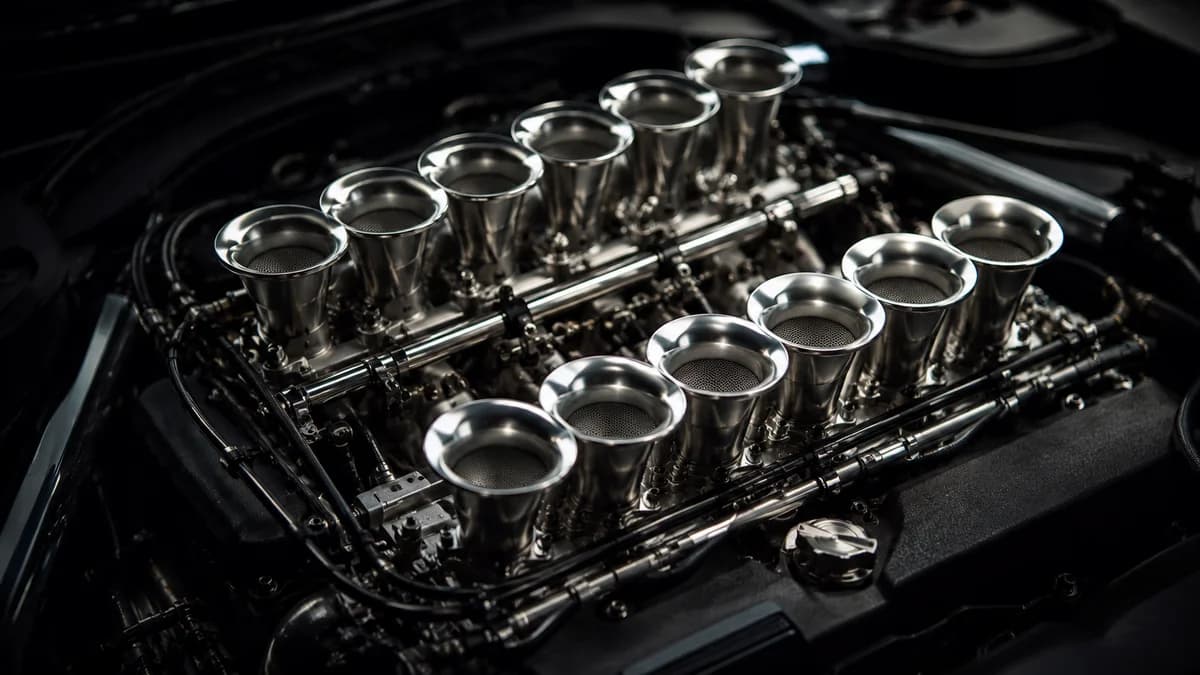
The S70/2 had individual throttle bodies, dry-sump lubrication, and a redline of 7,500 rpm, stratospheric for a 6.1-litre unit. In race trim for the McLaren F1 GTR, it pushed past 600 bhp while meeting Le Mans reliability requirements. A production F1 hit 386 km/h, a record that stood for over a decade. No turbo. No hybrid. Just twelve cylinders doing exactly what they were designed to do.
Pagani-Tuned Mercedes-AMG M158/M297 V12
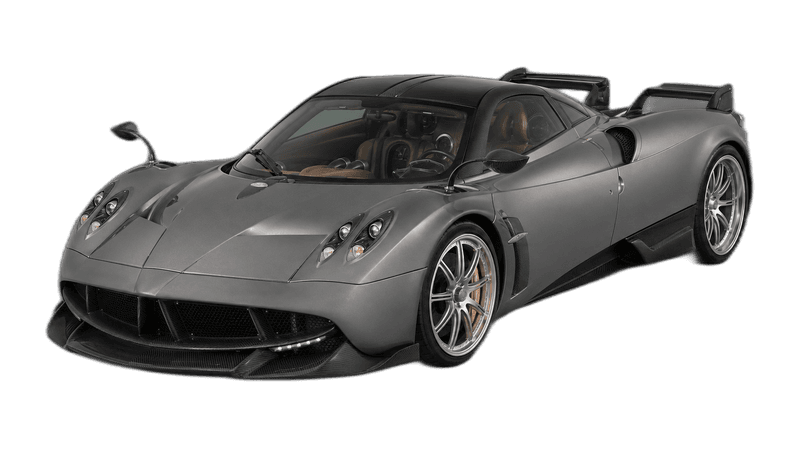
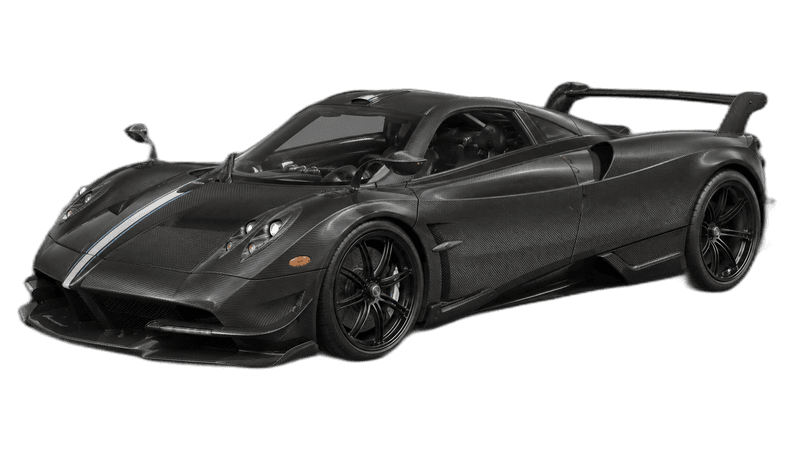
Every Pagani ever built has been powered by a Mercedes-AMG V12, hand-assembled at the Affalterbach factory with Pagani-specific calibration. The relationship began with the Zonda's 6.0-litre M120 derivative and evolved through the Huayra's 6.0-litre twin-turbo M158, producing 720 bhp in standard form and 800 bhp in the BC specification. The current Utopia uses the M297, a 6.0-litre twin-turbo unit making 852 bhp and 1,100 Nm of torque.
What Pagani extracts from the AMG V12 is not just power but character. Horacio Pagani insists on bespoke exhaust manifolds, unique intake geometry, and a throttle calibration that preserves low-rev tractability while delivering savage top-end thrust. The result is a V12 that sounds nothing like a Mercedes: it howls and crackles with an almost organic fury that complements the handmade carbon fibre bodywork surrounding it.
Aston Martin V12: Cosworth to In-House (1999-2023)
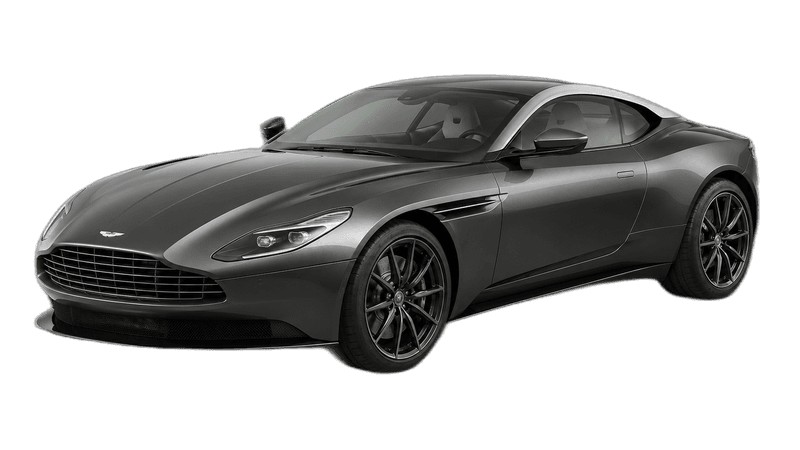
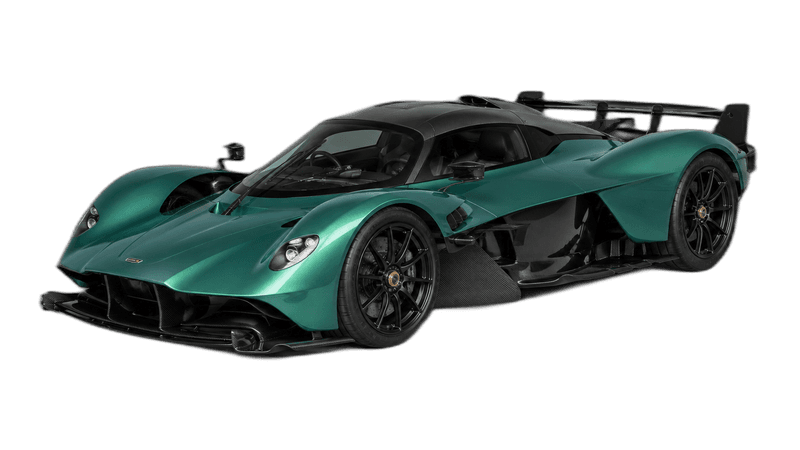
The original Aston Martin V12, designed by Cosworth and Ford, debuted in the Vanquish at 5,935 cc and 460 bhp. It was essentially two Duratec V6 blocks mated at 60 degrees, an elegant and surprisingly compact solution. Over twenty-four years, it grew to 5,204 cc (twin-turbo in the DB11) and ultimately reached its zenith in the Valkyrie's Cosworth-built 6.5-litre naturally aspirated unit producing 1,000 bhp at 10,500 rpm.
The Valkyrie engine deserves separate mention. Developed with Cosworth to Formula 1 tolerances, it revs to 11,100 rpm, higher than any production V12 in history. At just 206 kg, it weighs less than many four-cylinder turbos. It is the ne plus ultra of naturally aspirated twelve-cylinder engineering, and likely the last of its kind at this level of extremity.
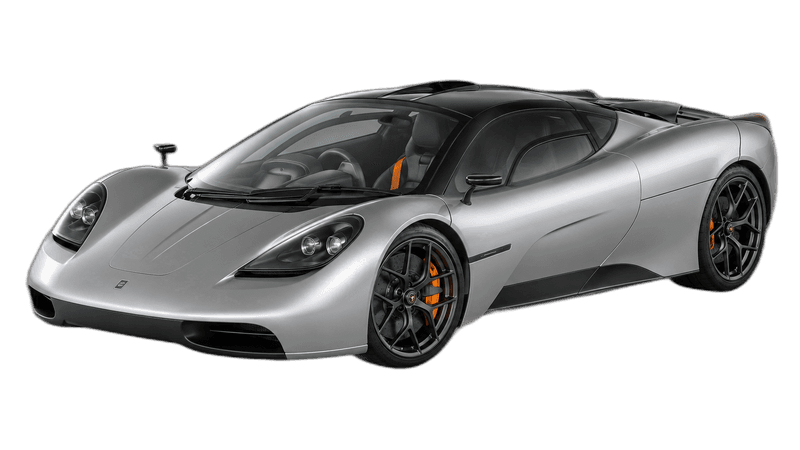
Cosworth GMA V12: The Gordon Murray T.50 Engine
When Gordon Murray set out to build his spiritual successor to the McLaren F1, he went back to Cosworth. The GMA T.33 V12 is a 3,994 cc naturally aspirated unit that revs to 12,100 rpm and produces 654 bhp. It weighs 178 kg. To put that in context: it produces more power per litre than the LaFerrari's V12 while weighing less than a Volkswagen Golf's 2.0-litre turbo four.
Murray's specification demanded no turbos, no hybrid assistance, and a redline north of 12,000 rpm. Cosworth delivered by using F1-derived materials and manufacturing processes, titanium valves, plasma-sprayed cylinder bores, a flat-plane crankshaft. The sound at full chat is unlike anything else on the road: a metallic, almost painful shriek that makes the Ferrari F12's V12 sound lazy by comparison.
Ferrari F140 V12 (2002-present)
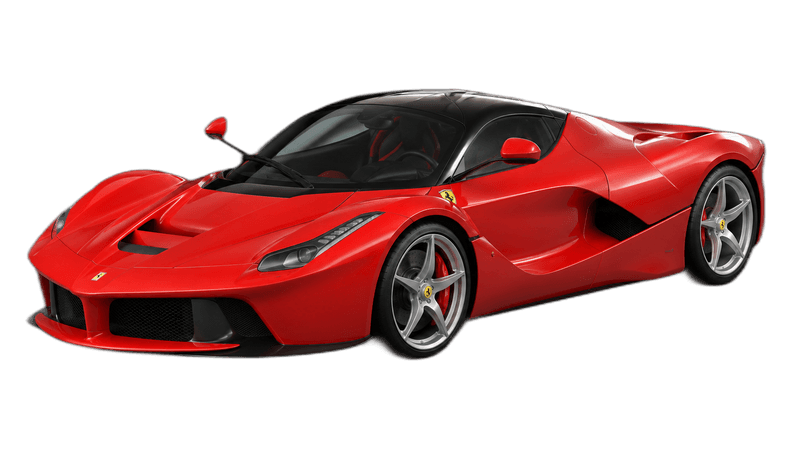
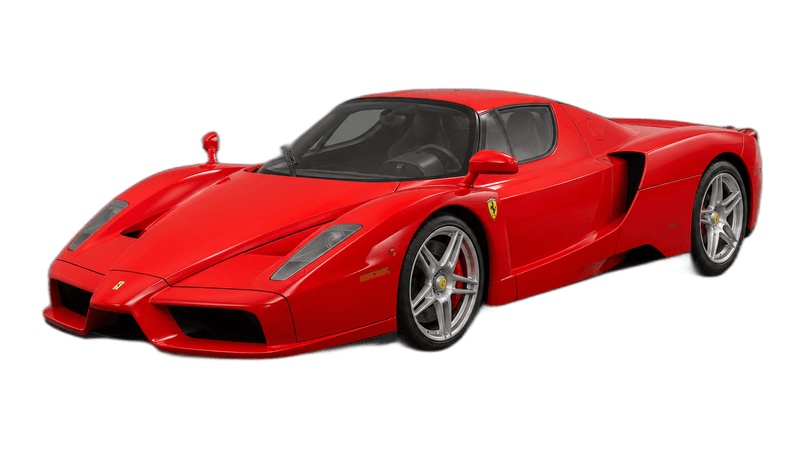
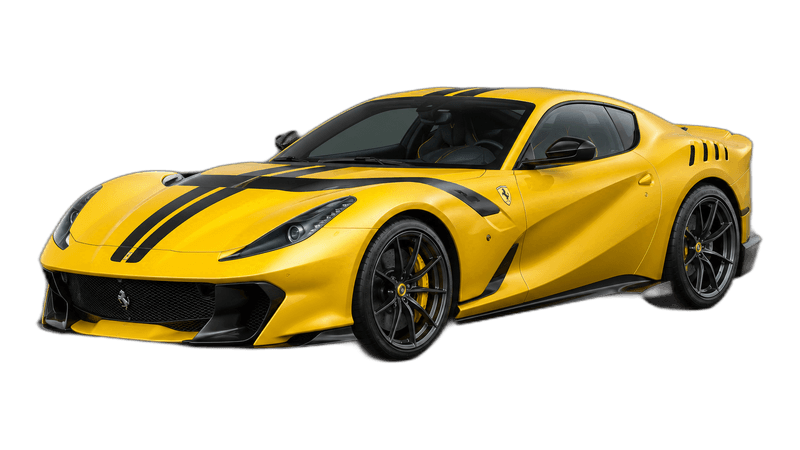
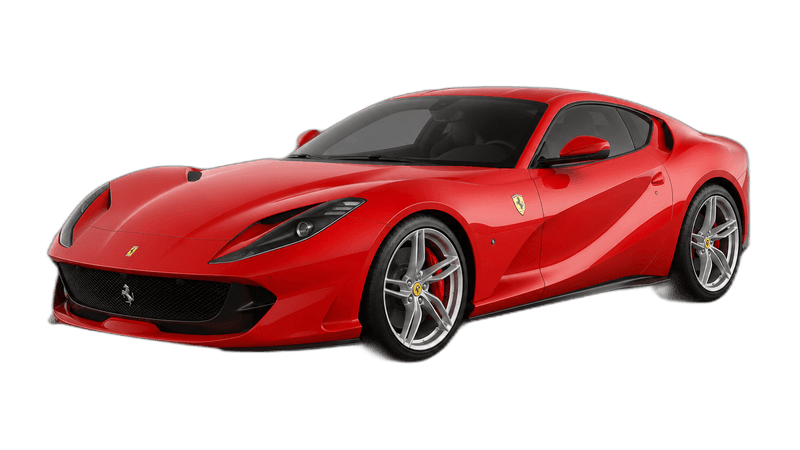
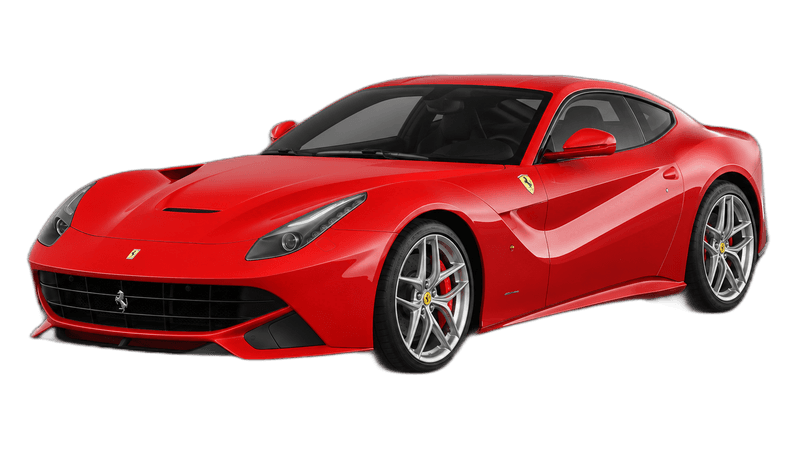
The F140 family: 65-degree, 6,262 cc, powers the Enzo, 599, F12, LaFerrari, 812 Superfast, and Daytona SP3. In its most potent naturally aspirated form (812 Competizione), it produces 830 bhp at 9,250 rpm, the highest-revving and most powerful series-production Ferrari V12 ever. With hybrid assistance in the LaFerrari, total system output reached 950 bhp.
The F140 represents the final evolution of the front-mounted Ferrari V12 before electrification renders the formula obsolete. The 812 Competizione's version deletes 5 kg of rotating mass, uses titanium con-rods, and breathes through redesigned intake runners that allow 9,500 rpm. It is the Colombo's great-great-grandchild, and arguably the most complete V12 ever fitted to a road car.
The Verdict That Isn't
There is no "best" V12. The Colombo defined the breed. The Bizzarrini gave it muscle. The S70/2 proved it could be light. The AMG M158 showed forced induction needn't kill the soul. The Cosworth GMA pushed the rev ceiling past 12,000. And the F140 brought four decades of Ferrari V12 philosophy to its absolute peak.
What unites them is not specification but intention: the belief that twelve cylinders, arranged in a vee, firing in a precise sequence, can produce something that transcends mechanical function and enters the realm of art. They are all, in their own way, the greatest V12 ever made.