The Obsession
Gordon Murray began sketching the McLaren F1 in 1988, on the back of a Marlboro cigarette packet during an Italian Grand Prix at Monza. His brief, written for an audience of one, was to build the greatest road car ever made, with no concession to cost, regulation, or committee thinking. Murray had one rule: if a component didn't serve the car's performance, it didn't go on the car. This obsession with lightness, with the elimination of everything unnecessary, would produce a machine that weighed 1,138 kg and hit 386.4 km/h, a top speed record that stood from 1994 to 2005.
The project budget was approximately £15 million. McLaren expected to sell 300 units at £540,000 each. They ultimately built 106 (64 road cars, 5 prototypes, 5 LM models, 3 LM-spec road cars, and 28 GTR racing variants plus one prototype racer). Murray personally approved every supplier, every material, every tolerance. The attention to detail bordered on pathological: the tool kit was titanium and weighed less than 2 kg. The owner's manual was printed on ultra-thin paper to save grams. The engine bay was lined with gold foil, not for aesthetics, but because gold is the most efficient reflector of heat.
The Central Seat
The McLaren F1's defining feature, the one that separates it from every supercar before and since, is its central driving position. Murray placed the driver on the car's centreline, with a passenger seat slightly behind and to each side. The concept came directly from Formula 1, where the driver sits centrally for optimum weight distribution and visibility. In the F1, it meant the driver had equal sightlines to both front corners, a symmetrical relationship to the car's dynamics, and an unobstructed view of the road ahead.
Every other supercar asks you to sit on one side and guess where the other side is. The F1 puts you in the middle and lets you know. Once you've driven from the centre, every other layout feels like a compromise.
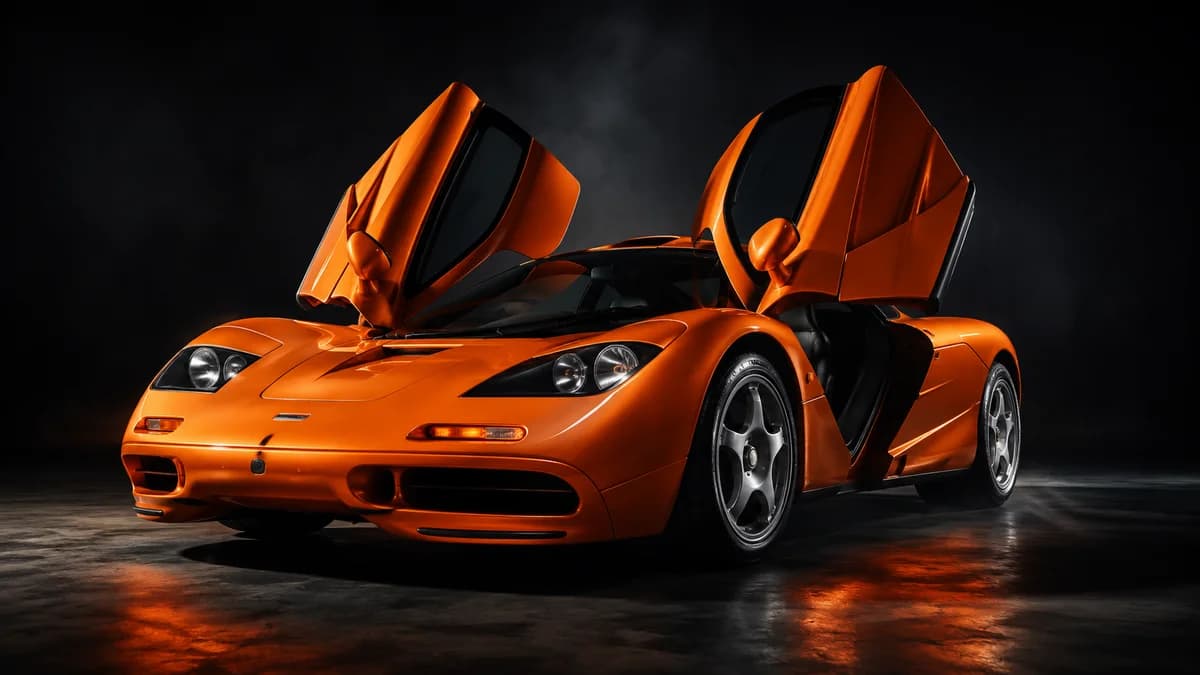
The central seat had practical consequences: the door apertures had to be massive (the F1's dihedral doors open upward and outward), the pedal box had to accommodate the driver's centreline position with offset driveshaft routing, and the dashboard had to be designed around a symmetrical cockpit. Every element of the interior, from the bespoke Kenwood stereo to the Facom tool roll, was designed specifically for the F1. Nothing was borrowed from a parts bin because no parts bin existed for a three-seat, centrally driven supercar.
The Engine
Murray originally wanted a Honda V10 or V12. When Honda declined, he approached BMW M. Paul Rosche, head of BMW Motorsport engine development, agreed to build a bespoke naturally aspirated V12 to Murray's specification: minimum 550 bhp, maximum weight 250 kg, no more than 600 mm tall. Rosche delivered the S70/2: 6,064 cc, 60 degrees, 48 valves, producing 618 bhp at 7,400 rpm and 651 Nm at 5,600 rpm. It weighed 266 kg, slightly above Murray's target, but Rosche compensated by making it more powerful than specified.
The S70/2 had no variable valve timing, no variable intake geometry, no electronic tricks. It achieved its extraordinary specific output (102 bhp per litre) through meticulous attention to airflow: individual throttle bodies, ram-air induction, and exhaust headers tuned to produce the optimal scavenging pulse at peak power. The engine management system was a bespoke TAG Electronic Systems unit, the same company that built F1 ECUs. It was, in the language of its era, a racing engine detuned for the road.
Le Mans, 1995
The McLaren F1 was never designed to race. Murray built it as a road car, full stop. But the GTR racing variant, developed by the factory at the insistence of customer racing teams, arrived at the 1995 24 Hours of Le Mans and won outright on its first attempt. The #59 Kokusai Kaihatsu Racing F1 GTR, driven by Yannick Dalmas, Masanori Sekiya, and JJ Lehto, completed 298 laps and beat purpose-built prototypes from Courage, Kremer, and WR. Four other F1 GTRs finished in the top five.
The victory was improbable. The F1 GTR was competing against cars designed exclusively for endurance racing, cars with lower drag, more downforce, and purpose-built powertrains. But the F1's fundamental engineering, its low weight, its efficient aerodynamics, its bulletproof BMW V12, compensated for its road-car origins. Dalmas later described the F1 GTR as "the most confidence-inspiring car I have ever raced. It never surprised you. It just kept going."
The McLaren F1 was designed as the ultimate road car. It won Le Mans anyway. That was not luck. That was what happens when the engineering is genuinely, uncompromisingly right.
The Legacy
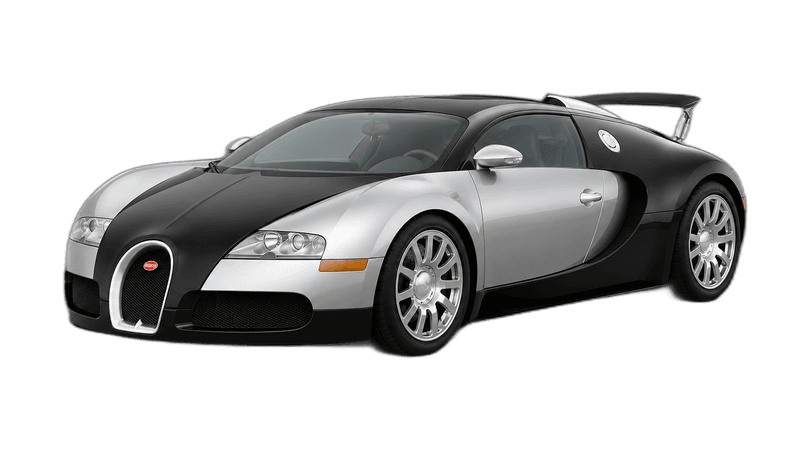
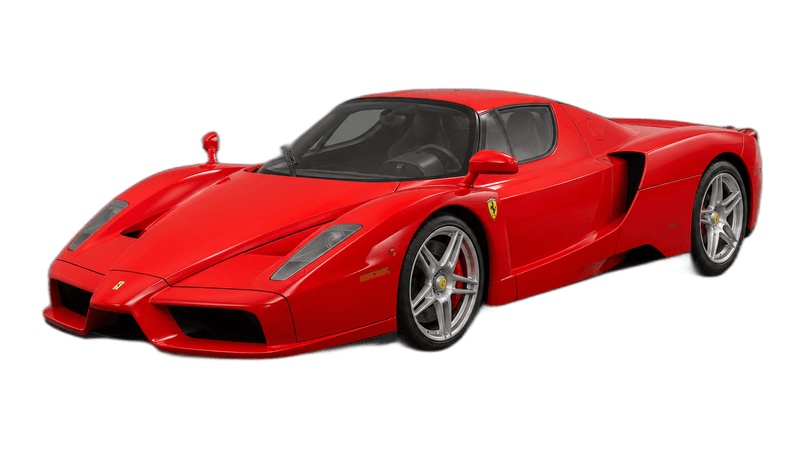
The McLaren F1 established the template for the modern hypercar. Its carbon fibre monocoque, developed by Peter Stevens and Murray, was the first in a road car and set the standard every subsequent hypercar would follow. Its naturally aspirated power density: 102 bhp per litre from a 6.0-litre V12, was unmatched until the Ferrari Enzo arrived eight years later. Its top speed of 386.4 km/h was the fastest any road car had ever been, and it took the Bugatti Veyron's 1,001 bhp W16 to finally surpass it in 2005.
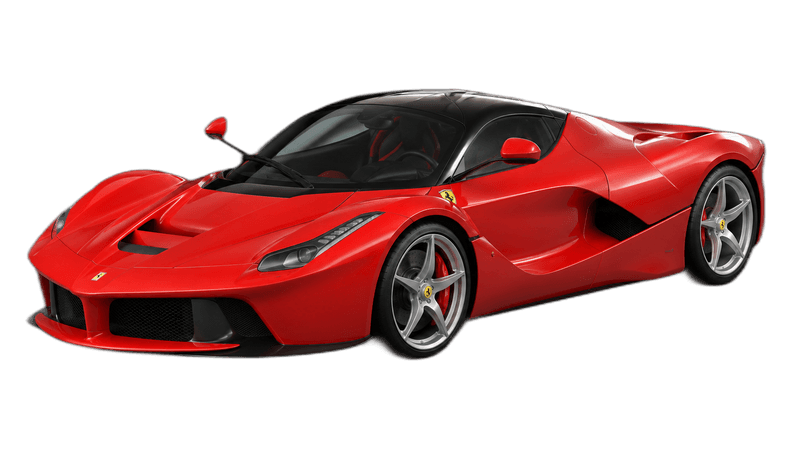
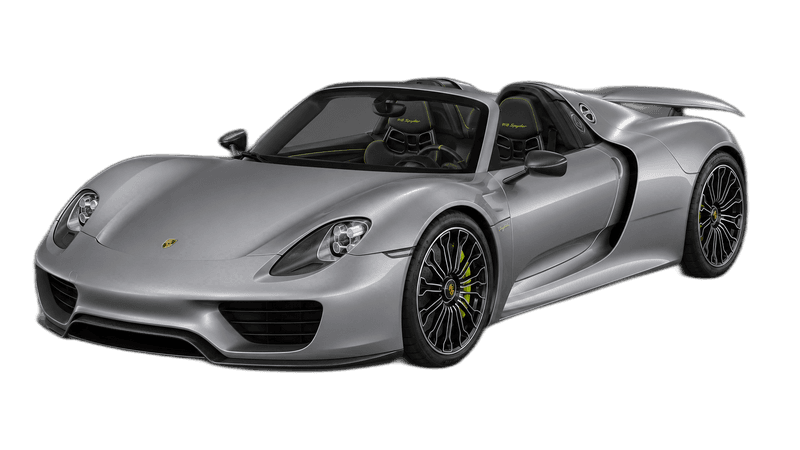
Today, a McLaren F1 in standard road specification sells for between £15 million and £20 million. The LM variant, of which only five were built, last traded for reportedly north of £25 million. The F1 is not merely the most valuable modern car in existence: it is the reference point against which every subsequent hypercar is measured. The Bugatti Veyron was faster. The Ferrari LaFerrari was more powerful. The Porsche 918 was more technologically advanced. But none of them were built with the same singular, uncompromising vision.
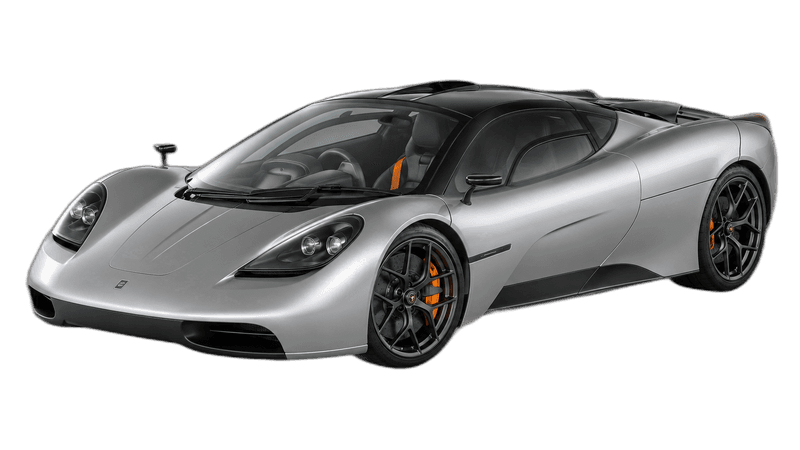
Gordon Murray has since built the T.50, his spiritual successor to the F1, with a Cosworth V12 that revs to 12,100 rpm and a fan-car aerodynamic system. It is, by all accounts, a masterpiece. But the F1 remains the car that proved a road car could be built without compromise, that if one person with enough knowledge, enough taste, and enough stubbornness held the pen, the result could be something that transcended the category entirely. It changed everything, and the everything it changed still hasn't caught up.