
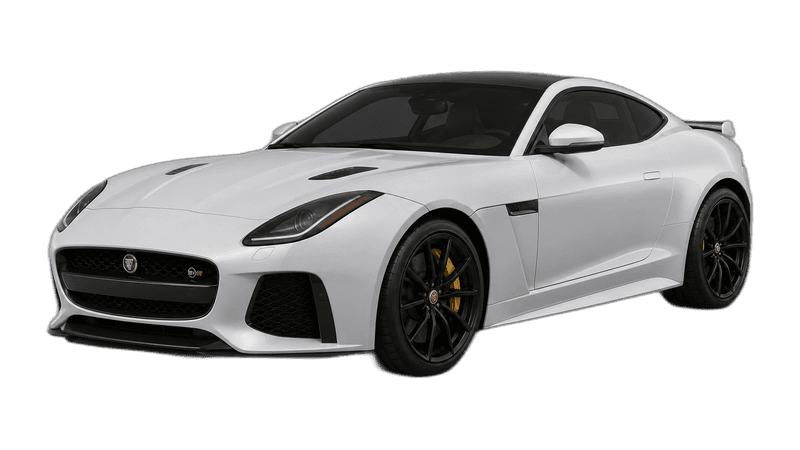
Jaguar F-Type SVR
£65,000
usatoIndicative market price, updated periodically.
567cv
Potenza
3.7s
0-100 km/h
322km/h
Velocita Massima
£65,000
Prezzo Usato
The Jaguar F-Type SVR produces 567 bhp, reaches 100 km/h in 3.7 seconds and has a top speed of 322 km/h. A representative example is worth about £65,000.
Quanto spinge.
La forza g di picco nell'istante in cui affondi l'acceleratore, stimata dal tempo 0–100 e dalla trazione.
Jaguar F-Type SVRG di partenza stimata dal tempo 0–100 e dalla trazione: un'approssimazione onesta, non un dato misurato.
Dream Car Garage Editorial · Edited by José Teo Lorente Vallecillos · Last updated 1 November 2026
Panoramica
We have not driven this car. This review is based on published specifications and the sources listed below.
The fastest first-generation F-Type
The Jaguar F-Type SVR was the flagship of the first-generation F-Type range, built to combine the supercharged V8 with lighter hardware and a higher maximum speed. Our catalogue covers the 2016 to 2020 SVR with a 5.0L supercharged V8 petrol engine, 567 bhp, 700 Nm, 0 to 100 km/h in 3.7 seconds and a 322 km/h maximum, with all-wheel drive. We have not driven this model for this article. This is a desk-researched ownership guide using Jaguar's SVR press material, PistonHeads' F-Type used buying guide and the DVSA recall service.
Jaguar's press release announced the SVR with 575 PS and 700 Nm, an eight-speed Quickshift transmission, 0 to 100 km/h in 3.7 seconds and a coupe maximum of 322 km/h. The catalogue's 567 bhp is the familiar conversion of that 575 PS output. Convertibles were slightly slower at the top end. The SVR also differed from the standard R through weight-saving measures, aerodynamic changes and chassis tuning. That makes it more than a badge exercise, but it also means the car should be inspected as a performance special, not simply as a tidy F-Type.
Engine, cooling and transmission
The supercharged 5.0-litre V8 gives the SVR its character, but the ownership case starts with basics. Listen for timing-chain tensioner rattle on start-up, then check for high-pressure fuel-pump warnings or restricted-performance messages. The supercharger should sound smooth rather than strained. Inspect coolant pipes, the water pump area, thermostat housing and intercooler plumbing. A car that has been tracked or repeatedly launch-started may have consumed brakes and cooling components faster than a road-only car, so ask how it has actually been used.
The eight-speed automatic should shift crisply without flare or thump. PistonHeads' F-Type guide recommends treating ZF fluid service seriously even where the gearbox is described as sealed for life. That advice matters even more on a high-output car. All-wheel drive adds rear hardware and front-to-rear driveline components. Check underneath for leaks, torn boots, worn couplings and uneven tyre wear. A launch-control car with mismatched tyres is telling you something about its previous life.
Battery health remains important. Low voltage can create false faults across modules, windows, roof systems and driver-assistance features. Ask for a battery age and a diagnostic scan. If the car has been stored, check for flat-spotted tyres, corroded brake discs and stale fuel symptoms. The SVR's drama can distract from dull but decisive details.
Chassis, brakes and carbon hardware
The SVR's suspension and brakes were part of its reason to exist. Adaptive dampers should work through their modes without knocking or leaking. The car should track straight under braking and remain stable over broken roads. Uneven tyre wear, damaged wheels and fresh suspension parts may indicate enthusiastic use. That is not automatically bad, but the price and maintenance file should reflect it. A hard-used SVR without invoices is a risk; a hard-used SVR with complete records can be a well-understood car.
Brakes deserve special attention. Carbon-ceramic options reduce weight but increase replacement cost dramatically. Steel brakes are more affordable but still need proper fluid and disc care. Check pad thickness, disc condition, caliper paint, heat cracking and the date of the last fluid change. Ask whether the car has seen track days. If it has, look for evidence of proper cooling-down laps, quality pads and regular brake-fluid replacement rather than simply accepting the claim that it was never used hard.
The SVR's aero and weight-saving parts also matter. Inspect the carbon fibre components for chips, poor repair or panel-gap issues. Check the rear spoiler operation where fitted, and confirm that lightweight panels are original or correctly documented. The press car's exotic hardware can make a damaged car expensive to return to standard. A professional body and paint inspection is sensible, especially where the seller mentions track or show use.
Convertible SVRs add a separate roof and sealing check. Cycle the roof several times, listen for strained mechanisms and inspect the header seals, side glass alignment and rear deck fit. Look for water marks around the seats, carpets and boot area. A car that has lived outside or been used hard in poor weather should show its history in the seals, glass and cabin hardware. Confirm the parking sensors operate cleanly.
Provenance, recalls and buying position
PistonHeads' F-Type guide lists a series of recalls and service actions that can affect cars in this range, including fuel-rail fire-risk work, alternator cable, belt ancillary fixings, rear-spoiler management and seatbelt pretensioners. Use the DVSA check and match it to invoices. Build date, market and equipment all affect which campaigns apply. An SVR with no recall paperwork is not unusual, but it should prompt direct verification rather than a shrug.
Provenance is central because the SVR was a limited, high-profile derivative. Check the VIN against the service file, verify the odometer history and confirm that modifications are declared and reversible where possible. Aftermarket software, exhaust systems and wheels can change the character of the car and complicate warranty or insurance discussions. A standard car with a clean file is easier to understand.
The best SVR combines drama with discipline. It should have strong cooling, a clean supercharger and engine file, serviced transmission and driveline, healthy suspension and brakes, straight carbon or lightweight panels, and documented recall work. It is a special F-Type, but the purchase still depends on the same evidence as any used performance car: records, inspection and consistency.
Specifiche
| Motore | 5.0L supercharged V8 petrol |
|---|---|
| Cilindrata | 5.0L |
| Potenza | 567 cv |
| Coppia | 700 Nm |
| 0-100 km/h | 3.7s |
| Velocita Massima | 322 km/h |
| Trazione | AWD |
| Paese | UK |
| Carrozzeria | 2 seater fixed-head coupé |
| Anni | 2016–2020 |
| Prezzo Usato | £65,000 |
Specifications are manufacturer-published figures.
Domande Frequenti
What is a Jaguar F-Type SVR worth?
A representative example is worth about £65,000. Actual values vary with specification, condition and history.
How much power does the Jaguar F-Type SVR have?
The Jaguar F-Type SVR produces 567 bhp and 700 Nm of torque.
How fast is the Jaguar F-Type SVR from 0 to 100 km/h?
The Jaguar F-Type SVR accelerates from 0 to 100 km/h in 3.7 seconds.
What is the top speed of the Jaguar F-Type SVR?
The Jaguar F-Type SVR has a top speed of 322 km/h.
What engine does the Jaguar F-Type SVR have?
The Jaguar F-Type SVR uses a 5.0L supercharged V8 petrol.
When was the Jaguar F-Type SVR built?
The Jaguar F-Type SVR was built from 2016 to 2020.
Is the Jaguar F-Type SVR all-wheel drive?
Yes. The Jaguar F-Type SVR is configured with all-wheel drive.
Altre di Jaguar
In evidenza su Carpedia
Best Sports Cars 2026
From the Dodge Challenger's American muscle to Porsche's precision-engineered 911, these are the ten sports cars of 2026 that deliver the most rewarding driving experiences.
Best First Supercars to Buy in 2026
Eight supercars that reward first-time ownership without punishing inexperience, selected for mechanical approachability, established specialist networks, and the kind of driving experience that earns its licence.