
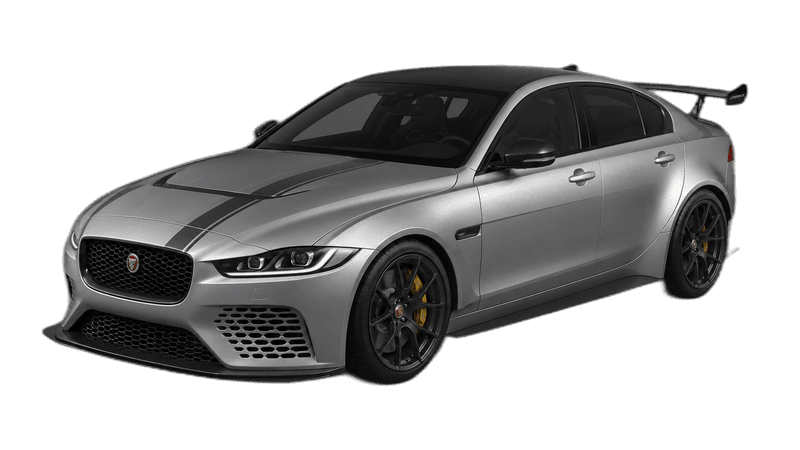
Jaguar XE SV Project 8
£145,000
usedIndicative market price, updated periodically.
592bhp
Power
3.7s
0-100 km/h
322km/h
Top Speed
£145,000
Price Used
How hard it pulls.
Peak g-force the instant you bury the throttle, estimated from the car's 0–100 time and drivetrain.
Jaguar XE SV Project 8Estimated peak launch g from the 0–100 time and drivetrain: an honest approximation, not a measured figure.
The Jaguar XE SV Project 8 is a 4/5 seater sedan/saloon by Jaguar, with 592 bhp, 700 Nm of torque, a 0-100 km/h time of 3.7 seconds and a top speed of 322 km/h. Indicative used value: approximately £145,000. Actual values vary with specification, condition and history.
Dream Car Garage Editorial · Edited by José Teo Lorente Vallecillos · Last updated 1 November 2026
Overview
We have not driven this car. This review is based on published specifications and the sources listed below.
A saloon body built around a 600 PS brief
The Jaguar XE SV Project 8 turned the XE saloon into the most extreme road car Jaguar Special Vehicle Operations had produced. Our catalogue records the 2017 to 2019 model with a 5.0L supercharged V8 petrol engine, 592 bhp, 700 Nm, 0 to 100 km/h in 3.7 seconds and a 322 km/h maximum, with all-wheel drive. We have not driven this model for this article. This is a desk-researched ownership guide using Jaguar's official Project 8 material, the PistonHeads XE SV Project 8 used buying guide and the DVSA recall service.
Jaguar's official material gives the Project 8 a 600 PS supercharged V8, a 3.7-second 0-100 km/h time and a maximum beyond 320 km/h. PistonHeads quotes 600 hp and 516 lb ft, an eight-speed automatic gearbox, all-wheel drive, a 3.7-second 0-62 mph time and a 200 mph maximum for the non-Touring aero package. The catalogue's 592 bhp is broadly consistent with 600 PS expressed as brake horsepower, but the important point is not the arithmetic. This was a limited-run, left-hand-drive-only special with extreme aero, carbon hardware and a production plan of 300 cars worldwide. Verify the exact car, its market history and its equipment before discussing values.
PistonHeads reports that 300 cars were planned, with Touring versions accounting for 15 examples and the guide suggesting actual sales may not have exceeded about 250. Treat those numbers as market-reporting context rather than a factory ledger. What matters for ownership is that Project 8 is too rare for broad reliability generalisations. A single well-used car can look very different from one kept as a collection piece, and neither extreme proves how the next example will behave.
Cooling, supercharger and heat-aged components
The Project 8's engine is related to Jaguar's supercharged V8 family, but the surrounding cooling and heat management package is much more demanding. PistonHeads highlights plastic coolant pipes that can age in heat, so the first inspection should include the coolant system from header tank to visible pipework. Look for staining, brittle unions, weeping joints and signs that a pipe has already been renewed. A specialist should check the less accessible areas, especially if the car has been tracked.
Supercharger noise needs context. A healthy supercharged V8 can make a purposeful whine under load. A rattle or buzz from the supercharger isolator is different, and PistonHeads specifically mentions isolator noise as a Project 8 check. The engine should start cleanly, idle evenly and pull without hesitation once warm. Oil and coolant history matter more than a low odometer reading because heat cycles age components even when the car is not accumulating miles.
Ask how the car has been stored and exercised. A Project 8 left parked for long periods can develop flat-spotted tyres, weak battery condition, seized brakes and stale fluids. A car used repeatedly on track can be mechanically excellent but may have consumed brakes, tyres and suspension components quickly. Both can be acceptable. The seller needs to provide the evidence that tells one story from the other.
Gearbox, brakes and running gear
PistonHeads identifies the eight-speed automatic as one of the areas to assess carefully. It is a fast-shifting road and track gearbox, but it is also working with high torque, all-wheel drive and substantial weight. On a test drive, it should change smoothly when cold, avoid harsh shunts in traffic and respond cleanly in manual mode. Any flare, shudder, delayed engagement or warning message deserves diagnosis. Documented fluid service is important because a gearbox problem on this car is unlikely to be cheap.
Brakes are another cost centre. Project 8 used serious braking hardware, including carbon ceramic brakes depending on specification. Inspect the discs for cracks, wear and damage, and ask for pad measurements and replacement history. Carbon ceramics can look dramatic yet still be near the end of their useful life. Steel-brake cars need the same honesty about pad thickness, disc condition and fluid history. The car's straight-line speed is not the issue; stopping repeatedly from high speed is what consumes expensive parts.
Suspension and wheel checks should reflect the car's aero and track intent. Look for damage to the wheels, uneven tyre wear and evidence of kerb contact. The dampers, bushings and joints should feel controlled rather than crashy. Project 8 was built to be capable on circuit, but a car that has been driven hard on poor roads can still need substantial refresh work. A lift and a specialist inspection are strongly recommended before purchase.
Carbon bodywork, aero and the Touring difference
The Project 8's visual identity comes from its wings, splitters, vented panels and carbon body components. Official and PistonHeads material both describe extensive carbon use. Inspect every exposed carbon edge for chips, cracks, delamination and poor repair. Aero pieces are not cosmetic; they affect cooling, downforce, stability and tyre load. Misaligned or damaged aero should be treated as a functional concern, not a styling issue.
The Touring version lacks the large fixed rear wing and was built in very small numbers. That difference matters to identity, but it does not make the car mechanically simple. Both versions still use the same basic supercharged powertrain, all-wheel-drive hardware and heavy-duty cooling brief. Confirm whether the car has the Track Pack, carbon buckets, removed rear seat arrangement and any other special equipment. Originality should be verified against invoices and build documentation where available.
Check the body shell and underbody for accident repair, track-contact damage and lifted paint around the aero fixings. The car's wide stance and low splitters make it vulnerable to poor parking and aggressive entry ramps. Paint thickness readings, panel-gap inspection and a professional bodyshop opinion are worthwhile on a low-volume special. A visibly dramatic Project 8 with undocumented damage is a much riskier purchase than a higher-mileage car with a clean file.
Ownership file and realistic specialist support
A Project 8 should come with more than a polished presentation. Look for original order documents, service invoices, recall checks, tyre and brake records, and evidence of specialist knowledge. The DVSA recall service remains the baseline for outstanding campaigns, although a car this rare may also have factory communications that are not visible there. A Jaguar specialist familiar with SVO cars is the right party to review software, aero parts and any stored fault codes.
Do not assume rare means fragile, and do not assume low mileage means safe. The engine and gearbox can be robust when serviced, but replacement parts, body panels and carbon pieces are tied to a very limited production run. Insurance, storage, transport and future maintenance all need planning. The best Project 8 is the car whose history explains its condition: clear ownership, appropriate use, stored correctly, serviced on time and inspected after any track work. It is a specialised purchase, rewarding only when the paperwork and the physical inspection agree.
Specifications
Engine
5.0L supercharged V8 petrol
Displacement
5.0L
Power
592 bhp
Torque
700 Nm
0-100 km/h
3.7s
Top Speed
322 km/h
Drivetrain
AWD
Country
UK
Body Style
4/5 seater sedan/saloon
Years
2017–2019
Production
300
Price Used
£145,000
Specifications are manufacturer-published figures.
More from Jaguar

Frequently Asked Questions
What are the specifications of the Jaguar XE SV Project 8?
The Jaguar XE SV Project 8 is a 4/5 seater sedan/saloon by Jaguar, with 592 bhp, 700 Nm of torque, a 0-100 km/h time of 3.7 seconds and a top speed of 322 km/h. Indicative used value: approximately £145,000. Actual values vary with specification, condition and history.
How much does a Jaguar XE SV Project 8 cost?
Indicative used value: approximately £145,000. Actual values vary with specification, condition and history.
How many Jaguar XE SV Project 8 were made?
Jaguar produced 300 units of the Jaguar XE SV Project 8.
What drivetrain does the Jaguar XE SV Project 8 use?
The Jaguar XE SV Project 8 is configured with all-wheel drive.
What type of car is the Jaguar XE SV Project 8?
The Jaguar XE SV Project 8 is a super saloons manufactured by Jaguar in UK. Production ran from 2017 to 2019.