
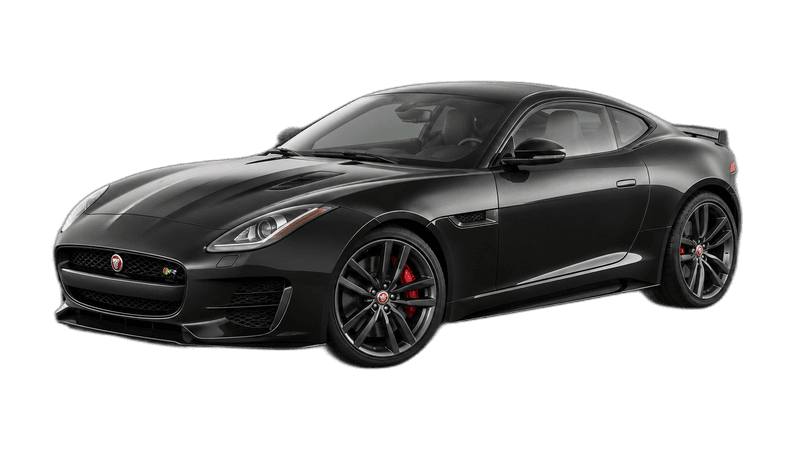
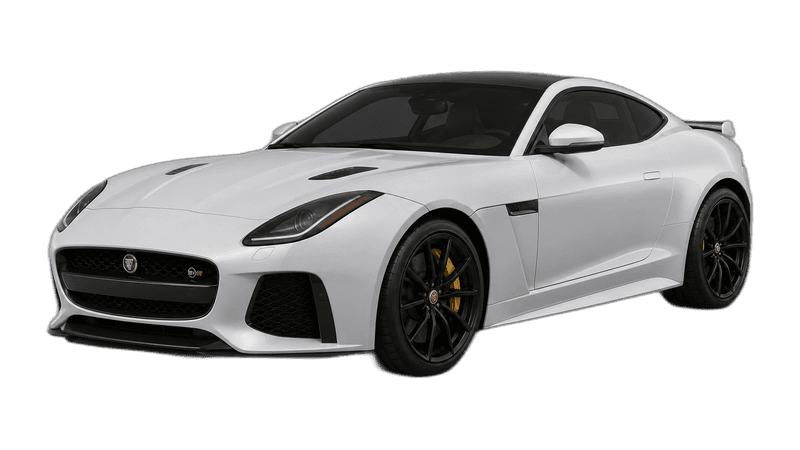
Jaguar F-Type R
£48,000
usedIndicative market price, updated periodically.
567bhp
Power
3.7s
0-100 km/h
300km/h
Top Speed
£48,000
Price Used
How hard it pulls.
Peak g-force the instant you bury the throttle, estimated from the car's 0–100 time and drivetrain.
Jaguar F-Type REstimated peak launch g from the 0–100 time and drivetrain: an honest approximation, not a measured figure.
The Jaguar F-Type R is a 2 seater fixed-head coupé by Jaguar, with 567 bhp, 700 Nm of torque, a 0-100 km/h time of 3.7 seconds and a top speed of 300 km/h. Indicative used value: approximately £48,000. Actual values vary with specification, condition and history.
Dream Car Garage Editorial · Edited by José Teo Lorente Vallecillos · Last updated 1 November 2026
Overview
We have not driven this car. This review is based on published specifications and the sources listed below.
A V8 F-Type with daily usability
The Jaguar F-Type R is the eight-cylinder version of Jaguar's modern two-seat sports car, offered through the model's first generation as both coupe and convertible. Our catalogue covers the 2014 to 2020 R with a 5.0L supercharged V8 petrol engine, 567 bhp, 700 Nm, 0 to 100 km/h in 3.7 seconds and a 300 km/h maximum, with all-wheel drive. We have not driven this model for this article. This is a desk-researched ownership guide using Jaguar's F-Type brochure, PistonHeads' F-Type used buying guide and the DVSA recall service.
The output figure needs context. Jaguar's 18MY brochure lists the F-Type R at 550 PS, while later R cars are associated with 575 hp in PistonHeads' buying-guide coverage. The catalogue's 567 bhp is consistent with a 575 PS metric conversion rather than with every early R. Treat power as update-dependent, and verify the exact car by VIN, build date and engine data. An early rear-wheel-drive car and a later all-wheel-drive car are not mechanically identical purchases, even when both wear R badges.
Supercharged V8 checks
The 5.0-litre supercharged V8 is the main event. PistonHeads tells F-Type buyers to listen for timing-chain tensioner rattle and to treat a high-pressure fuel-pump fault seriously. A restricted-performance warning, long crank or fuel-pressure fault code can point toward the pump rather than a minor sensor. The supercharger itself should be quiet apart from a controlled whine. Check the oil and coolant, inspect the intercooler and coolant pipe joints, and ask whether the water pump or thermostat housing has been replaced. Cooling leaks are not universal, but they are much cheaper to negotiate before purchase than after.
Battery condition affects modules across the car. A weak battery can generate a Christmas tree of warnings and make a healthy F-Type look like an electrical liability. Ask for the battery age, storage routine and a recent diagnostic scan. Stored faults should match the seller's story. If the car has been left unused, check the tyres for flat spots, the brakes for corrosion and the exhaust for moisture.
The ZF eight-speed automatic needs the same mature approach as in other Jaguar and Land Group products. It may be described as sealed, but a fluid change around 70,000 miles is sensible buying advice where applicable. On a test drive it should shift smoothly hot and cold, hold gears cleanly in manual mode and avoid thuds when manoeuvring. All-wheel-drive versions add driveshafts, couplings and rear hardware; inspect underneath for leaks, torn boots and evidence of hard launches.
Chassis, brakes and bodywork
The R is heavy and fast, so suspension condition is not a small detail. Adaptive dampers should respond through their modes without knocking. Uneven tyre wear, worn rear bushes, kerbed wheels and vague steering all matter. Check the car at low speed over broken ground and at motorway speed for stability. PistonHeads notes the importance of working dynamic systems on the F-Type range, and on an R they are part of the car's character rather than optional luxury.
Brakes must match the performance. Standard steel brakes are expensive enough when neglected; carbon ceramics, where fitted, are a different level of commitment. Look at disc condition, pad thickness, caliper condition, fluid history and evidence of track use. A fast car used repeatedly on track needs more than a road-service file. If the seller claims gentle use but the tyres, brakes and underbody tell another story, believe the hardware.
Body checks mirror other aluminium F-Types. Panel gaps should be even, paint should not flake around doors or rear arches, and the bonnet and doors should align cleanly. Convertibles need a full roof cycle, seal inspection and checks for glass scratches or water ingress. Coupes need close attention to rear-quarter repairs and previous accident evidence. Because values vary sharply by update and condition, a professional inspection is money well spent.
The cabin deserves the same patience. Operate the pop-out door handles repeatedly, check the dashboard vents and switchgear, and look for warning messages that return after a clear. PistonHeads also notes side-glass scratching where grit gets into the seals, so inspect the glass edges and ask whether revised seals or weatherstrips have been fitted. Test the windows, locks, lights and infotainment from cold, not only after a dealer has had the car running. Small faults are not necessarily expensive, but a bundle of ignored faults can indicate how the car has been maintained. Check the seatbelts, mirrors, parking sensors and camera during inspection, because repeated module warnings can reflect weak battery condition rather than a major fault.
Recalls, updates and the right example
PistonHeads lists F-Type campaigns that include fuel-rail fire-risk work, alternator cable, belt ancillary fixings, rear-spoiler management and seatbelt pretensioners, among others. The DVSA check should be run before viewing, then matched to paperwork. A seller who cannot produce recall evidence is not automatically hiding a problem, but the burden shifts to the buyer. Do not accept verbal assurance where a government check and dealer records can provide evidence.
The best R is not necessarily the newest or the loudest. It is the car with consistent service history, proof of cooling and gearbox care, healthy battery and modules, straight bodywork, functioning dampers, appropriate brakes and no unresolved recalls. It should feel special without needing excuses. The R delivers the F-Type's full drama, but the purchase case rests on documents and inspection evidence rather than performance figures alone.
Specifications
Engine
5.0L supercharged V8 petrol
Displacement
5.0L
Power
567 bhp
Torque
700 Nm
0-100 km/h
3.7s
Top Speed
300 km/h
Drivetrain
AWD
Country
UK
Body Style
2 seater fixed-head coupé
Years
2014–2020
Price Used
£48,000
Specifications are manufacturer-published figures.
More from Jaguar


Featured in Carpedia
Best Sports Cars 2026
From the Dodge Challenger's American muscle to Porsche's precision-engineered 911, these are the ten sports cars of 2026 that deliver the most rewarding driving experiences.
Best Sports Cars Under €100,000 in 2026
Nine sports cars from €50,000 to €100,000 that deliver genuine GT-class performance, including a junior Aston, a Japanese analogue icon, and the most underrated Porsche money can buy.
What Cars Should I Put in My Dream Garage?
A comprehensive guide to building a dream garage at every budget. Five balanced 5-car garages, from under GBP 100K total to unlimited, each covering daily driving, weekends, track days, road trips, and special occasions.
How Much Does a Dream Car Garage Cost?
A data-driven analysis of dream car costs using verified pricing from 600 performance and luxury cars. From the GBP 6,000 Mazda MX-5 NB to the GBP 6,000,000 Porsche 911 GT1, with price distributions, value picks, and hidden cost breakdowns.
Frequently Asked Questions
What are the specifications of the Jaguar F-Type R?
The Jaguar F-Type R is a 2 seater fixed-head coupé by Jaguar, with 567 bhp, 700 Nm of torque, a 0-100 km/h time of 3.7 seconds and a top speed of 300 km/h. Indicative used value: approximately £48,000. Actual values vary with specification, condition and history.
How much does a Jaguar F-Type R cost?
Indicative used value: approximately £48,000. Actual values vary with specification, condition and history.
What drivetrain does the Jaguar F-Type R use?
The Jaguar F-Type R is configured with all-wheel drive.
What type of car is the Jaguar F-Type R?
The Jaguar F-Type R is a sports cars manufactured by Jaguar in UK. Production ran from 2014 to 2020.