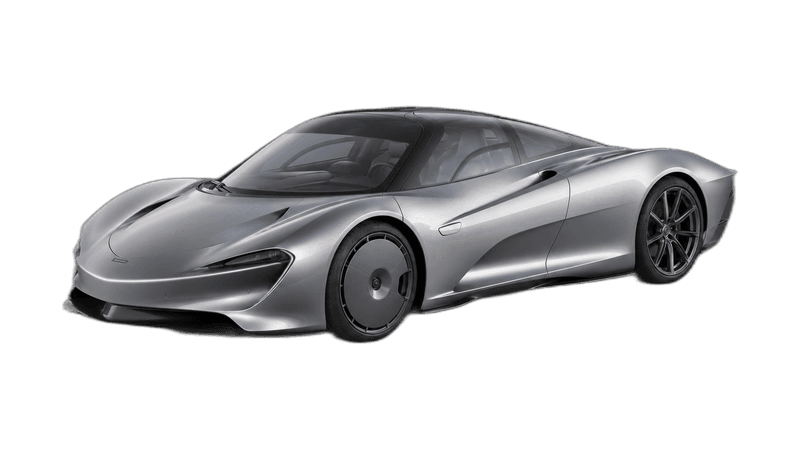
McLaren 570GT
£105,000
usadoIndicative market price, updated periodically.
562cv
Potencia
3.4s
0-100 km/h
328km/h
Velocidad Máxima
£105,000
Precio Usado
The McLaren 570GT produces 562 bhp, reaches 100 km/h in 3.4 seconds and has a top speed of 328 km/h. A representative example is worth about £105,000.
Cómo empuja.
La fuerza g máxima en el instante en que pisas a fondo, estimada a partir del 0–100 y la tracción del coche.
McLaren 570GTG de salida estimada a partir del 0–100 y la tracción: una aproximación honesta, no una cifra medida.
Dream Car Garage Editorial · Edited by José Teo Lorente Vallecillos · Last updated 28 October 2026
Visión General
We have not driven this car. This review is based on published specifications and the sources listed below.
The comfort-focused 570GT identity
The McLaren 570GT uses the same 3,799 cc twin-turbo V8 as the 570S, producing 570 PS, approximately 562 bhp, and 600 Nm. Its quoted 3.4 seconds to 100 km/h and 328 km/h top speed sit within a more comfort-oriented package. A higher panoramic roof, revised cabin treatment and luggage practicality distinguish it from the 570S. This is a rear-wheel-drive coupe, not a convertible.
We have not driven this model for this article. This guide uses McLaren's official 570GT page, the PistonHeads 570S buying guide, which includes the GT, and McLaren's recall portal. PistonHeads dates its GT coverage from 2016 to 2019, while the catalogue retains the 2016 to 2020 model span. Do not turn that difference into a production-total claim. No official model-specific count is established, so it remains unset.
Cooling and annual diagnostic evidence
Ask for a cooling-system inspection covering leaks, hose condition, radiators and previous low-coolant warnings. PistonHeads identifies coolant leaks as a Sports Series ownership issue. Request the diagnosis and invoices for any work, and check whether the symptom returned. A full reservoir on the viewing day cannot explain the earlier history by itself.
Observe the engine cold and warm and request diagnostic records before warnings are cleared. Annual service invoices should identify fluid work and any investigation into warning codes. The 2022 guide's service prices are not current estimates. A recent reset without an explanation is less useful than a documented diagnosis and repair.
Dampers, springs and ride equipment
Inspect the dampers and coil springs for leaks, damage and uneven ride height. PistonHeads discusses both on the Sports Series. The GT's comfort emphasis does not make suspension measurements optional. Have a specialist assess any knocking or inconsistent behaviour and relate it to the fitted equipment rather than assuming it is characteristic of the model.
Compare tyre wear with alignment and suspension condition. If the car has been used on circuit, ask for subsequent geometry and maintenance records. If it has spent long periods stored, ask about recommissioning and battery support. Neither use pattern replaces the need for a physical inspection.
MC-marked tyres and carbon-ceramic brakes
Check the tyre specification, MC markings where appropriate, dates and wear on all four wheels. PistonHeads highlights tyre choice for the 570S family. Non-standard wheels or tyres should be evaluated for this chassis and the intended use, not approved solely on appearance. Ask why the current set was fitted and retain any alignment report.
Measure the carbon-ceramic discs and pads and review fluid history. A clean disc surface cannot establish remaining life. Obtain a current estimate for any recommended work rather than using the buying guide's historic prices. Demonstrate front lift where fitted and inspect the splitter and underside separately for earlier contact.
Panoramic roof and practical cabin equipment
The higher panoramic roof is part of the GT's identity, so inspect its glass, seals and surrounding trim for cracks, marks or water ingress. PistonHeads discusses glass cracks on the Sports Series, but that is not proof of a GT-wide roof defect. Test the wipers, washers and any roof-related equipment fitted to the individual car.
Examine the luggage areas, seat adjustment and cabin trim for wear and evidence of water entry. Try access and headroom with the intended occupants rather than assuming the GT will suit everyone because it is the comfort-oriented version. The model's additional practicality is only useful if the actual equipment operates correctly.
Aluminium body and towing-eye cover
Inspect aluminium panels for corrosion, particularly near fixings and dissimilar materials. Check the front splitter, towing-eye cover, panel gaps and paint for accident or cosmetic repairs. PistonHeads identifies these as inspection areas. Ask for photographs and invoices when a repair is described, and have the specialist distinguish a cosmetic issue from a structural concern.
Look for glass cracks and wiper problems as part of the body inspection. A small defect should be recorded and assessed rather than treated as either insignificant or proof of wider abuse. If undertrays cannot be removed, record the limitation and decide whether further workshop access is needed before completing the assessment.
IRIS, battery and electrical operation
Test the IRIS screen, navigation, Bluetooth, camera and audio controls. Ask for software history and any battery-drain investigation. PistonHeads mentions these areas on the Sports Series, but experiences vary by software version and use. Check the windows, mirrors, climate control and seat functions through a complete demonstration.
Persistent warnings should be diagnosed rather than dismissed as normal IRIS behaviour. Ask whether any symptom returned after a software update or repair. A new battery may address a symptom without explaining an underlying drain, so request the diagnostic evidence rather than treating the replacement alone as proof of resolution.
Service continuity and recall checks
Connect annual service invoices with cooling work, suspension repairs, diagnostics, storage and recommissioning. Regular use and consistent specialist care can be more informative than minimal mileage with gaps. Obtain current quotations for any immediate work and confirm the service schedule for the actual model year with a McLaren specialist.
Use McLaren's recall portal to select the relevant regional route and confirm the actual VIN with an authorised retailer. Retain dealer confirmation of completed work. The portal does not provide one universal worldwide all-campaign result, and a clear regional check does not verify unrelated repairs or service quality.
Method and limits
An independent 570GT assessment should combine cooling and diagnostic evidence, dampers, MC-marked tyres, measured brakes, panoramic-roof condition, body inspection and electronics. Record what could not be demonstrated and arrange follow-up for important omissions. Keep model-wide generalisations out of the individual report.
We have not driven this model for this article. No present transaction price, investment return or universal reliability claim is offered. The official page establishes the GT's distinct comfort and roof identity, while the dated buying guide supplies bounded ownership prompts. Production remains unset, and the individual car's documented condition matters more than an unsupported total or an assumption based on the 570S.
Especificaciones
| Motor | 3.8L (3799 cc) twin-turbo V8 |
|---|---|
| Cilindrada | 3.8L |
| Potencia | 562 cv |
| Par Motor | 600 Nm |
| 0-100 km/h | 3.4s |
| Velocidad Máxima | 328 km/h |
| Tracción | RWD |
| País | UK |
| Carrocería | 2-door coupe |
| Años | 2016–2020 |
| Precio Usado | £105,000 |
Specifications are manufacturer-published figures.
Preguntas Frecuentes
What is a McLaren 570GT worth?
A representative example is worth about £105,000. Actual values vary with specification, condition and history.
How much power does the McLaren 570GT have?
The McLaren 570GT produces 562 bhp and 600 Nm of torque.
How fast is the McLaren 570GT from 0 to 100 km/h?
The McLaren 570GT accelerates from 0 to 100 km/h in 3.4 seconds.
What is the top speed of the McLaren 570GT?
The McLaren 570GT has a top speed of 328 km/h.
What engine does the McLaren 570GT have?
The McLaren 570GT uses a 3.8L (3799 cc) twin-turbo V8.
When was the McLaren 570GT built?
The McLaren 570GT was built from 2016 to 2020.
Is the McLaren 570GT all-wheel drive?
No. The McLaren 570GT is configured with rear-wheel drive.