
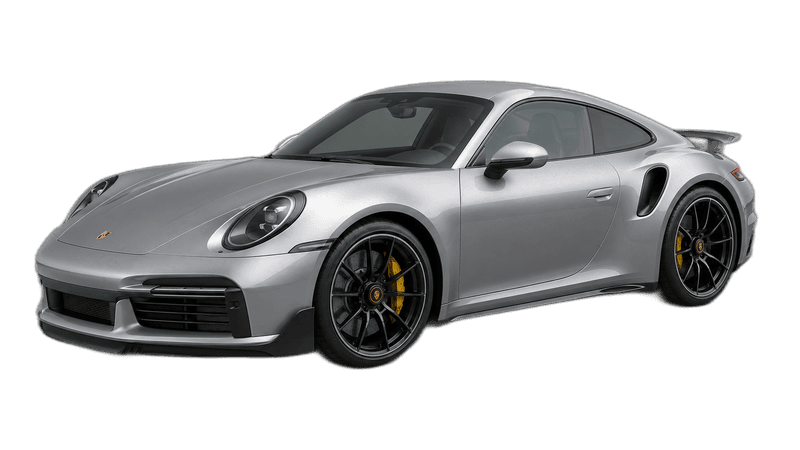
Porsche 911 Turbo S (992)
£195,000
usedIndicative market price, updated periodically.
641bhp
Power
2.7s
0-100 km/h
330km/h
Top Speed
£195,000
Price Used
How hard it pulls.
Peak g-force the instant you bury the throttle, estimated from the car's 0–100 time and drivetrain.
Porsche 911 Turbo S (992)Estimated peak launch g from the 0–100 time and drivetrain: an honest approximation, not a measured figure.
The Porsche 911 Turbo S (992) is a 2+2 coupe by Porsche, producing 641 bhp, and 800 Nm of torque, with a 0-100 km/h time of 2.7 seconds, and a top speed of 330 km/h, Valued at approximately £195,000.
Dream Car Garage Editorial · Last updated 24 October 2026
Overview
We have not driven this car. This review is based on published specifications, owner reports and market listings.
The case for the 992 Turbo S
The 992 Turbo S is the 911 for the owner who wants the quickest car in the room without the compromises of a GT car. It uses a 3.8-litre twin-turbo flat-six producing 640 bhp and 800 Nm, an eight-speed PDK and all-wheel drive. Porsche quotes 2.7 seconds to 100 km/h and a 330 km/h top speed. Those numbers are almost irrelevant on a public road, but the way the car delivers them is not. It is traction-limited rather than power-limited, so it can put its performance down in the wet, in winter and with two people and luggage on board.
The Turbo S is also the most grand-touring 911 in the range. The ride is firm but compliant, the seats are comfortable, the front boot is useful and the cabin is quiet at a cruise. It is a car you can drive to the Alps, cross a pass and drive home without feeling punished. That breadth is why the Turbo S has a loyal following and why good used examples sell quickly.
The trade-off is complexity. Active engine mounts, adaptive dampers, rear-axle steering, a front lift system, carbon-ceramic brakes and a sophisticated all-wheel-drive system all add cost when they fail. A cheap Turbo S is cheap for a reason. The best buying strategy is a well-optioned car with a complete history and a pre-purchase inspection by a Porsche specialist.
What it costs to run
Porsche's service schedule is based on time and mileage, with a minor service roughly every two years or 20,000 miles and a major service at longer intervals. Independent specialists typically charge £600 to £900 for a minor service and £1,500 to £2,200 for a major one. A main dealer will be more. Budget for an annual oil change if the car is used hard or stored for long periods.
Tyres are a significant cost. The Turbo S runs wide 20-inch front and 21-inch rear tyres, and a set of Michelin Pilot Sport 4S or Pirelli P Zero is typically £1,400 to £1,800 fitted. Rear tyres can wear out in 10,000 to 15,000 miles on a car that is driven enthusiastically. The carbon-ceramic brakes are standard on the Turbo S. They last a long time in normal use, but replacement discs and pads are £8,000 to £12,000 at a specialist. Check them carefully before buying.
PDK fluid and filter are due around every six years or 60,000 miles, at £500 to £700. Spark plugs are due on time as well as mileage, typically every four years, at £500 to £700. Insurance and road tax are high, and fuel consumption is typically 20 to 25 mpg on a run and the high teens in town. The Turbo S is not a cheap car to keep, even by 911 standards.
Known weak points
Coolant leaks from the heat exchanger and water pump area are the most common engine-bay complaint on the 992. Oil seepage around the timing chain covers is less common but expensive because of access. The active engine mounts can fail and cause a vibration or a warning message. The turbo wastegate actuators can develop a rattle, and the sport exhaust valves can seize, especially on cars used through winter.
The PDK is generally strong, but low-speed jerkiness and mechatronic faults are reported. A PDK service history matters. The front lift system can fail, leaving the nose low and the car unusable over speed bumps. The rear spoiler mechanism can stick or throw a warning. The all-wheel-drive transfer case and differentials are expensive if they fail, and uneven tyre wear can damage them. Check that all four tyres match and are within a few millimetres of each other.
Carbon-ceramic discs can chip or crack if the car has seen track use or if a wheel has been changed carelessly. They are not a consumable in the usual sense, but they are not indestructible. A brake measurement and a close look at the disc faces are essential.
What to check before buying
Begin with the service record. A full Porsche or specialist history is worth more than low mileage. Check the build sheet for options such as Sport Chrono, rear-axle steering, the front lift system, the sports exhaust, Burmester audio and the 18-way adaptive seats. These options matter at resale and they change the ownership experience.
Ask for a DME report. Even a PDK car records over-rev events, and a car that has been abused can have damage that is not obvious on a test drive. On a PDK car, check for smooth engagement from rest, no hesitation on downshifts and no warning messages. A Porsche specialist can read clutch wear and fault codes.
Look for coolant residue around the heat exchanger, oil mist on the timing covers and a sweet smell after a hot run. Check the active engine mounts for vibration at idle. Operate the front lift, the rear spoiler and the sports exhaust valves. Check every electrical function, including the cameras, driver aids and infotainment. Inspect the wheels for cracks and the tyres for uneven wear. A paint depth gauge will reveal poorly repaired bumper or wing damage.
Market and depreciation
The 992 Turbo S has depreciated from its new price, but it has held up better than most 200 mph cars. Early 2020 and 2021 cars with 20,000 to 40,000 miles were around £130,000 to £150,000 at the time of writing. Later, low-mileage cars with good specification were £150,000 to £180,000. The 992.2 facelift has put some pressure on the earliest cars, but the Turbo S remains the benchmark all-weather supercar.
Options affect value. A car with the front lift, rear-axle steering, Sport Chrono and a desirable colour will sell faster than a basic car. A high-mileage car with a patchy history can look cheap and then cost thousands to bring up to standard. The cheapest Turbo S is rarely the best value.
Expect further softening over the next two to three years, but not a collapse. The 911 Turbo has a large enthusiast base, and the 992 is still a modern car with modern safety and emissions equipment. If you buy a good one and keep it maintained, depreciation is likely to be gentler than a comparable McLaren or AMG GT.
Who it suits
The Turbo S suits the owner who wants one car for commuting, long trips and all-weather performance. It is comfortable enough for a daily driver, fast enough to be thrilling and practical enough to use in winter. It does not suit someone who wants a raw, analogue experience or a car they can maintain on a small budget. It also does not suit a buyer who wants a track car; the GT3 is lighter, more communicative and cheaper to run on consumables.
If you rarely use the rear seats and want more drama, a GT3 is the next step. If you want the same idea for less money, a 991.2 Turbo S is the obvious alternative. It is smaller, less digital and still devastatingly fast.
Alternatives
The Audi R8 V10 Performance is the closest rival. It has a naturally aspirated V10, a more exotic soundtrack and similar all-weather traction, but it is less practical and less discreet. The Mercedes-AMG GT R is more dramatic and rear-driven, but it is harsher and less usable in winter. The McLaren 720S is faster and more exotic, but running costs and reliability risk are higher.
The 991.2 Turbo S deserves a serious look. It has the same basic layout, a smaller body and a well-established reliability picture. A good one is now £90,000 to £120,000, which leaves room for maintenance. The 992 is the better daily driver; the 991.2 is the better value for a weekend car.
How this review was compiled
This review is based on Porsche's published technical and service information, owner reports from Rennlist and PCGB forums, UK specialist servicing guides and current Auto Trader listings. UK guide prices depend on spec, mileage and condition.
Specifications
Engine
3.7L twin-turbo flat-6 petrol
Displacement
3.7L
Power
641 bhp
Torque
800 Nm
0-100 km/h
2.7s
Top Speed
330 km/h
Drivetrain
AWD
Country
Germany
Body Style
2+2 coupe
Years
2020–present
Price Used
£195,000
Specifications are manufacturer-published figures.
More from Porsche


Featured in Carpedia
The Definitive Porsche 911 Buyer's Guide
From the 996 bargain bin to the 992 GT3 summit, every generation of the Porsche 911, what to pay, and what to watch for.
Porsche 911 Turbo S vs Nissan GT-R Nismo vs Audi R8 V10 Performance
The 911 Turbo S, the GT-R Nismo, and the R8 V10 Performance share all-wheel drive, supercar-rivalling performance, and a claim to be the most complete fast car you can buy. Their differences reveal three incompatible versions of what 'complete' means.
Frequently Asked Questions
What are the specifications of the Porsche 911 Turbo S (992)?
The Porsche 911 Turbo S (992) is a 2+2 coupe by Porsche, producing 641 bhp, and 800 Nm of torque, with a 0-100 km/h time of 2.7 seconds, and a top speed of 330 km/h, Valued at approximately £195,000.
How much does a Porsche 911 Turbo S (992) cost?
The Porsche 911 Turbo S (992) has a used market value of approximately £195,000.
Is the Porsche 911 Turbo S (992) AWD or RWD?
The Porsche 911 Turbo S (992) uses a AWD drivetrain configuration in a 2+2 coupe body style.
What type of car is the Porsche 911 Turbo S (992)?
The Porsche 911 Turbo S (992) is a sports cars manufactured by Porsche in Germany. Production started in 2020.