
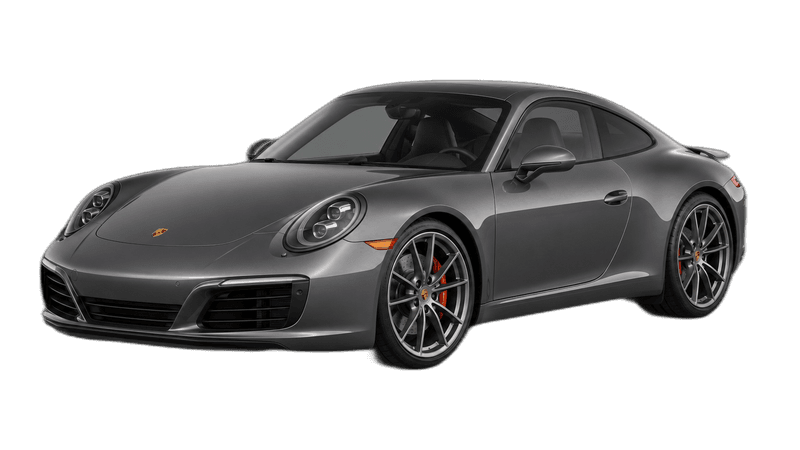
Porsche 911 Carrera S (991.2)
£75,000
usedIndicative market price, updated periodically.
414bhp
Power
308km/h
Top Speed
£75,000
Price Used
The Porsche 911 Carrera S (991.2) produces 414 bhp and has a top speed of 308 km/h. A representative example is worth about £75,000.
Dream Car Garage Editorial · Edited by José Teo Lorente Vallecillos · Last updated 25 October 2026
Overview
We have not driven this car. This review is based on published specifications and the sources listed below.
Turbocharged Carrera does not mean 911 Turbo
The facelifted 991.2 Carrera S introduced a 3.0-litre twin-turbocharged flat-six in place of the first-phase Carrera S's naturally aspirated 3.8-litre engine. Porsche announced the revised Carrera range in 2015. The use of turbocharging does not make this the separate 911 Turbo model, with its own engine, equipment and drivetrain specification. A useful advertisement and inspection must distinguish the actual derivative.
We have not driven this model for this article. This is a desk-researched guide to the configuration and ownership questions, not a personal measurement of boost response or economy. The case for the car is that particular later-Carrera package. Whether it offers the right controls, size and comfort for an owner cannot be decided from a universal claim that turbocharging improved or spoiled every aspect of the 911.
Identify the build and transmission
Confirm the VIN specification, build date and installed equipment. A registration around a model transition may not establish the engine generation, while wheels or lighting can be changed. The Carrera S offered a seven-speed manual or seven-speed PDK. Both are factory configurations, but they require different assessment and should be chosen for the interaction wanted rather than an unsupported forecast about which will retain value.
For a manual, check clutch engagement, selection and the driveline under appropriate conditions. For PDK, test cold and warm operation, reverse and gentle movement as well as ordinary acceleration. Investigate leaks, warnings or persistent abnormal shifts before payment. A proposed software update or fluid change is not proof of a lasting cure unless the underlying fault and applicable remedy have been established.
The turbo installation needs its own inspection
Review engine oil servicing, cooling work, ignition maintenance and any history of reduced power or warning messages. Have a suitable specialist assess the turbo installation, associated plumbing and evidence of oil or coolant leaks. A car that produces convincing acceleration during a short viewing is not thereby cleared of every control, cooling or lubrication problem.
Do not import an earlier Carrera's IMS retrofit checklist into this engine or declare it immune to all costly wear because the design changed. Ask which tests and inspections apply to the actual installation. Published owner accounts can identify questions without establishing a measured failure probability. The technician should explain what can be assessed without dismantling and any remaining uncertainty relevant to the purchase.
Ask specifically about engine software and exhaust changes. A tuning claim needs an identifiable installer and record of the present hardware and calibration. Replacing visible parts with original-looking components does not establish a standard operating history. Check insurance and local compliance, and distinguish a power printout from evidence that the complete car is durable, legal or suitable for repeated circuit use.
Cooling areas and air conditioning
Inspect cooling openings, radiators, condensers and accessible plumbing for debris, corrosion and impact damage. Review any recurring coolant loss and the diagnosis behind replacement parts. Topping up before a viewing does not establish a resolved fault. Ask whether a previous overheating episode was investigated and what subsequent checks support the seller's account.
Demonstrate heating and air conditioning through normal operation. A weak system may need more than refrigerant, and the scope should be established before it becomes a minor assumed deduction from the asking price. Body repairs near cooling equipment deserve records too. An attractive bumper and clean grille cannot show the condition of every concealed component behind them.
Verify rear steering and front lift
Porsche offered rear-axle steering as an option on the facelift Carrera S. It was not automatically fitted to every S, nor does a sporty wheel choice prove its presence. Confirm the build, operation and any relevant repair or calibration records. The same principle applies to the optional front-axle lift: demonstrate it if fitted and check the car's clearance at the intended garage.
PASM adaptive damping was standard in the revised Carrera range, while other chassis configurations and options need individual identification. Assess dampers, joints, alignment and warning history. A low ride height may reflect factory equipment or later changes. A comprehensive inspection describes what is installed and its condition rather than prescribing repairs to every system ever offered on the model.
Brakes, tyres and use history
Identify the brake package and obtain an appropriate assessment of wear and damage. Optional PCCB ceramic brakes need their own criteria and replacement estimate rather than a normal disc-price assumption. Check wheels, tyre specification, matching and age. All-wheel-drive Carrera 4S references should not be used as if they describe this rear-drive Carrera S or eliminate the importance of suitable tyres.
Ask about track days, preparation and incidents, with invoices where available. Low road mileage does not measure circuit workload, while honest documented track use can be easier to understand than an unexplained gap. Inspect the underside, aerodynamic parts and structural mounting areas for damage. A routine history search is useful but cannot certify every repair or every privately handled incident.
Cabin technology and everyday fit
The facelift introduced updated PCM and launch-era connectivity features. Demonstrate phone integration, navigation and any connected functions with the equipment available now. Original advertising is not a promise that subscriptions or remote services transfer unchanged across owners and countries. Check both keys, cameras, climate control, seats and windows rather than limiting the viewing to an engine start and a screen photograph.
Inspect for water entry and review any drainage or roof repairs appropriate to the actual body. Try parking, entry, rear-seat access and luggage loading in a realistic way. If a different body or driven-wheel layout is required, compare that derivative directly. The fact that all carry 911 badges does not make their passenger access, roof mechanisms or operating requirements interchangeable.
Costs, value and the purchase decision
Obtain written estimates for maintenance due, consumables, diagnosis and repairs, distinguishing optional systems from routine servicing. Include insurance, tax and access to a suitable workshop. Read warranty scope, exclusions and claim arrangements rather than assuming an attractive dealer description protects every component or modification.
Compare equivalent specification, transmission, history and condition, separating asking prices from transactions. The evidence here establishes neither a resale floor nor a guaranteed financial advantage over an unboosted Carrera. A 991.1 offers a different engine proposition; a 992 changes equipment and dimensions again. Choose the inspected car whose benefits justify its compromises and care costs without relying on appreciation.
How this review was compiled
Porsche's facelift announcement establishes the engine and optional equipment discussed here, with earlier-generation material used for comparison. No test drive, current transaction survey, invoice sample or measured reliability study was undertaken. The references provide context, not certification of an individual used example. Independently verify specification, maintenance and condition before purchase.
Specifications
| Engine | 3.0L (2981 cc) twin-turbocharged flat-6 |
|---|---|
| Displacement | 3.0L |
| Power | 414 bhp |
| Torque | 500 Nm |
| Top Speed | 308 km/h |
| Drivetrain | RWD |
| Country | Germany |
| Body Style | 2+2 coupe |
| Years | 2016–2019 |
| Price Used | £75,000 |
Specifications are manufacturer-published figures.
Frequently Asked Questions
What is a Porsche 911 Carrera S (991.2) worth?
A representative example is worth about £75,000. Actual values vary with specification, condition and history.
How much power does the Porsche 911 Carrera S (991.2) have?
The Porsche 911 Carrera S (991.2) produces 414 bhp and 500 Nm of torque.
What is the top speed of the Porsche 911 Carrera S (991.2)?
The Porsche 911 Carrera S (991.2) has a top speed of 308 km/h.
What engine does the Porsche 911 Carrera S (991.2) have?
The Porsche 911 Carrera S (991.2) uses a 3.0L (2981 cc) twin-turbocharged flat-6.
When was the Porsche 911 Carrera S (991.2) built?
The Porsche 911 Carrera S (991.2) was built from 2016 to 2019.
Is the Porsche 911 Carrera S (991.2) all-wheel drive?
No. The Porsche 911 Carrera S (991.2) is configured with rear-wheel drive.
More from Porsche
Featured in Carpedia
The Definitive Porsche 911 Buyer's Guide
From the 996 bargain bin to the 992 GT3 summit, every generation of the Porsche 911, what to pay, and what to watch for.
Best Sports Cars 2026
From the Dodge Challenger's American muscle to Porsche's precision-engineered 911, these are the ten sports cars of 2026 that deliver the most rewarding driving experiences.