
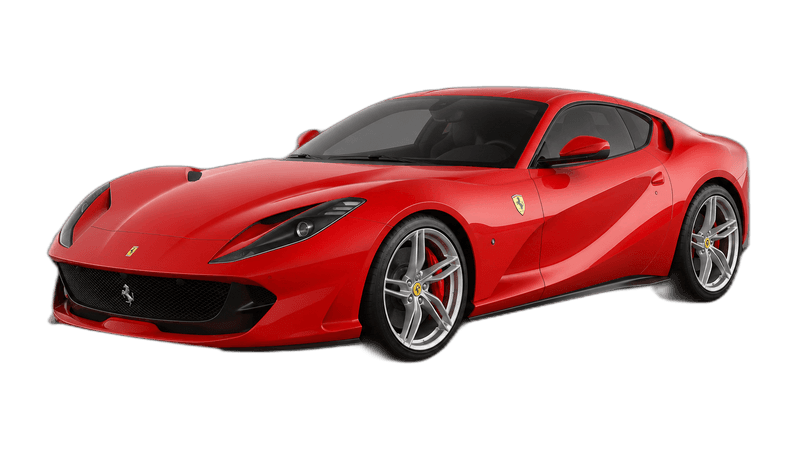
Ferrari 812 Superfast
£300,000
usedIndicative market price, updated periodically.
789bhp
Power
2.9s
0-100 km/h
340km/h
Top Speed
£300,000
Price Used
The Ferrari 812 Superfast produces 789 bhp, reaches 100 km/h in 2.9 seconds and has a top speed of 340 km/h. A representative example is worth about £300,000.
How hard it pulls.
Peak g-force the instant you bury the throttle, estimated from the car's 0–100 time and drivetrain.
Ferrari 812 SuperfastEstimated peak launch g from the 0–100 time and drivetrain: an honest approximation, not a measured figure.
Dream Car Garage Editorial · Edited by José Teo Lorente Vallecillos · Last updated 27 October 2026
Overview
We have not driven this car. This review is based on published specifications and the sources listed below.
The 800 PS front-engine V12 generation
The 812 Superfast was launched in 2017 with a 6.5-litre naturally aspirated V12 producing 800 PS, about 789 bhp, and 718 Nm. A seven-speed Magna dual-clutch transmission drives the rear wheels, with 0-100 km/h in 2.9 seconds and a top speed around 340 km/h. Ferrari introduced electric power steering here and integrated it with the car's rear-wheel steering and dynamic controls.
This is a desk-researched ownership guide. We have not driven this model for this article. Ferrari did not publish an official total production figure for the Superfast, so no global count is assigned. The individual engine, chassis, service history and factory options provide the meaningful evidence.
Oil, battery and powertrain diagnosis
Observe the engine cold and warm, with oil, coolant and visible hoses inspected. PistonHeads describes oil pooling on some pre-2020 cars associated with a warped solenoid-valve-holder cover, gaskets or related sealing work. That does not make every 812 suspect. It makes an undertray-off inspection and repair-record review worthwhile, particularly on earlier cars.
Battery and charging condition are central to a useful assessment. The 812 guide links weak batteries and charging leads with multiple electrical warnings and misleading symptoms. Ask when the battery was last replaced, which maintainer was used and whether charging cables are original and undamaged. A successful start after charging does not explain away a recurring warning.
Request diagnostic records and annual service invoices. Verify the remaining dates and transfer conditions of the seven-year maintenance package or later warranty. Modifications can affect warranty assessment, so exhaust, electronic or powertrain changes should be disclosed and documented.
Electric steering and four-wheel steering
The 812's electric power steering differs from the F12's hydraulic system. Evaluate assistance, warnings and steering response with Ferrari diagnostic equipment and a specialist road assessment. The rear-wheel steering system should be included rather than treated as an invisible background feature.
Adaptive dampers, the electronic differential and Side Slip Control 5.0 are part of the chassis package. Inspect dampers, suspension joints and underbody components, and compare measured geometry with tyre wear. Correct 20-inch wheel and tyre fitment should be confirmed on every corner.
A specialist should assess manettino and dynamic functions in an appropriate setting. A warning or inconsistent response needs diagnosis even if a restart temporarily clears it. Do not attempt to explore the limits of the electronic controls during an ordinary viewing.
Brakes, recall status and active diffuser
Carbon-ceramic brakes require measured disc and pad condition, fluid history and a check of visible hydraulic components. PistonHeads identifies a brake-fluid-reservoir-cap recall intended to preserve ventilation and avoid pressure problems. Confirm completion through the full VIN and Ferrari's recall process rather than assuming it was included in routine service.
The active rear diffuser and its mechanisms should be inspected for damage and correct operation. The guide notes painted diffuser alignment concerns on some cars built before spring 2019, so examine panel fit and ask for shimming or rectification records where relevant. Do not transfer that early-build observation automatically to every later car.
Inspect the front splitter, undertrays and rear bodywork for contact or poor repairs. Front lift and parking equipment should be tested where fitted. Replacement aero parts should be identified in the history.
Fuel sender, cabin controls and seating
PistonHeads describes fuel-sender readings that can overstate or understate the tank level, along with USB, charger, audio and camera faults. These are inspection prompts, not proof of a model-wide failure pattern. Test the fuel gauge behaviour, infotainment, charging ports, audio and cameras with the seller's permission.
A 15-minute BUS reset may clear some electronic symptoms, but a reset is not a repair record. Ask for the underlying diagnosis if warnings have recurred. Start-stop warnings should be investigated rather than disabled without explanation.
Check seat-lifter operation, headroom, bolster wear and rattles. Inspect the rear hatch and luggage cover, dashboard vents and switchgear. Seat comfort and adjustment are individual requirements, so sit in the car rather than relying on an option name.
Cold-start and electrical inspection should follow a consistent sequence. Note the battery's measured condition before startup, record any warnings without clearing them and check whether they return after the car reaches operating temperature. A restart may temporarily remove a message, but it does not explain its cause. Ask the specialist to compare stored faults with service invoices and recent battery work. If the car has been modified, establish exactly what changed before discussing warranty coverage with Ferrari. The goal is a documented diagnosis, not a promise that a charging cycle or reset will resolve every warning.
Service, provenance and independent assessment
The service file should connect maintenance, battery work, recall completion, warranty claims and any diffuser or oil-sealing repairs. Ask how the car was stored and what was done immediately before sale. A clean dashboard and recent detail are not substitutes for invoices.
An independent Ferrari specialist should inspect the engine, charging system, diagnostics, steering, underbody, brakes and records. The report should identify measured findings and anything that could not be tested. No unofficial production total is needed to establish this car's identity.
Sources and limitations
We have not driven this model for this article. Ferrari's official 812 Superfast page supplies the engine, steering and performance identity, while the PistonHeads 812 guide supplies the ownership and recall topics. Ferrari's recall page explains how to check open campaigns with the full 17-digit VIN. This guide makes no claim about transaction prices, future value or universal reliability. VIN-based campaign checks and an independent Ferrari inspection remain necessary.
Specifications
| Engine | 6.5L (6496 cc) naturally aspirated V12 |
|---|---|
| Displacement | 6.5L |
| Power | 789 bhp |
| Torque | 718 Nm |
| 0-100 km/h | 2.9s |
| Top Speed | 340 km/h |
| Drivetrain | RWD |
| Country | Italy |
| Body Style | 2-door coupe |
| Years | 2017–2022 |
| Price Used | £300,000 |
Specifications are manufacturer-published figures.
Frequently Asked Questions
What is a Ferrari 812 Superfast worth?
A representative example is worth about £300,000. Actual values vary with specification, condition and history.
How much power does the Ferrari 812 Superfast have?
The Ferrari 812 Superfast produces 789 bhp and 718 Nm of torque.
How fast is the Ferrari 812 Superfast from 0 to 100 km/h?
The Ferrari 812 Superfast accelerates from 0 to 100 km/h in 2.9 seconds.
What is the top speed of the Ferrari 812 Superfast?
The Ferrari 812 Superfast has a top speed of 340 km/h.
What engine does the Ferrari 812 Superfast have?
The Ferrari 812 Superfast uses a 6.5L (6496 cc) naturally aspirated V12.
When was the Ferrari 812 Superfast built?
The Ferrari 812 Superfast was built from 2017 to 2022.
Is the Ferrari 812 Superfast all-wheel drive?
No. The Ferrari 812 Superfast is configured with rear-wheel drive.
More from Ferrari
Featured in Carpedia
Best Supercars 2026
The supercar class of 2026 spans from a 875bhp hybrid Porsche to Lamborghini's fire-breathing V12. These are the ten machines that deliver the most visceral driving experiences this side of a hypercar.
Monza: The Temple of Speed
Autodromo Nazionale Monza has been defining outright speed since 1922. Its long straights reward horsepower above all else, yet its three chicanes and the Parabolica demand braking precision and mechanical balance. These are the fastest production cars ever recorded on the most storied circuit in motorsport.
What Cars Should I Put in My Dream Garage?
A comprehensive guide to building a dream garage at every budget. Five balanced 5-car garages, from under GBP 100K total to unlimited, each covering daily driving, weekends, track days, road trips, and special occasions.
The 10 Greatest V12 Engines Ever Made
A celebration of the twelve-cylinder engine, the most intoxicating configuration ever devised, and the ten units that defined it.
How Much Does a Dream Car Garage Cost?
A data-driven analysis of dream car costs using verified pricing from 600 performance and luxury cars. From the GBP 6,000 Mazda MX-5 NB to the GBP 6,000,000 Porsche 911 GT1, with price distributions, value picks, and hidden cost breakdowns.