
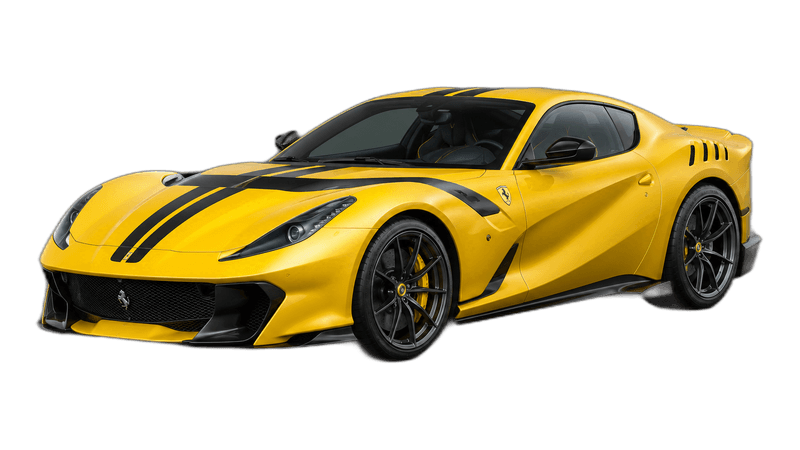
Ferrari 812 Competizione
£750,000
usedIndicative market price, updated periodically.
819bhp
Power
2.85s
0-100 km/h
340km/h
Top Speed
£750,000
Price Used
The Ferrari 812 Competizione produces 819 bhp, reaches 100 km/h in 2.85 seconds and has a top speed of 340 km/h. A representative example is worth about £750,000.
How hard it pulls.
Peak g-force the instant you bury the throttle, estimated from the car's 0–100 time and drivetrain.
Ferrari 812 CompetizioneEstimated peak launch g from the 0–100 time and drivetrain: an honest approximation, not a measured figure.
Dream Car Garage Editorial · Edited by José Teo Lorente Vallecillos · Last updated 27 October 2026
Overview
We have not driven this car. This review is based on published specifications and the sources listed below.
A 999-car development of the 812
The 812 Competizione was launched in 2021 with a 6.5-litre naturally aspirated V12 producing 830 PS, about 819 bhp, and 692 Nm. The engine reaches 9,500 rpm, with 0-100 km/h in 2.85 seconds and a top speed above 340 km/h. Ferrari built 999 coupes, a figure that must remain separate from the 599-car Competizione A allocation.
This is a desk-researched ownership guide. We have not driven this model for this article. The Competizione uses titanium connecting rods, revised internal components and a higher rev limit than the Superfast. Its independent four-wheel steering, PCV 3.0 and SSC 7.0 systems also require their own inspection context.
High-revving engine and service records
The engine should be observed cold and warm, with oil, coolant, intake and diagnostic checks. Revised pistons, lighter crankshaft components and titanium rods make it distinct from the earlier 812 engine. Do not transfer every early-812 ownership anecdote to this later model; inspect the actual engine and its records.
Ask for annual service invoices, software updates and any warning-related diagnosis. A high rev limit is not an invitation to assess the engine by an unsafe road demonstration. A Ferrari specialist should evaluate operating condition through appropriate diagnostics and inspection.
Battery and charging condition remain important because electrical symptoms can produce misleading warnings. Ask when the battery was replaced, which maintainer was used and whether any charging or electrical repairs are documented. Modifications should be disclosed and assessed against the remaining warranty.
Verify the actual dates and scope of the seven-year maintenance package or later coverage. A service-book stamp alone does not establish what remains active.
Independent four-wheel steering and chassis systems
The Competizione's independent rear-wheel steering and PCV 3.0 calibration differ from the Superfast. Have the steering systems, sensors and warnings checked with Ferrari diagnostic equipment. A specialist road evaluation should be planned rather than improvised during a viewing.
Inspect adaptive dampers, suspension joints and the underbody. Compare measured geometry with tyre wear, especially given the car's track-focused alignment and Cup 2 R fitment. Correct 20-inch wheels and tyre specification should be confirmed on every corner.
SSC 7.0 and the electronic differential are part of the model's identity. Their condition should be assessed through diagnostics and an appropriate specialist evaluation, not by attempting to reach their limits on a public road.
Where a Competizione has been driven on circuit, request the dates and the inspection performed afterwards. Check for heat-related marks, damaged aero and evidence of fluid changes without treating these as proof of a defect. The purpose is to connect use with maintenance, not to disqualify a car for being driven as intended.
Brakes, recall and aerodynamic bodywork
Carbon-ceramic brakes require measured disc and pad condition, fluid history and inspection of the visible hydraulic components. PistonHeads notes SF90-derived calipers for the Competizione and identifies a brake-fluid-reservoir-cap recall in the 812 family. Confirm VIN-specific campaign completion through Ferrari rather than assuming it applies or was completed.
The coupe replaces the conventional rear screen with vortex generators. Inspect this area, the active aero components, front splitter and undertrays for damage and correct fitting. Body or aero repairs should be documented, especially if the car has been used on circuit.
Front lift, cameras and parking equipment should be tested where fitted. Check wheel condition and ask for the reason behind any non-standard tyre or wheel fitment. Cosmetic photographs cannot establish the condition of the underbody.
Battery, cabin and delivered specification
Test the fuel gauge, USB connections, charging ports, audio, cameras and seat controls. Electrical symptoms should be diagnosed rather than cleared and forgotten. Inspect the charging lead and ask whether any warnings followed storage.
Seat-lifter operation, headroom and support should be assessed in person. Check bolsters, stitching, dashboard vents, luggage-area trim and rattles. Lightweight cabin materials and visible carbon parts should be matched to the factory record.
The coupe's wheels, seats, aero and cabin options should be linked to its build documentation. Later modifications and replacement parts need invoices and a clear distinction from original equipment. Original parts supplied with the car should be listed.
Circuit use and consumable history deserve specific attention on a Competizione. Request geometry reports, brake measurements, Cup 2 R tyre ages and any post-track inspections rather than relying on mileage alone. The lighter engine internals and higher rev limit do not remove ordinary lubrication and cooling checks, so ask whether oil and coolant service followed time as well as distance. Any replacement aero panel, wheel, exhaust component or electronic module should be listed separately from factory equipment. If the car has not been used on circuit, that is simply a fact about its history, not a reason to skip the same measurements.
Provenance within the 999-car allocation
A Ferrari specialist should inspect the engine, diagnostics, steering, brakes, underbody and service file. The report should state what was measured and what could not be accessed. Storage, circuit use and recent recommissioning need records where available.
The 999-car figure applies only to the coupe. Do not combine it with the 599 Apertas or treat it as a single global total for both body styles. The individual VIN, build record and condition remain more useful than a rarity statement.
Sources and limitations
We have not driven this model for this article. Ferrari's official 812 Competizione page supplies the engine, performance and chassis identity, while the PistonHeads 812 guide supplies the production and ownership evidence. Ferrari's recall page explains how to check open campaigns with the full 17-digit VIN. This guide makes no claim about transaction prices, future value or universal reliability. VIN-based campaign checks and an independent Ferrari inspection remain necessary.
Specifications
| Engine | 6.5L (6496 cc) naturally aspirated V12 |
|---|---|
| Displacement | 6.5L |
| Power | 819 bhp |
| Torque | 692 Nm |
| 0-100 km/h | 2.85s |
| Top Speed | 340 km/h |
| Drivetrain | RWD |
| Country | Italy |
| Body Style | 2-door coupe |
| Years | 2021–2023 |
| Production | 999 |
| Price Used | £750,000 |
Specifications are manufacturer-published figures.
Frequently Asked Questions
What is a Ferrari 812 Competizione worth?
A representative example is worth about £750,000. Actual values vary with specification, condition and history.
How much power does the Ferrari 812 Competizione have?
The Ferrari 812 Competizione produces 819 bhp and 692 Nm of torque.
How fast is the Ferrari 812 Competizione from 0 to 100 km/h?
The Ferrari 812 Competizione accelerates from 0 to 100 km/h in 2.85 seconds.
What is the top speed of the Ferrari 812 Competizione?
The Ferrari 812 Competizione has a top speed of 340 km/h.
What engine does the Ferrari 812 Competizione have?
The Ferrari 812 Competizione uses a 6.5L (6496 cc) naturally aspirated V12.
How many Ferrari 812 Competizione were made?
Ferrari produced 999 units of the Ferrari 812 Competizione.
When was the Ferrari 812 Competizione built?
The Ferrari 812 Competizione was built from 2021 to 2023.
Is the Ferrari 812 Competizione all-wheel drive?
No. The Ferrari 812 Competizione is configured with rear-wheel drive.
More from Ferrari
Featured in Carpedia
The 10 Greatest V12 Engines Ever Made
A celebration of the twelve-cylinder engine, the most intoxicating configuration ever devised, and the ten units that defined it.
Ferrari's Racing DNA: From Maranello to Le Mans
Enzo Ferrari sold road cars to fund racing. Seventy-five years later, that philosophy still defines every car that leaves Maranello.
What Your Dream Garage Says About You
The cars you choose when money is no object say everything about who you are, and nothing about what you drive.