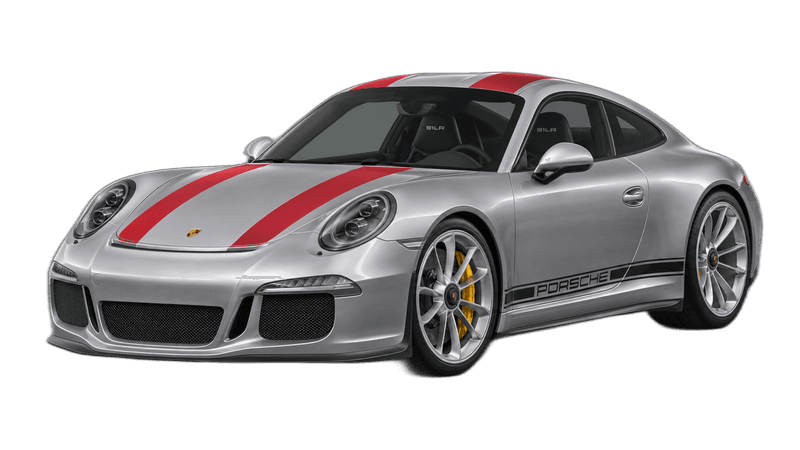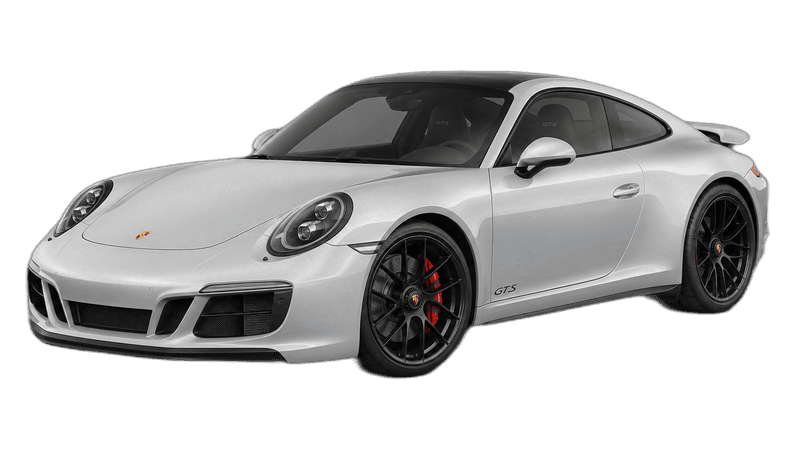
Porsche 911 Carrera GTS (991.2)
£95,000
usadoIndicative market price, updated periodically.
444cv
Potencia
3.7s
0-100 km/h
312km/h
Velocidad Máxima
£95,000
Precio Usado
The Porsche 911 Carrera GTS (991.2) produces 444 bhp, reaches 100 km/h in 3.7 seconds and has a top speed of 312 km/h. A representative example is worth about £95,000.
Cómo empuja.
La fuerza g máxima en el instante en que pisas a fondo, estimada a partir del 0–100 y la tracción del coche.
Porsche 911 Carrera GTS (991.2)G de salida estimada a partir del 0–100 y la tracción: una aproximación honesta, no una cifra medida.
Dream Car Garage Editorial · Edited by José Teo Lorente Vallecillos · Last updated 28 October 2026
Visión General
We have not driven this car. This review is based on published specifications and the sources listed below.
Turbocharged second-generation GTS
The 991.2 Carrera GTS introduced a 3.0-litre twin-turbo flat-six with 450 PS, approximately 444 bhp, and 550 Nm. This catalogue entry is the rear-wheel-drive coupe. The PDK version is quoted at 3.7 seconds to 100 km/h and the manual coupe at 312 km/h; do not use the faster Carrera 4 GTS acceleration as though it belonged to this rear-drive car.
We have not driven this model for this article. Official Porsche material establishes the specification. The PistonHeads 991.2 guide supplies broader Carrera ownership context, while Porsche's VIN service provides campaign checking. The independent guide often quotes the base Carrera, so its figures and fault reports must not be presented as GTS-specific evidence. No official model production total is assigned.
Wide body, PASM and centre-lock identity
The GTS combines the wider body with Sport Design details, sports exhaust, Alcantara trim and 20-inch centre-lock wheels. Coupe models use PASM sport suspension lowered by 10 mm. Verify the equipment through the build record rather than treating black wheels or a GTS decal as proof of the complete package.
Inspect the front splitter, wheels and underbody for contact and the dampers for leakage or previous replacement. If suspension parts have been changed, ask whether the original GTS calibration and ride height were retained. Centre-lock wheels need the correct service procedure and tools; record any damage or conversion rather than assuming all 991 wheels are interchangeable.
Twin-turbo engine and cooling history
Ask for oil and coolant service records, diagnostic results and a cold-to-warm inspection. PistonHeads mentions water-pump and thermostat replacements, plus an expansion-tank recall for false coolant warnings. These are reasons to check the individual cooling system and VIN, not proof that every GTS will lose coolant.
The guide also describes a workshop campaign involving the vacuum changeover-valve solenoid. Ask for evidence of applicable campaign and workshop work without confusing the two. Inspect for oil leaks and previous repairs, including any reports involving the sump or drain plug. Historic prices and isolated repair anecdotes do not establish current costs or a model-wide failure rate.
PDK or manual, with the correct evidence
For a PDK car, obtain fluid and filter history and ask about software, warning messages and even-gear behaviour. A specialist should assess normal shifts and stored information rather than relying on a dashboard that has recently been cleared. The manual car instead needs clutch and gear-selection assessment. Do not apply one transmission's checklist to the other.
Avoid repeated launch-control tests as a proxy for condition. Connect any circuit use with brake, tyre, fluid and alignment records. The GTS's performance is relevant to the maintenance questions, but the fact of hard use alone neither condemns nor validates a car. Invoices and measured condition provide the useful distinction.
Suspension, brakes and tyre wear
Inspect PASM operation, bushes, dampers and alignment. The buying guide discusses suspension noises and uneven rear tyre wear; those are prompts to measure the car rather than assume a GTS defect. Compare tyre age, N-rated specification and wear across both axles, and ask why previous sets were replaced.
Check whether the car has steel brakes or optional PCCB and inspect the fitted system accordingly. PistonHeads mentions steel-disc condition and squeal, but those reports do not justify describing every brake noise as a fracture. Measure discs and pads, review fluid history and obtain a current specialist estimate for any work identified.
Front lift, spoiler and electrical checks
If front lift is fitted, demonstrate it and ask about pump or hydraulic history. A working lift does not prove that the splitter has avoided earlier damage. Inspect the underside separately and list any removed undertrays or inaccessible areas in the report.
PistonHeads reports spurious rear-spoiler deployment, bump-triggered wipers and PCM reboots on some 991.2 cars. Demonstrate these systems and ask for software or repair history rather than treating the anecdotes as expected GTS behaviour. Check the steering-wheel controls, voice command, seatbelts, door trim, sunshade and dashboard tweeters for operation and rattles.
Service continuity and campaigns
Service invoices should connect scheduled maintenance with cooling-system work, PDK care, tyres, brakes and electrical repairs. Ask about air-conditioning performance and ventilated-seat wiring where fitted. The guide's bulletins and anecdotes are inspection prompts, not substitutes for a diagnosis on the actual chassis.
Enter the full VIN in Porsche's recall tool and retain confirmation of completed campaigns. The guide mentions fuel-bolt corrosion, coolant-warning and airbag-related campaigns; none establishes applicability to this car without a VIN check. A clear result also says nothing about the quality of unrelated maintenance.
Inspection limits and production uncertainty
An independent inspection should cover the engine, transmission, cooling system, centre-lock wheels, measured brakes, PASM and electrical equipment. Record whether a cold start, lift operation or undertray removal was possible. If not, arrange follow-up rather than treating the missing evidence as a pass.
Wheel and brake choices deserve a separate record. Confirm the centre-lock wheel specification, fastener condition and any torque or removal history from the specialist who performed the work. Identify steel or carbon-ceramic brakes before comparing measurements. Neither a wheel design nor a caliper colour proves the complete chassis specification. Retain invoices for tyres, alignment, brake work and any replacement fasteners, and ask whether the installed parts match the car's build record.
We have not driven this model for this article. No present valuation, future-return promise or universal failure rate is supplied. Production remains unset because an official total is not established. The GTS should be assessed through its own wide-body, turbocharged specification and documented condition, not through the base Carrera's figures or an inherited list of faults.
Especificaciones
| Motor | 3.0L (2981 cc) twin-turbo flat-six |
|---|---|
| Cilindrada | 3.0L |
| Potencia | 444 cv |
| Par Motor | 550 Nm |
| 0-100 km/h | 3.7s |
| Velocidad Máxima | 312 km/h |
| Tracción | RWD |
| País | Germany |
| Carrocería | 2-door coupe |
| Años | 2017–2019 |
| Precio Usado | £95,000 |
Specifications are manufacturer-published figures.
Preguntas Frecuentes
What is a Porsche 911 Carrera GTS (991.2) worth?
A representative example is worth about £95,000. Actual values vary with specification, condition and history.
How much power does the Porsche 911 Carrera GTS (991.2) have?
The Porsche 911 Carrera GTS (991.2) produces 444 bhp and 550 Nm of torque.
How fast is the Porsche 911 Carrera GTS (991.2) from 0 to 100 km/h?
The Porsche 911 Carrera GTS (991.2) accelerates from 0 to 100 km/h in 3.7 seconds.
What is the top speed of the Porsche 911 Carrera GTS (991.2)?
The Porsche 911 Carrera GTS (991.2) has a top speed of 312 km/h.
What engine does the Porsche 911 Carrera GTS (991.2) have?
The Porsche 911 Carrera GTS (991.2) uses a 3.0L (2981 cc) twin-turbo flat-six.
When was the Porsche 911 Carrera GTS (991.2) built?
The Porsche 911 Carrera GTS (991.2) was built from 2017 to 2019.
Is the Porsche 911 Carrera GTS (991.2) all-wheel drive?
No. The Porsche 911 Carrera GTS (991.2) is configured with rear-wheel drive.