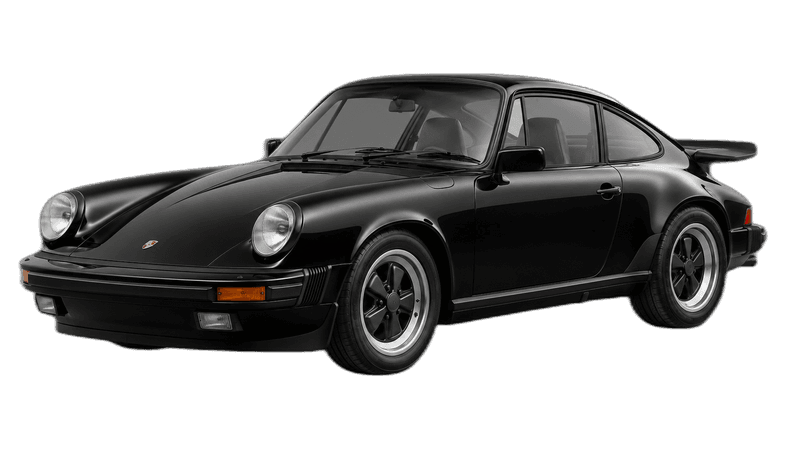
Porsche 911 Carrera 3.2
£75,000
usadoIndicative market price, updated periodically.
228cv
Potencia
6.1s
0-100 km/h
245km/h
Velocidad Máxima
£75,000
Precio Usado
The Porsche 911 Carrera 3.2 produces 228 bhp, reaches 100 km/h in 6.1 seconds and has a top speed of 245 km/h. A representative example is worth about £75,000.
Cómo empuja.
La fuerza g máxima en el instante en que pisas a fondo, estimada a partir del 0–100 y la tracción del coche.
Porsche 911 Carrera 3.2G de salida estimada a partir del 0–100 y la tracción: una aproximación honesta, no una cifra medida.
Dream Car Garage Editorial · Edited by José Teo Lorente Vallecillos · Last updated 25 October 2026
Visión General
We have not driven this car. This review is based on published specifications and the sources listed below.
A Carrera defined by its actual specification
The Carrera 3.2 replaced the SC for the 1984 model year, combining a larger air-cooled flat-six with Bosch Motronic electronic engine management. It should not be described as retaining the SC's K-Jetronic continuous injection. Original-market equipment and engine specifications vary, so confirm the build and installed unit before comparing output figures or applying advice from an overseas review.
We have not driven this model for this article. This is a desk-researched ownership guide, not an account of personally measured steering feel, economy or handling. Its appeal is a particular combination of classic 911 body, naturally aspirated engine and manual transmission. The car's present condition and setup decide whether that package works for the prospective owner more meaningfully than its historical reputation.
The gearbox change needs accurate identification
Earlier Carrera 3.2s use the five-speed 915, while the G50 arrived for the 1987 model year with a hydraulic clutch arrangement. A registration date alone may not establish the model year or original gearbox. Ask for build information and inspect the installed transmission, especially where replacement units or conversions are mentioned. The shift pattern or a seller's preference does not authenticate the installation.
A G50 is not automatically a better purchase than a sound 915 car. Have the actual clutch, linkage and transmission assessed cold and warm by someone familiar with the relevant unit. Persistent crunching or poor selection needs diagnosis rather than being dismissed as character. Compare the total condition and likely work, not a fixed premium supported only by an online rule of thumb.
Bodywork before cosmetic appeal
Inspect sills, inner rear sill structures, jacking points, floors, screen surrounds, battery areas and suspension mounting points. Galvanising does not prevent all corrosion after decades of use and repair. Ask what can be seen without dismantling and whether further access is warranted. Clean paint and intact underseal do not establish the condition of every concealed section.
Obtain restoration photographs showing the shell before paint, welding methods and how alignment was checked. A high restoration invoice is not a substitute for workmanship assessment. Repeated repainting or replacement panels require an explanation, but cosmetic work alone does not prove serious structural damage either. An informed inspection should distinguish presentation changes from issues affecting the shell's integrity.
Engine assessment without rebuild promises
Review oil servicing, valve-clearance maintenance, leak history and any internal engine work. Ask a specialist to assess head-stud condition and investigate oil use, smoke or poor running in the context of this engine. A broad statement that all three-litre or 3.2-litre engines have been fixed should not be accepted as diagnosis of the one for sale.
Compression or leak-down tests can contribute useful evidence when conducted and interpreted appropriately. They do not quantify every future failure or replace an assessment of operating behaviour and records. A rebuild invoice should identify what was inspected, repaired and reused. Fresh seals or a top-end job should not be represented as a complete engine rebuild without documentation supporting that scope.
Motronic, fuel supply and starting
Demonstrate a cold start, full warm-up and hot restart. Investigate unstable idle, hesitation and electrical interruptions through a coherent diagnostic process rather than replacing parts until the symptom disappears. Ask about engine-management, ignition and wiring changes. An aftermarket chip or exhaust does not establish increased usable performance, local compliance or long-term durability.
Inspect ageing fuel hoses, connections and associated equipment with appropriate expertise. Establish what has been renewed and whether the work used suitable components and routing. A car that has spent long periods in storage may need attention even at low mileage. Recommissioning should cover safe operation as a whole rather than only changing oil and fitting a new battery.
Chassis, brakes and wheels
Assess torsion-bar suspension, bushes, dampers, steering joints, bearings and alignment. A lowered stance can look attractive while creating clearance or geometry problems. Ask for installation and setup records where modifications have occurred. Tyre specification, age and matching matter alongside tread depth, particularly on a car that covers little distance and retains old tyres for appearance.
Inspect brakes, fluid history and the condition of pipes and hoses. An apparently powerful engine demonstration should not overshadow stopping and directional stability. If the car has attended circuits, request preparation, consumable and incident records. Track use is not automatically disqualifying, but low road mileage does not describe the stresses of repeated sessions or reveal whether subsequent checks were performed.
Choose the body for real journeys
Coupe, Targa and Cabriolet offer different access, weather sealing and roof requirements. Check the removable Targa panel and seals or demonstrate the Cabriolet roof as appropriate. Inspect cabin moisture, ventilation, heating and any air conditioning. Missing equipment or failed climate functions should be priced before purchase rather than dismissed because the car is an enthusiast model.
Try seating, visibility and luggage loading with the people and items you expect to carry. Small rear seats do not make every Carrera a suitable family car. Confirm the quality of any seat, audio or electrical changes and whether the insurer accepts them. Original equipment may interest collectors without being the most practical configuration for every owner.
Build the budget from evidence
Request separate quotations for servicing due, diagnosed engine work, structural repairs and cosmetic improvements. This article has no current workshop-price survey establishing one annual maintenance figure. Include tyres, insurance, storage and specialist transport. A price difference between two cars cannot be judged without knowing the scope of the work each needs and the parts actually available.
Compare the same body, specification, history and condition when reviewing advertisements. Asking prices are not transactions, and no gearbox guarantees appreciation or a quick sale. A later 964 offers power steering, ABS and a different suspension package, while an SC offers another engine-management arrangement. Choose the Carrera 3.2 because its inspected configuration suits the intended use, not an assumed financial hierarchy.
How this review was compiled
Published generation history and buying guidance inform the specification and inspection distinctions. No road test, measured reliability study or live valuation survey was undertaken. The links are further reading, not authentication of a particular example. Establish the model year, gearbox, structural condition and engine evidence independently before committing to a car advertised mainly through reputation.
Especificaciones
| Motor | 3.2L naturally aspirated flat-six petrol |
|---|---|
| Cilindrada | 3.2L |
| Potencia | 228 cv |
| Par Motor | 284 Nm |
| 0-100 km/h | 6.1s |
| Velocidad Máxima | 245 km/h |
| Tracción | RWD |
| País | Germany |
| Carrocería | 2 seater convertible/cabriolet |
| Años | 1984–1989 |
| Precio Usado | £75,000 |
Specifications are manufacturer-published figures.
Preguntas Frecuentes
What is a Porsche 911 Carrera 3.2 worth?
A representative example is worth about £75,000. Actual values vary with specification, condition and history.
How much power does the Porsche 911 Carrera 3.2 have?
The Porsche 911 Carrera 3.2 produces 228 bhp and 284 Nm of torque.
How fast is the Porsche 911 Carrera 3.2 from 0 to 100 km/h?
The Porsche 911 Carrera 3.2 accelerates from 0 to 100 km/h in 6.1 seconds.
What is the top speed of the Porsche 911 Carrera 3.2?
The Porsche 911 Carrera 3.2 has a top speed of 245 km/h.
What engine does the Porsche 911 Carrera 3.2 have?
The Porsche 911 Carrera 3.2 uses a 3.2L naturally aspirated flat-six petrol.
When was the Porsche 911 Carrera 3.2 built?
The Porsche 911 Carrera 3.2 was built from 1984 to 1989.
Is the Porsche 911 Carrera 3.2 all-wheel drive?
No. The Porsche 911 Carrera 3.2 is configured with rear-wheel drive.