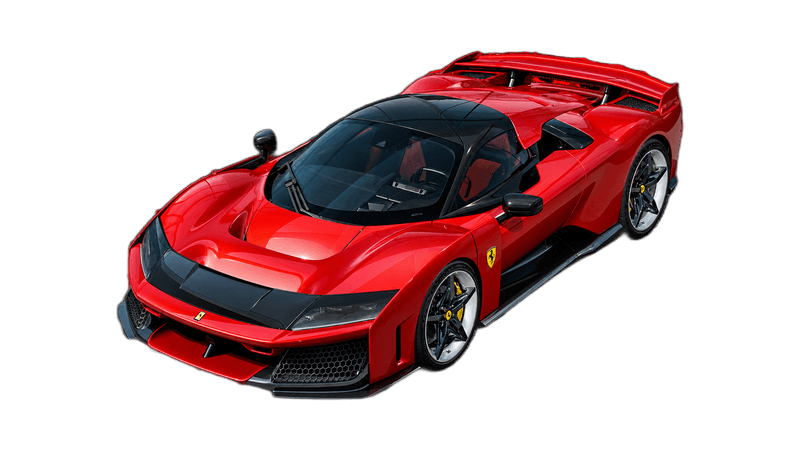
Ferrari F80
1184cv
Potencia
2.15s
0-100 km/h
350km/h
Velocidad Máxima
The Ferrari F80 produces 1184 bhp, reaches 100 km/h in 2.15 seconds and has a top speed of 350 km/h.
Cómo empuja.
La fuerza g máxima en el instante en que pisas a fondo, estimada a partir del 0–100 y la tracción del coche.
Ferrari F80G de salida estimada a partir del 0–100 y la tracción: una aproximación honesta, no una cifra medida.
Dream Car Garage Editorial · Edited by José Teo Lorente Vallecillos · Last updated 28 October 2026
Visión General
We have not driven this car. This review is based on published specifications and the sources listed below.
Ferrari's 799-car hybrid supercar
The F80 is the limited-series Ferrari that followed the LaFerrari into the marque's flagship line. Ferrari quotes a combined 1200 PS, about 1184 bhp, from a 3.0-litre 120-degree twin-turbo V6 and a hybrid system that includes an electric front axle. The petrol engine alone produces 900 PS, or 300 PS per litre, while the electric machines contribute up to 300 PS. Ferrari built 799 examples.
This is a desk-researched ownership guide. We have not driven this model for this article. The F80 is a recent limited-run car with factory-controlled servicing and a small population, so published long-term failure patterns do not exist. The useful evidence is the individual car's build specification, storage history, diagnostic record and the quality of any specialist inspection.
How the hybrid system works
Ferrari describes the F80's architecture as a derivation of the 499P endurance racing programme, adapted to an 800-volt road-car system. The electric front axle provides all-wheel drive and torque control, while a motor-generator unit on the engine contributes to the combined output. An electric turbocharger places a motor between the turbine and compressor to reduce lag and manage boost.
That complexity changes what a pre-purchase inspection should cover. A conventional engine check is not enough. The high-voltage battery, its cooling circuit, the front e-axle, the inverter and the DC-to-DC converter all need diagnostic attention. Ask for stored fault histories rather than a dashboard photograph. A car that has been stored for months may show no warning until the systems are loaded, so the inspection should include a drive cycle and a charging check under factory procedures.
The V6 itself still deserves a cold start, an oil and coolant inspection and a review of boost behaviour. Listen for abnormal mechanical noise and compare the warm running condition with the cold start. Recent software updates, sensor replacements and cooling-system work should be documented with invoices and diagnostic reports.
Active aerodynamics and the carbon chassis
Ferrari quotes around 1000 kg of downforce at 250 km/h, with the model page citing 1050 kg. The package includes an S-Duct, a triplane front wing, an active rear wing and a diffuser that extends across the full width of the car. The active suspension, aero surfaces and brake cooling are coordinated, so a fault in one system can change the behaviour of another.
Inspect the front and rear underbody with the trays removed. Look for contact damage, repaired carbon fibre, missing fasteners and non-standard parts. Operate the active wing through its range where the diagnostic procedure allows, and listen for abnormal actuator noise. A wing that moves is not necessarily calibrated correctly, so the inspection report should include fault codes and live data.
The chassis uses a carbon-fibre safety cell with aluminium front and rear subframes and titanium fasteners. Accident repair on this structure is a factory-level task. Ask for photographs of any repair, the identity of the repairing facility and the parts invoices. Paint thickness readings and panel-gap checks can support the story, but they do not replace a structural inspection.
Carbon-ceramic brakes and tyre condition
The F80 uses Brembo CCM-R Plus carbon-ceramic brakes. Ferrari says the discs use longer carbon fibres, deliver 100 percent greater mechanical strength and 300 percent greater thermal conductivity than its previous material, and carry a silicon-carbide coating. Those claims describe the hardware, not the condition of a used car.
Ask for disc and pad measurements, brake fluid history and evidence of correct bedding. A low-mileage car can still have brake discs with surface damage from disuse or incorrect cleaning. Check the calipers, lines and parking brake mechanism. If the car has been used on circuit, request the post-event inspection and any fluid changes.
Tyres deserve particular attention because age matters as much as tread. Confirm the date codes, the exact specification and whether the car has been stored on its tyres under load. Ferrari's published tyre fitment should be compared with what is actually on the car. A mixed set or an unapproved compound is a reason to ask questions, not automatically a reason to walk away.
Cabin, storage and limited-run provenance
The F80 has a central driving position with a passenger seat set slightly further back. Ferrari returned physical controls to the steering wheel and included a 24-hour bag behind the seats. Check the seat adjustment, the screen functions, the climate system, the cameras and the charging points. Trim and carbon finishes should match the factory build record.
Storage is a major issue for a limited-run hybrid. Ask how the car was kept, whether the high-voltage battery was maintained according to factory guidance and what work was carried out before it returned to the road. A recent detail and a fresh service stamp do not prove that the battery, brakes and tyres are in good order.
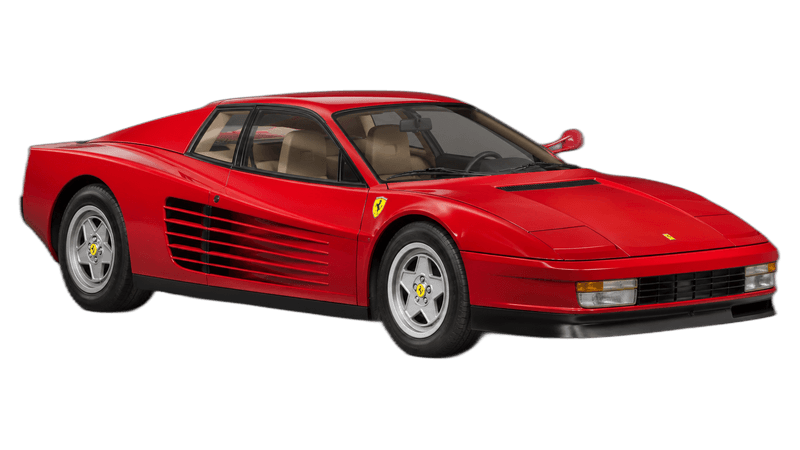
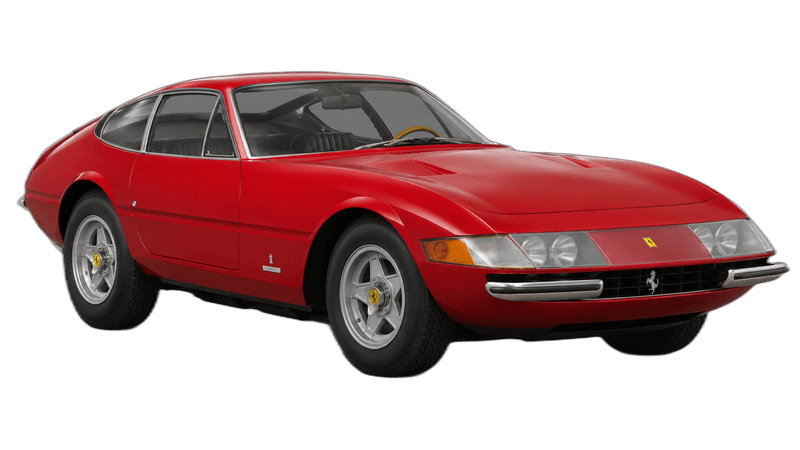
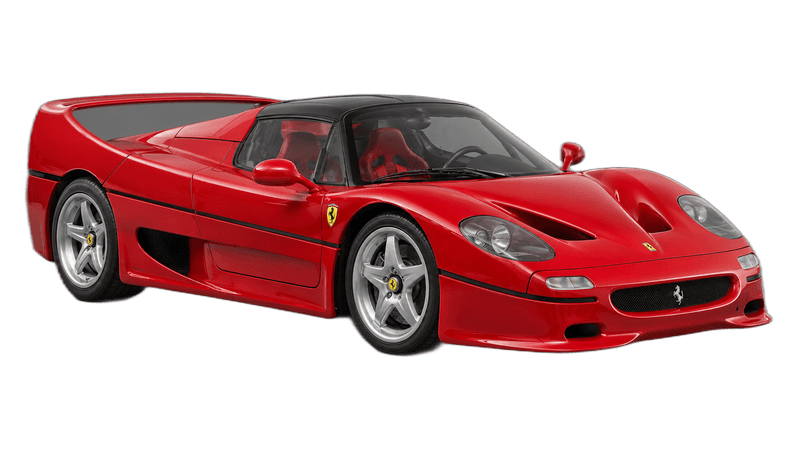
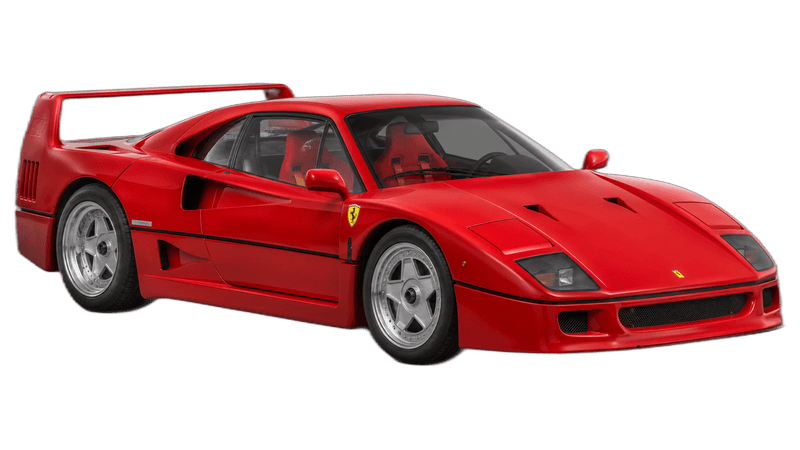
The 799-car production figure is part of the model's identity, not a substitute for provenance. Confirm the VIN, the original delivery specification, the factory options and the service history. Ask whether the car has been to a Ferrari-approved body shop and whether any cosmetic work was recorded. Keep the F80 separate from earlier Ferrari flagship models when discussing production.
Inspection and ownership planning
Arrange an inspection by a Ferrari specialist with access to factory diagnostics, a lift and the complete service file. The report should cover the engine, high-voltage system, e-axle, cooling, brakes, tyres, aero, suspension, structure and electrical functions. It should identify what could not be tested and what evidence is missing.
Ask the seller for a cold-start demonstration, a full diagnostic scan and a history of warranty claims. Confirm that any recall or campaign work has been completed against the VIN. Insurance, storage and factory support should be arranged before purchase, not after the car arrives.
This guide makes no claim about transaction prices, future values or universal reliability. A limited-run Ferrari is bought on documented condition and expert advice, and the F80 is no exception.
Sources and limitations
Ferrari's official F80 model page supplies the powertrain, aerodynamic and brake details, while the corporate launch article supplies the production count and chassis information. Ferrari's technology article provides additional context for the hybrid system. The guide is a desk-researched ownership framework, not a road test or a guarantee of reliability. A factory-trained inspection and VIN-based campaign check remain necessary.
Especificaciones
| Motor | 3.0 L twin-turbocharged V6 hybrid |
|---|---|
| Cilindrada | 3.0L |
| Potencia | 1184 cv |
| 0-100 km/h | 2.15s |
| Velocidad Máxima | 350 km/h |
| Tracción | AWD |
| País | Italy |
| Carrocería | 2-door coupé |
| Años | 2025–present |
| Producción | 799 |
Specifications are manufacturer-published figures.
Preguntas Frecuentes
How much power does the Ferrari F80 have?
The Ferrari F80 produces 1184 bhp.
How fast is the Ferrari F80 from 0 to 100 km/h?
The Ferrari F80 accelerates from 0 to 100 km/h in 2.15 seconds.
What is the top speed of the Ferrari F80?
The Ferrari F80 has a top speed of 350 km/h.
What engine does the Ferrari F80 have?
The Ferrari F80 uses a 3.0 L twin-turbocharged V6 hybrid.
How many Ferrari F80 were made?
Ferrari produced 799 units of the Ferrari F80.
When was the Ferrari F80 built?
Production of the Ferrari F80 began in 2025.
Is the Ferrari F80 all-wheel drive?
Yes. The Ferrari F80 is configured with all-wheel drive.