
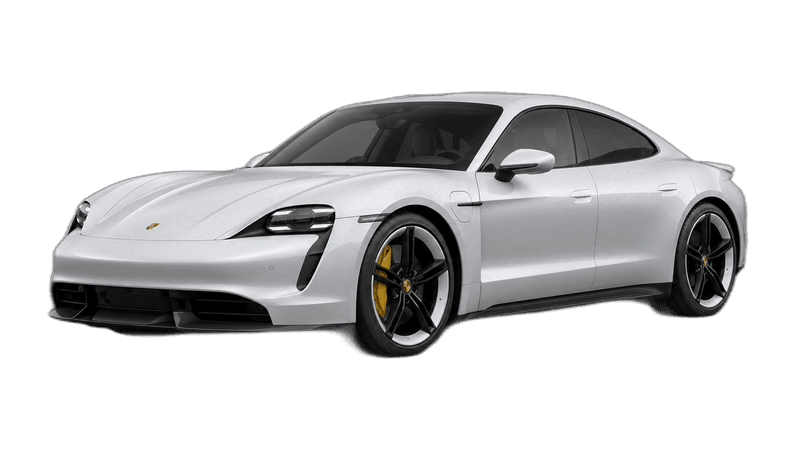
Porsche Taycan Turbo S
£100,000
usedIndicative market price, updated periodically.
750bhp
Power
2.8s
0-100 km/h
260km/h
Top Speed
£100,000
Price Used
How hard it pulls.
Peak g-force the instant you bury the throttle, estimated from the car's 0–100 time and drivetrain.
Porsche Taycan Turbo SEstimated peak launch g from the 0–100 time and drivetrain: an honest approximation, not a measured figure.
The Porsche Taycan Turbo S is a five-door fastback sedan by Porsche, producing 750 bhp, and 1110 Nm of torque, with a 0-100 km/h time of 2.8 seconds, and a top speed of 260 km/h, Valued at approximately £100,000.
Dream Car Garage Editorial · Last updated 23 October 2026
Overview
We have not driven this car. This review is based on published specifications, owner reports and market listings.
The electric Porsche
The Taycan Turbo S arrived in 2019 as Porsche's first production electric car. It uses two motors, a two-speed rear gearbox and a 93.4 kWh battery pack. With launch control, it produces 750 bhp and accelerates from 0 to 62 mph in 2.8 seconds. It is a genuine super-saloon.
The Taycan is not just fast in a straight line. It has a low centre of gravity, a sophisticated chassis and steering that feels more like a Porsche than an electric car. The cabin is beautifully made, and the car is comfortable on a long journey. It is one of the best electric cars to drive, even if it is not the most efficient.
The Turbo S is the top of the range, with more power, bigger brakes and more standard equipment. It is also the most expensive to buy and to insure. The used market has softened dramatically, which makes it an interesting proposition if you can live with the running costs and the charging network.
Running costs
Porsche recommends a service every two years or 20,000 miles. A minor service is £400 to £700, and a major service with brake fluid and filters is £700 to £1,000. The Taycan has fewer moving parts than a combustion car, but it still needs tyres, brakes, coolant and suspension work.
Tyres are expensive because the car is heavy and has large wheels. A set of premium 21-inch tyres is £1,200 to £1,500. The Turbo S comes with carbon-ceramic brakes as standard in most markets. They last a long time on the road because regenerative braking does most of the work, but they are expensive to replace and the discs can corrode if the car is not used regularly. Check for cracks and wear; a replacement set can cost £8,000 to £12,000.
Charging costs depend on your tariff. A home charge is much cheaper than public rapid charging. The Taycan can charge at up to 270 kW on a suitable charger, but the real-world range is around 250 to 280 miles in mixed driving. In winter, it drops. Insurance is high, and road tax is based on the electric car rules.
Battery and charging
The battery is the most expensive component in the car. Porsche warrants it for eight years or 100,000 miles, whichever comes first, and it should retain at least 70% of its capacity. Ask for a battery health report before buying. A dealer can read the state of health and the number of fast-charge cycles.
Check that the car charges on AC and DC, and that the charging port and cable are in good condition. The optional 150 kW DC charger and the 22 kW AC charger are desirable. A car that has been used mostly for rapid charging may have more battery degradation, but the Taycan's thermal management is good.
The 12-volt battery is a known weak point. A failing 12-volt battery can cause a cascade of warning messages and leave the car stranded. Check the age of the battery and look for recent replacement. A trickle charger is a good idea if the car is not used regularly.
Known weak points
The Taycan has had several recalls and technical campaigns. Check the VIN with a Porsche dealer to see whether all recalls have been completed. The most serious was a battery fire risk on some early cars, which required a software update or a battery replacement. There have also been updates for the 12-volt system, the PCM and the air suspension.
The air suspension can leak or fail, especially on cars used on rough roads. A car that sits unevenly or takes a long time to rise has a problem. The adaptive dampers can also leak. The suspension is expensive to repair, so a pre-purchase inspection is essential.
The PCM infotainment system can be slow or buggy. Check the screen, the navigation, the Apple CarPlay and the driver assistance systems. The Taycan has a lot of software, and some owners report glitches after updates. A software update can fix many issues, but not all.
The carbon-ceramic discs can corrode if the car is washed and stored without being driven. Surface rust is normal after a wash, but deep pitting is not. A car that has been sitting for months may need new discs.
Buying checklist
Ask for the full service history and the battery health report. Check that the car has been charged regularly and that the 12-volt battery is healthy. A car with a recent battery replacement or a software update is preferable. Check the recalls with a Porsche dealer.
Inspect the air suspension from cold. Start the car and watch it rise; it should be smooth and quick. Check the ride height at each corner and listen for a compressor noise. Test the adaptive dampers in all modes. Check the brakes for corrosion and the tyres for even wear.
Test the charging system on both AC and DC if possible. Check the charging port for damage and the cable for wear. Test the PCM, the climate control, the seats and the driver assistance systems. A car with a lot of optional equipment is more desirable, but it is also more complex.
A pre-purchase inspection by a Porsche specialist is essential. The Taycan is a complex electric car, and a diagnostic scan can reveal faults that are not obvious on a test drive. Ask for a battery health report and a suspension inspection.
Market and depreciation
The Taycan Turbo S has depreciated heavily. Cars that cost £140,000 or more when new were trading at £70,000 to £90,000 for 2020 and 2021 examples at the time of writing. Later, low-mileage cars with good specification were £90,000 to £110,000. The Turbo S is the fastest depreciating model in the range.
The depreciation is the main reason to buy used. The first owner has taken a huge hit, and the car is still a modern electric super-saloon. A car with a warranty, a good battery health report and a full history is the safest buy. Avoid cars with accident damage, suspension problems or a patchy charging history.
The Taycan is likely to depreciate further as new electric cars arrive, but the Turbo S has a strong following. The best examples may stabilise in a few years. It is not an investment, but it is a lot of car for the money.
Who it suits
The Taycan Turbo S suits someone who wants a fast, comfortable electric car with a premium interior and a genuine Porsche chassis. It is good for commuting, long journeys and the occasional track day. It does not suit someone who wants a cheap-to-run car, a manual gearbox or a car that can be repaired anywhere.
If you want a more efficient electric car, the standard Taycan or the Taycan 4S is the better choice. If you want more range, the newer Taycan facelift is improved. If you want a more practical electric car, the Audi e-tron GT is the same platform with a different body.
Alternatives
The Audi e-tron GT is the closest relative. It shares the platform and the battery, but it is more comfortable and less sporty. The Tesla Model S Plaid is faster and has more range, but it is less refined and has a smaller dealer network. The Mercedes-AMG EQS is more luxurious, but it is heavier and less engaging.
The Porsche Panamera is the combustion alternative. It is more practical, has a hatchback and a similar chassis, but it is not electric. The Taycan is the best-driving electric car in its class, and the Turbo S is the most dramatic version.
How this review was compiled
This review is based on Porsche's published technical and service information, owner reports from TaycanForum and Rennlist, UK specialist servicing guides and current Auto Trader listings. Guide prices only; specification and mileage can shift them.
Specifications
Engine
electric
Power
750 bhp
Torque
1110 Nm
0-100 km/h
2.8s
Top Speed
260 km/h
Drivetrain
AWD
Country
Germany
Body Style
five-door fastback sedan
Years
2019–present
Price Used
£100,000
Specifications are manufacturer-published figures.
More from Porsche


Featured in Carpedia
Best GT Cars 2026
From the 939bhp Porsche Taycan Turbo S to the blood-and-thunder TVR Cerbera Speed 12, these are the ten GT cars that make every journey an occasion.
The Ultimate Dream Garage 2026
If money were no object and the garage had ten bays, which cars would you choose? Our editorial team has done the hard work, selecting one champion from each category to assemble the definitive Dream Garage of 2026.
Frequently Asked Questions
What are the specifications of the Porsche Taycan Turbo S?
The Porsche Taycan Turbo S is a five-door fastback sedan by Porsche, producing 750 bhp, and 1110 Nm of torque, with a 0-100 km/h time of 2.8 seconds, and a top speed of 260 km/h, Valued at approximately £100,000.
How much does a Porsche Taycan Turbo S cost?
The Porsche Taycan Turbo S has a used market value of approximately £100,000.
Is the Porsche Taycan Turbo S AWD or RWD?
The Porsche Taycan Turbo S uses a AWD drivetrain configuration in a five-door fastback sedan body style.
What type of car is the Porsche Taycan Turbo S?
The Porsche Taycan Turbo S is a hyper gts manufactured by Porsche in Germany. Production started in 2019.