
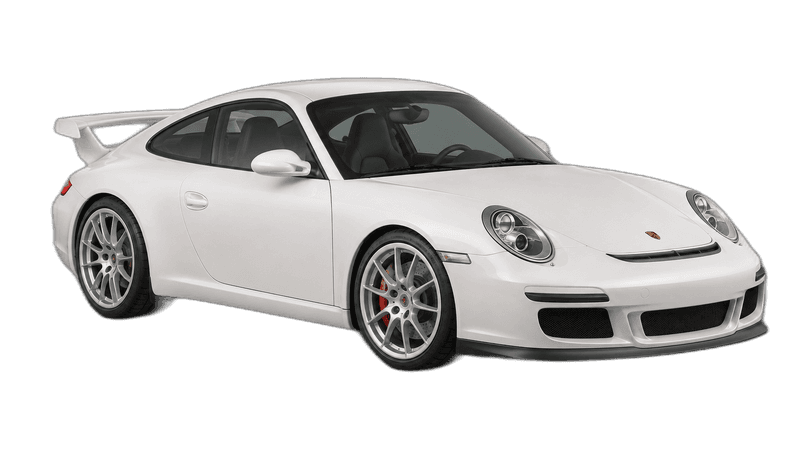
Porsche 911 GT3 (997)
£95,000
usedIndicative market price, updated periodically.
£95,000
Price Used
The Porsche 911 GT3 (997) is a 2-door coupe by Porsche, Valued at approximately £95,000.
Dream Car Garage Editorial · Last updated 26 October 2026
Overview
We have not driven this car. This review is based on published specifications, owner reports and market listings.
Two phases under one name
The 997 GT3 covers the 2006 to 2012 period, but it is not one uniform specification. The early 997.1 uses a 3.6-litre naturally aspirated flat-six rated at 415 PS. The later 997.2, introduced for 2009, uses a 3.8-litre engine rated at 435 PS. Both are motorsport-derived engines and both are paired with a six-speed manual gearbox. There is no PDK in this generation, despite the later GT3's move to a dual-clutch transmission.
This is a desk-researched ownership guide. We have not driven this model for this article. The 997 GT3 is appealing because it combines a relatively compact 911 body with a high-revving engine, a mechanical limited-slip differential and a chassis that was developed for track use without abandoning road manners. The exact experience depends on the condition of the individual car, its alignment, tyres and any modifications.
The later 3.8 uses an intake manifold rather than the direct-injection 9A1 architecture fitted to the contemporary Carrera. That distinction matters when a seller describes the car simply as a later engine. It is still a different engine from the 991 generation, and it has its own inspection requirements. Do not apply Carrera direct-injection advice to either 997 GT3 without confirming the actual hardware.
Engine and transmission
Start with the build record and identify the installed engine. The 997.1's 3.6 revs to 8400 rpm and produces its peak power high in the range. The 997.2's 3.8 produces more torque and power, but it retains the naturally aspirated character and a high redline. A replacement engine is not automatically a reason to walk away, but its specification, source and installation need to be documented.
Ask for a cold start and a proper warm-up. Listen for chain, camshaft or valvetrain noise, and inspect for oil and coolant leaks. Check the exhaust for smoke and the cooling system for evidence of overheating or recent repairs. A compression or leak-down test can add information, but it should be interpreted by someone who knows the engine family. Oil analysis is useful only when the sample and history are known.
The six-speed manual is the only transmission. Check clutch take-up, pedal feel, gear selection when cold and synchromesh behaviour. A high-performance clutch can be heavier than a Carrera unit, but a slipping or juddering clutch still needs diagnosis. Inspect the mechanical limited-slip differential and confirm the correct lubricant. The gearbox and differential are expensive to rebuild, so a specialist assessment is worthwhile.
Over-rev data can be read from the engine management on many cars. Ask for the report and for an explanation of the ranges and hours recorded. The data is evidence of how the engine has been used, not proof that it is healthy or that a future failure will not occur. A recent rebuild should have its own documentation, including the reason for the work and the parts replaced.
Chassis, steering and mounts
The 997 GT3 uses a more focused suspension specification than the Carrera, with PASM adaptive dampers on the early car and a similar performance brief on the later version. Inspect the dampers for leaks and noise, the springs for correct fitment, and the top mounts for cracking. Worn lower arm bushes and rear top mounts can affect stability and tyre wear. A car that feels imprecise may need suspension work rather than a different tyre.
Check the steering rack, tie rods and column for play or leaks. The 997 has hydraulic steering, which gives a different feel from later electromechanical systems, but that does not make every example equally healthy. Ask for an alignment report and establish whether the current settings are intended for road or track use. An aggressive camber setting can improve track response while increasing tyre wear on the road.
The optional front-axle lift system, where fitted, should be operated through its full range. Listen for pump noise and inspect for leaks or damaged lines. A car that has been lowered or fitted with aftermarket suspension may have limited clearance even with the lift raised. Check the front splitter and underbody for scrape damage, but do not treat cosmetic scraping as proof of structural damage.
Inspect the engine and gearbox mounts, particularly if the car has been used on track. The optional dynamic engine mount system on the later car should be checked for leaks and warning messages. A failed mount can cause movement, noise and handling changes. Standard mounts also age, so include them in the inspection rather than focusing only on the engine.
Brakes, wheels and tyres
The 997.1 GT3 uses five-stud wheels, while the 997.2 moved to centre-lock wheels. Confirm the fitment and the correct torque procedure. Centre locks are not a convenience feature to be treated casually: incorrect tightening can damage the wheel or hub. Inspect the wheels for cracks, repairs and corrosion, and check the tyres for matching specification and manufacturing dates.
Iron brakes were standard, with PCCB carbon-ceramic brakes available as an option. Identify what is fitted before discussing maintenance. Carbon-ceramic discs need a careful wear and damage assessment, including edge condition and any sign of impact. Iron discs are simpler to replace but still need correct pads, fluid and cooling. A car that has seen track use may have modified ducts, pads or fluid, so ask for the relevant records.
Check the brake lines, hoses, master cylinder and handbrake mechanism. Look for uneven pad wear, which can indicate a sticking caliper or a problem with the hydraulic system. Fresh brake fluid is not proof that the system has been correctly maintained. If the car has been stored for long periods, inspect the discs and calipers for corrosion and inactivity.
Body, aero and cabin
The 997 GT3 has a deeper front bumper, a fixed rear wing and a wider rear body than the Carrera. The 997.2 car uses a single-stage rear wing, while the RS versions use a larger carbon wing. Check the panels and mounting points for accident repair, and inspect the front boot area for creases. The radiators and condensers are exposed at the front, so look for stone damage, corrosion and blocked airflow.
The GT3 is a two-seater with no rear seats. Check the rear compartment for evidence of a cage, harnesses or aftermarket audio, and confirm that any installation is safe and reversible. The early car was available with air conditioning and audio as standard equipment, while the Clubsport package added a roll cage, seats, harnesses and other track-oriented items. Verify the actual specification rather than assuming every car is a lightweight special.
Inspect the seats, steering wheel, trim and carpets. A car with bucket seats and a cage may be less comfortable on the road, while a Comfort-spec car may be easier to live with. Neither is automatically better. Check the windows, locks, wipers, lights, heater and ventilation. Water leaks and electrical faults can be expensive to trace, especially on a car that has been stored outside or used on track.
Track use and records
Track use leaves specific marks on a 997 GT3. Inspect the front radiators and condensers for stone damage, the splitter and bumper for scrapes, and the wheel arches for tyre debris. The manual gearbox makes clutch and synchromesh wear more relevant than PDK service records. Ask for event records as context, not proof of mechanical care.
The over-rev report, service invoices and MOT or equivalent records should be read together. Compare the mileage and dates for inconsistencies. A car with a recent engine rebuild may still need suspension, brakes and tyres, while a car with a clean engine report may have tired dampers and bushes. Build a complete picture rather than buying one impressive document.
Modified 997 GT3s are common. A centre-lock conversion on a 997.1, or a five-stud conversion on a 997.2, needs the correct hubs, bearings and brake clearance. Exhaust, suspension and engine software changes should be declared and reversible. Ask for the original parts and a geometry report before treating the car as standard.
Decide on the actual car
Compare the 997.1 and 997.2 on the specification you actually want. The later car offers more power, centre-lock wheels and a different aero package, but it is not automatically the better ownership proposition. The early car has a simpler five-stud wheel arrangement and a slightly different engine character. Condition, history and maintenance matter more than the difference in brochure output.
The 997.1 and 997.2 are not interchangeable on value. The later car's centre locks, larger engine and aero are offset by different maintenance needs. Compare like-for-like specification and documented history, and budget for a clutch, dampers or gearbox work even if the asking price already reflects them. No future value is assumed here.
How this review was compiled
Porsche's 997 GT3 model history, a PistonHeads 997 GT3 buying guide and a 9WERKS 997.1 GT3 guide inform the specification and inspection points. No test drive, failure-rate study, current transaction survey or workshop quotation survey was undertaken. The links are further reading, not certification of an advertised car. Have the actual engine, transmission, structure and suspension assessed together before purchase.
Specifications
Engine
3.6L (997.1) / 3.8L (997.2) naturally aspirated Mezger flat-6
Drivetrain
RWD
Country
Germany
Body Style
2-door coupe
Years
2006–2012
Price Used
£95,000
Specifications are manufacturer-published figures.
More from Porsche


Featured in Carpedia
Frequently Asked Questions
What are the specifications of the Porsche 911 GT3 (997)?
The Porsche 911 GT3 (997) is a 2-door coupe by Porsche, Valued at approximately £95,000.
How much does a Porsche 911 GT3 (997) cost?
The Porsche 911 GT3 (997) has a used market value of approximately £95,000.
Is the Porsche 911 GT3 (997) AWD or RWD?
The Porsche 911 GT3 (997) uses a RWD drivetrain configuration in a 2-door coupe body style.
What type of car is the Porsche 911 GT3 (997)?
The Porsche 911 GT3 (997) is a track focused manufactured by Porsche in Germany. Production ran from 2006 to 2012.