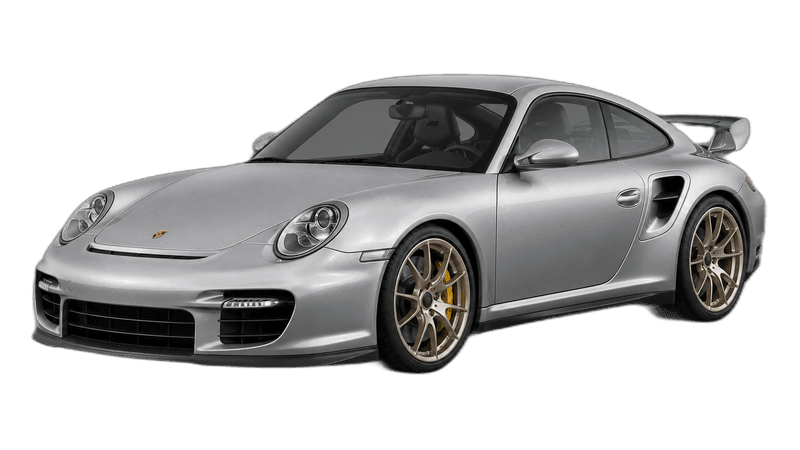
Porsche 911 GT2 RS (997)
£300,000
usedIndicative market price, updated periodically.
611bhp
Power
3.5s
0-100 km/h
330km/h
Top Speed
£300,000
Price Used
The Porsche 911 GT2 RS (997) produces 611 bhp, reaches 100 km/h in 3.5 seconds and has a top speed of 330 km/h. A representative example is worth about £300,000.
How hard it pulls.
Peak g-force the instant you bury the throttle, estimated from the car's 0–100 time and drivetrain.
Porsche 911 GT2 RS (997)Estimated peak launch g from the 0–100 time and drivetrain: an honest approximation, not a measured figure.
Dream Car Garage Editorial · Edited by José Teo Lorente Vallecillos · Last updated 27 October 2026
Overview
We have not driven this car. This review is based on published specifications and the sources listed below.
A distinct end point for the 997 GT2 line
Porsche's 997 history identifies the GT2 RS as a development of the twin-turbocharged 3.6-litre engine producing 620 PS, about 611 bhp. The contemporary technical description lists 700 Nm, rear-wheel drive and a six-speed manual transmission. Production was limited to 500 cars. Unlike the later PDK-only GT2 RS, this generation gives the driver a manual gearbox and a clutch to consider during inspection.
This is a desk-researched ownership guide. We have not driven this model for this article. The limited production run means broad reliability claims would be poorly supported. The useful approach is to document the individual car, verify its equipment and have a GT specialist inspect its mechanical and structural condition.
Verify the engine and any performance changes
The 3.6-litre engine uses variable turbine geometry and belongs to a different ownership context from the ordinary 997 Carrera. Do not apply Carrera engine concerns automatically, and do not treat the GT2 RS as a standard Turbo with a different rear wing. Its output, drivetrain and factory equipment require model-specific assessment.
Ask for the factory option list, engine identity and software history. Increased boost, exhaust changes or other tuning should be disclosed with invoices and the name of the workshop. A seller's comparison with another limited model does not document the modification. Standard equipment may be preferable to some buyers, but originality alone is not proof of mechanical condition.
Check oil and coolant condition, visible leaks and stored faults through specialist diagnostics. Any smoke, abnormal noise or inconsistent running needs diagnosis rather than reassurance based on rarity.
Manual gearbox, clutch and flywheel
The technical material describes a single-mass flywheel and a six-speed manual transmission. Inspect for documented clutch or gearbox work and have a specialist assess engagement, shifting and any abnormal noise. A generic statement that the gearbox feels strong is not a condition report.
Previous circuit use may form part of the car's intended life, but it should be disclosed with the inspections and maintenance that followed. Ask about alignment settings, consumable replacements and whether any components were changed afterwards. Do not equate track history automatically with damage, or road-only claims with careful use.
The original parts accompanying a modified car matter. If exhaust, wheels, suspension or interior components were changed, establish whether the factory items are present and correctly identified.
Carbon panels and aero equipment
The GT2 RS uses lightweight body components, prominent aerodynamic additions and centre-lock wheels. Inspect carbon-fibre-reinforced panels for cracks, poor repairs and evidence of contact. Front and rear aero parts should be complete and correctly mounted. Replacement pieces need provenance and an explanation.
Underbody inspection is important because low bodywork can conceal damage that is not visible in listing photographs. Fasteners, trays and jack points should be checked. Evidence of a repaint should prompt questions about the underlying repair rather than an assumption that it was cosmetic.
Centre-lock wheels require correct tools and procedures. A specialist should inspect the wheels and locking hardware rather than relying on a roadside visual check.
PCCB and Clubsport specification
PCCB ceramic brakes were standard. Inspect discs and calipers for damage and obtain a measured condition assessment where the specialist considers it necessary. Surface appearance alone cannot establish the remaining condition of the braking system.
Clubsport equipment was standard in many markets, with the technical material noting a different situation for the United States. Verify the roll cage, harnesses, extinguisher and related equipment against the actual market and build sheet. Do not describe every car as having an identical Clubsport configuration.
A cage or harness that has been removed and refitted needs documentation. Check that safety equipment is complete and that any changes did not damage surrounding trim or structure.
The wheels and tyres deserve their own assessment. Confirm the centre-lock wheels are correct for the car, inspect them for damage and check tyre specification, production dates and condition. Old tyres can undermine a car that otherwise presents well, and mismatched wheels should prompt a provenance question. Brake fluid and flexible lines should be checked as part of the hydraulic system rather than treated as consumables that need no record.
Limited evidence calls for better records
A 500-car production run does not support confident claims about how often a fault occurs. Public discussion can identify questions to ask, but it cannot establish a rate. Service invoices, diagnostic reports and an expert inspection carry more weight than a reputation repeated across listings.
Confirm the VIN, production details and campaign status through appropriate Porsche channels. Check that maintenance is continuous enough to explain storage and use. Rare components and model-specific procedures make the choice of inspector especially important.
Storage history matters as much as mileage. Ask whether the car was run regularly, how it was stored and what was done before it was offered for sale. A recent major service is useful only when the invoice lists the work and the parts. Check that the engine, gearbox and safety equipment still match the build record, and treat any missing original component as a point that needs a documented explanation rather than an assumption.
How this review was compiled
We have not driven this model for this article. Porsche's 997 history confirms the 620 RS output. StuttCars' reproduction of the technical description supplies the manual transmission, production run, brake and Clubsport details; conflicting summary-table figures elsewhere on that page are not used. The guide makes no claim about common failures, transaction prices or future value. A VIN-based record check and GT-specialist inspection remain necessary.
Specifications
| Engine | 3.6L (3600 cc) twin-turbocharged flat-6 |
|---|---|
| Displacement | 3.6L |
| Power | 611 bhp |
| Torque | 700 Nm |
| 0-100 km/h | 3.5s |
| Top Speed | 330 km/h |
| Drivetrain | RWD |
| Country | Germany |
| Body Style | 2-door coupe |
| Years | 2010–2011 |
| Production | 500 |
| Price Used | £300,000 |
Specifications are manufacturer-published figures.
Frequently Asked Questions
What is a Porsche 911 GT2 RS (997) worth?
A representative example is worth about £300,000. Actual values vary with specification, condition and history.
How much power does the Porsche 911 GT2 RS (997) have?
The Porsche 911 GT2 RS (997) produces 611 bhp and 700 Nm of torque.
How fast is the Porsche 911 GT2 RS (997) from 0 to 100 km/h?
The Porsche 911 GT2 RS (997) accelerates from 0 to 100 km/h in 3.5 seconds.
What is the top speed of the Porsche 911 GT2 RS (997)?
The Porsche 911 GT2 RS (997) has a top speed of 330 km/h.
What engine does the Porsche 911 GT2 RS (997) have?
The Porsche 911 GT2 RS (997) uses a 3.6L (3600 cc) twin-turbocharged flat-6.
How many Porsche 911 GT2 RS (997) were made?
Porsche produced 500 units of the Porsche 911 GT2 RS (997).
When was the Porsche 911 GT2 RS (997) built?
The Porsche 911 GT2 RS (997) was built from 2010 to 2011.
Is the Porsche 911 GT2 RS (997) all-wheel drive?
No. The Porsche 911 GT2 RS (997) is configured with rear-wheel drive.