
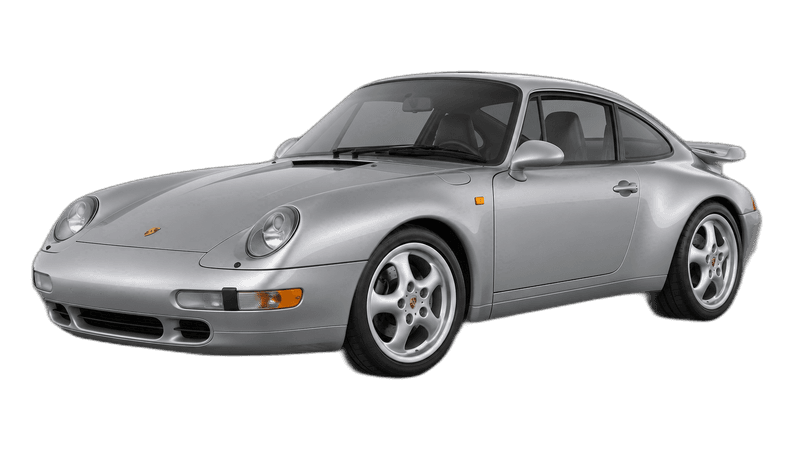
Porsche 911 Carrera (993)
£85,000
usedIndicative market price, updated periodically.
268bhp
Power
5.6s
0-100 km/h
270km/h
Top Speed
£85,000
Price Used
How hard it pulls.
Peak g-force the instant you bury the throttle, estimated from the car's 0–100 time and drivetrain.
Porsche 911 Carrera (993)Estimated peak launch g from the 0–100 time and drivetrain: an honest approximation, not a measured figure.
The Porsche 911 Carrera (993) is a 2+2 coupe by Porsche, producing 268 bhp, and 330 Nm of torque, with a 0-100 km/h time of 5.6 seconds, and a top speed of 270 km/h, Valued at approximately £85,000.
Dream Car Garage Editorial · Last updated 25 October 2026
Overview
We have not driven this car. This review is based on published specifications, owner reports and market listings.
The last air-cooled generation is not one specification
The 993 represents the final air-cooled 911 generation and introduced a new multi-link rear suspension layout. Those are meaningful historical distinctions, not a guarantee of reliability, handling safety or future prices. A buyer still needs to establish the actual car's engine, driven wheels, transmission and body before applying an inspection checklist or comparing it with another advertisement.
We have not driven this model for this article. This desk-researched guide examines ownership implications rather than claiming our own experience of ride or steering. The 993 may appeal as a later interpretation of the air-cooled layout, but its condition after decades of maintenance and modification can matter more than the reputation earned by new examples in period tests.
Identify the engine and gearbox
The naturally aspirated Carrera uses a 3.6-litre flat-six, with intake and specification changes during production. Later Varioram equipment should not be attributed automatically to every early car. Confirm model year and installed components, particularly after engine replacement or modification. Registration date and a convenient power figure in a listing may not establish the actual configuration.
Manual cars use a six-speed transmission, while Tiptronic is a four-speed automatic with a different operating and inspection brief. Try the actual choice cold and warm. A manual requires clutch and selection assessment; an automatic requires its own diagnosis of abnormal shifts or warnings. Do not apply later PDK maintenance advice or promise that a fluid change will cure an unidentified fault.
Carrera, Carrera 4 and wide-body distinctions
Rear-wheel-drive and Carrera 4 versions differ, and wide-body Carrera S and Carrera 4S equipment should be identified separately. Not every wide-body 993 has the same brake system, and a wide body does not make a naturally aspirated car a Turbo. Obtain the VIN build and assess what is fitted now rather than relying on appearance or a seller's general family description.
Any conversion needs records explaining bodywork, mechanical changes and approval or insurance implications. A documented alteration may suit its owner without becoming a different original factory derivative. Factory history can authenticate the production specification but does not certify later repairs. Match the inspection and comparable vehicles to the actual car, including whether original components remain available.
Engine evidence and inspection
Review oil servicing, leakage, cooling-related equipment and any top-end or internal engine repairs. Air cooling does not mean there are no oil lines, fans or thermal-management systems to maintain. Ask a model-experienced specialist to investigate smoke, oil use, poor running and unusual noise rather than prescribing a rebuild merely because the car has reached an arbitrary mileage.
On a Varioram car, the variable-length intake and its vacuum-operated controls form part of the inspection. Ask the technician to identify the installation and investigate damaged hoses or poor operation rather than treating the later intake as a maintenance-free power upgrade. Its presence is a specification distinction, not evidence that an otherwise tired engine is healthier than a well-maintained earlier unit.
Suspension and tyres deserve the same attention
The rear multi-link arrangement is a generation change, not a reason to ignore worn bushes, links, dampers or alignment. Have the installed suspension assessed and investigate uneven tyre wear or instability. A seller's claim that the later chassis solved every old 911 handling issue should not replace physical diagnosis, correct tyres and a sensible driving assessment.
Check wheel condition, tyre age, fitment and matching. Modifications to ride height, wheel size or suspension require a coherent setup, not simply a list of expensive parts. Ask who installed and aligned the car and for what use. Returning it to original geometry may involve more work than removing one visible accessory, so obtain estimates before treating reversal as trivial.
Shell and roof choices
Inspect screen surrounds, sills, floors, structural attachment areas and previous welding or collision repairs. Galvanised construction does not make every surviving shell corrosion-free. Ask for photographs before cosmetic finishing and have workmanship assessed appropriately. An attractive exterior and a clear history report do not rule out privately funded repairs or concealed deterioration.
The 993 Targa uses a sliding glass-roof concept rather than the removable panel associated with earlier Targas. Demonstrate its operation and inspect seals, drainage and cabin moisture. A Cabriolet has separate fabric-roof requirements, while a coupe needs its own seal and any sunroof checks. A generic roof inspection cannot establish the condition of every body version.
Equipment and daily usability
Test climate control, ventilation, windows, locks, instruments and spoiler operation. A period cabin can be acceptable without modern connectivity, but advertised functions should work. Check the quality of audio, alarm or tracking installations and investigate recurring battery drain. A recent battery replacement may conceal an unresolved electrical cause rather than constitute a complete repair.
Try access, seat adjustment and luggage loading with the intended users. Small rear seats do not establish suitability for every household. If touring is planned, consider the support route away from home and what recovery cover actually includes. A low-mileage car also needs evidence of time-based maintenance and appropriate storage rather than an assumption that inactivity preserves all components.
Costs, values and alternative choices
The dry-sump lubrication system requires the correct model-specific oil-level checking procedure. Have the specialist demonstrate it using the handbook rather than judging the level from a cold reading and adding oil indiscriminately. Inspect exhaust and heat-exchanger condition too, particularly where a sports system has replaced original equipment. Price the actual faults found, including any effect on cabin heating or local emissions requirements, rather than assuming one annual service allowance covers everything.
Compare equivalent bodies, transmissions, specification and documented condition, separating asking prices from completed sales. Being the final air-cooled generation does not guarantee appreciation or reimburse running costs. A 964 offers different equipment and chassis questions; a 996 changes to water cooling and its own inspection requirements. Choose the actual inspected package rather than an assumed collector hierarchy.
How this review was compiled
Porsche's generation history establishes the main engineering changes, while the linked buying guide provides additional model context. No road test, live transaction survey or measured failure-rate study was undertaken. The references are further reading, not certification of a used vehicle. Independently verify the version, repair history and present condition before relying on the appeal of a final-generation label.
Specifications
Engine
3.6L flat-6 naturally aspirated petrol
Displacement
3.6L
Power
268 bhp
Torque
330 Nm
0-100 km/h
5.6s
Top Speed
270 km/h
Drivetrain
RWD
Country
Germany
Body Style
2+2 coupe
Years
1994–1998
Price Used
£85,000
Specifications are manufacturer-published figures.
More from Porsche


Featured in Carpedia
Frequently Asked Questions
What are the specifications of the Porsche 911 Carrera (993)?
The Porsche 911 Carrera (993) is a 2+2 coupe by Porsche, producing 268 bhp, and 330 Nm of torque, with a 0-100 km/h time of 5.6 seconds, and a top speed of 270 km/h, Valued at approximately £85,000.
How much does a Porsche 911 Carrera (993) cost?
The Porsche 911 Carrera (993) has a used market value of approximately £85,000.
Is the Porsche 911 Carrera (993) AWD or RWD?
The Porsche 911 Carrera (993) uses a RWD drivetrain configuration in a 2+2 coupe body style.
What type of car is the Porsche 911 Carrera (993)?
The Porsche 911 Carrera (993) is a sports cars manufactured by Porsche in Germany. Production ran from 1994 to 1998.