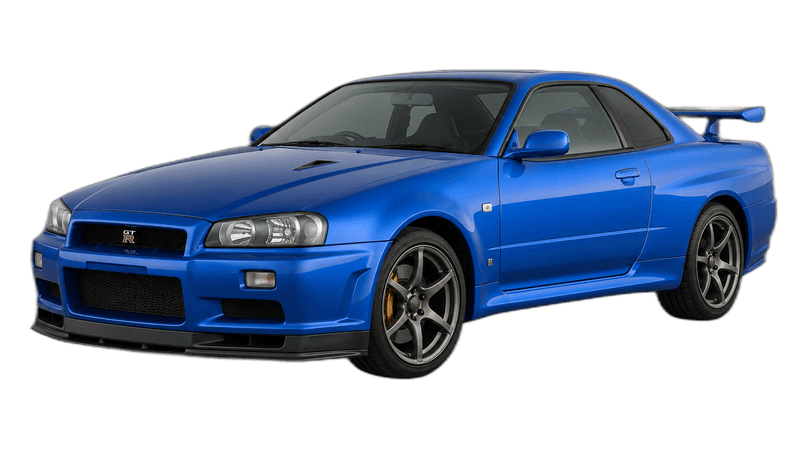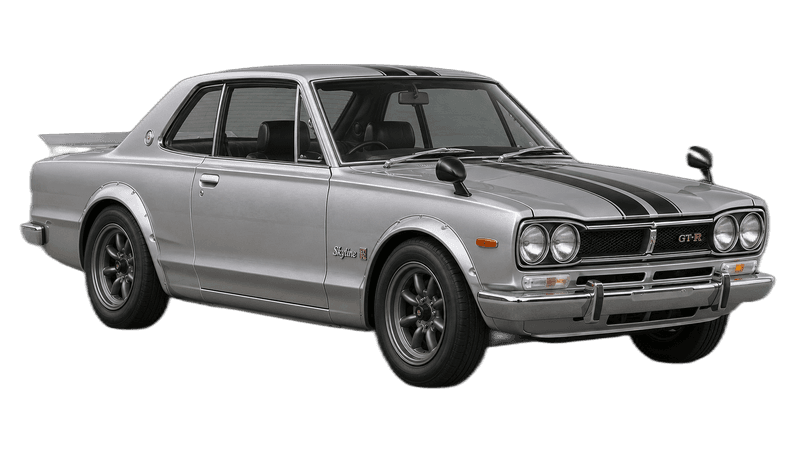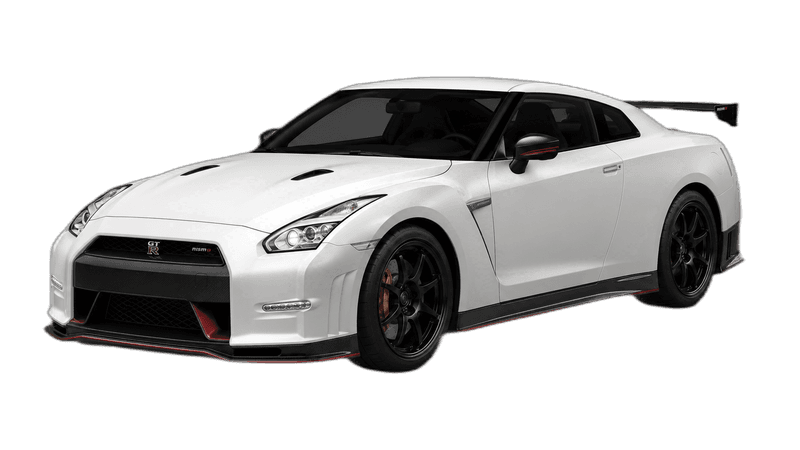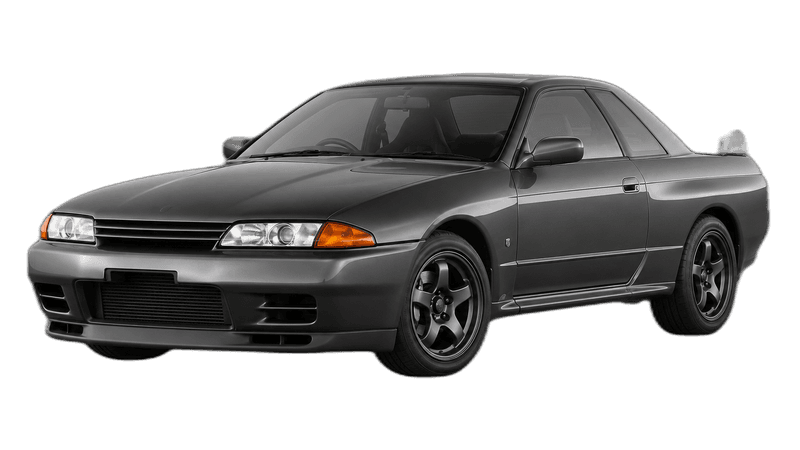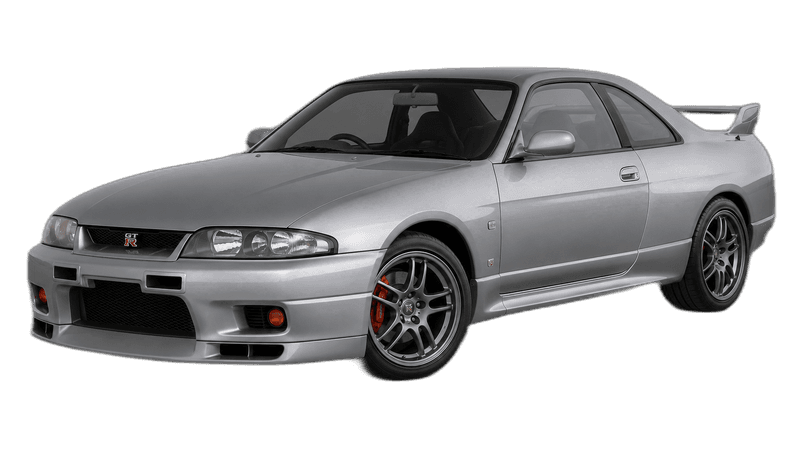
Nissan Skyline R33 GT-R V-Spec
£85,000
usedIndicative market price, updated periodically.
280bhp
Power
4.9s
0-100 km/h
265km/h
Top Speed
£85,000
Price Used
The Nissan Skyline R33 GT-R V-Spec produces 280 bhp, reaches 100 km/h in 4.9 seconds and has a top speed of 265 km/h. A representative example is worth about £85,000.
How hard it pulls.
Peak g-force the instant you bury the throttle, estimated from the car's 0–100 time and drivetrain.
Nissan Skyline R33 GT-R V-SpecEstimated peak launch g from the 0–100 time and drivetrain: an honest approximation, not a measured figure.
Dream Car Garage Editorial · Edited by José Teo Lorente Vallecillos · Last updated 30 October 2026
Overview
We have not driven this car. This review is based on published specifications and the sources listed below.
The R33 V-Spec is a specific version, not a generic Skyline
Our catalogue uses the 1995–1998 R33 GT-R V-Spec: a 2568 cc RB26DETT twin-turbo inline-six with 280 bhp, 368 Nm, 0 to 100 km/h in 4.9 seconds and a 265 km/h maximum, with all-wheel drive. We have not driven this model for this article. This is a desk-researched ownership guide using Nissan's R33 archive channel, the PistonHeads Skyline GT-R used buying guide and the DVSA recall service. Their evidence should guide a specialist inspection.
Nissan's official archive preserves the R33 GT-R family, including 1995 GT-R, N1 and V-Spec images. PistonHeads is more specific about the road-car hierarchy: the main versions are the 1995-on GT-R and the 1997-on Series 3 V-Spec, with three series of GT-R and V-Spec and each later series fewer in number. It also identifies the Series 3 V-Spec as the first officially imported R33 GT-R variant to the UK, with 100 cars sold through Middlehurst. That makes V-Spec verification central. Do not accept a badge or a coilover-and-wheel package as proof.
Confirm the V-Spec equipment and the ATTESA Pro system
The V-Spec's appeal lies in its sharpened chassis hardware, including the ATTESA E-TS Pro setup described by PistonHeads as an active rear limited-slip differential paired with an intelligent centre differential. The car should pull away cleanly, corner without binding and remain stable under power. Any shudder, vibration or uneven torque delivery needs specialist diagnosis across the transfer unit, rear differential, driveshafts and control system. Because these parts are integral to the model, vague drivetrain behaviour should never be treated as normal character.
Check that the suspension, brakes, wheels and body equipment match the V-Spec identity. PistonHeads notes that original 9x17 wheels have become rare because so many cars were modified. If the car wears aftermarket wheels, ask for the originals where available and inspect the arches, dampers, top mounts and alignment. A V-Spec with replaced suspension can still be a good car, but the change should be documented and the car should be set up correctly for road use. Confirm the exact model-year equipment against the VIN before comparing it with other R33s.
Corrosion and structural condition are the first price filter
As with the R32, rust can turn a desirable GT-R into a long project. Inspect the sills, arches, floors, suspension mounting points, strut towers, boot floor and underbody bracing. Look for flaking underseal, fresh seam sealer, mismatched paint and evidence of repaired structural sections. The R33's size and weight make healthy suspension mounting areas especially important. Any water ingress should be traced through carpets, boot trim and electrical connectors. A clean MOT is only a minimum document, not proof of structural health.
Accident history also matters. The R33 is often imported, modified and resprayed, so panel gaps, paint thickness and the consistency of trim parts should be checked against the paperwork. PistonHeads notes that the Series 3 GT-R had xenon headlights while the UK V-Spec lacked auto levelling and washing. Small details like this can help establish the car's market and equipment. If the seller claims originality, ask for photographs, invoices and the identity of any specialist who has worked on it.
Engine, gearbox and turbo health follow the same evidence rule
The RB26DETT is the defining engine, but a V-Spec purchase should be made on evidence rather than reputation. Ask for oil-change records, spark-plug service, cooling-system work and turbocharger history. Check for blue smoke, noisy turbos, boost leaks, uneven idle and signs of overheating. The six-speed gearbox should select cleanly, the clutch should engage smoothly and the drivetrain should remain quiet under load. PistonHeads points to modifications across the Skyline market, so an engine with raised output needs invoices, tuning details and proof that the fuelling, cooling and transmission have been upgraded to match.
Brakes, tyres and suspension are easier to assess but still reveal use. Check tyre make and size consistency, pad and disc condition, damper leaks and bush wear. A lowered car may look purposeful while hiding worn geometry components. The DVSA recall service and Nissan or a specialist should be used to confirm campaigns and safety work. If the car has a documented Middlehurst or specialist history, keep those invoices central to the valuation.
Series and import details can change the value case
The R33 market rewards precision. A Series 3 V-Spec should be identified by more than a rear badge: check the VIN, import documents, equipment level, suspension hardware and the presence or absence of the correct lights and trim. PistonHeads notes that the Series 3 V-Spec was the first officially imported R33 GT-R variant to the UK through Middlehurst, so provenance can add useful context. Ask where the car was serviced, which parts were renewed and whether the original wheels or other removed components survive. A complete history makes the V-Spec premium easier to justify because it shows the car has been maintained as the specific version being advertised.
Buy the V-Spec whose story is easier to verify
The R33 GT-R V-Spec offers a distinct blend of turbocharged six-cylinder power, advanced all-wheel-drive hardware and coupe usability. It is also a car where small specification differences matter. Nissan's archive anchors the model family, while PistonHeads supplies the version hierarchy, UK import detail and buyer checks. Use them together to test whether the car is truly the version being advertised.
The best example has clear identity, honest corrosion history, correct V-Spec equipment, healthy drivetrain components and a service file that explains its life. This guide combines Nissan's historical specifications and the sources listed below. It assigns no exact production count to the Series 3 V-Spec derivative.
Specifications
| Engine | 2.6L (2568 cc) RB26DETT twin-turbocharged inline-6 petrol |
|---|---|
| Displacement | 2.6L |
| Power | 280 bhp |
| Torque | 368 Nm |
| 0-100 km/h | 4.9s |
| Top Speed | 265 km/h |
| Drivetrain | AWD |
| Country | Japan |
| Body Style | 2-door coupe |
| Years | 1995–1998 |
| Price Used | £85,000 |
Specifications are manufacturer-published figures.
Frequently Asked Questions
What is a Nissan Skyline R33 GT-R V-Spec worth?
A representative example is worth about £85,000. Actual values vary with specification, condition and history.
How much power does the Nissan Skyline R33 GT-R V-Spec have?
The Nissan Skyline R33 GT-R V-Spec produces 280 bhp and 368 Nm of torque.
How fast is the Nissan Skyline R33 GT-R V-Spec from 0 to 100 km/h?
The Nissan Skyline R33 GT-R V-Spec accelerates from 0 to 100 km/h in 4.9 seconds.
What is the top speed of the Nissan Skyline R33 GT-R V-Spec?
The Nissan Skyline R33 GT-R V-Spec has a top speed of 265 km/h.
What engine does the Nissan Skyline R33 GT-R V-Spec have?
The Nissan Skyline R33 GT-R V-Spec uses a 2.6L (2568 cc) RB26DETT twin-turbocharged inline-6 petrol.
When was the Nissan Skyline R33 GT-R V-Spec built?
The Nissan Skyline R33 GT-R V-Spec was built from 1995 to 1998.
Is the Nissan Skyline R33 GT-R V-Spec all-wheel drive?
Yes. The Nissan Skyline R33 GT-R V-Spec is configured with all-wheel drive.