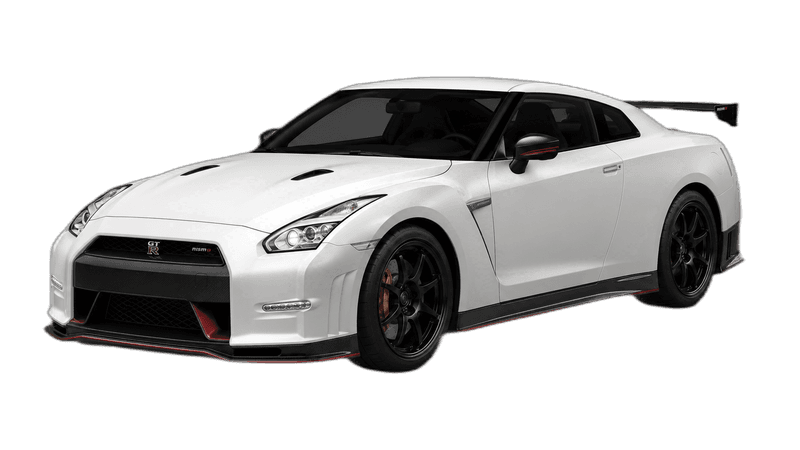
Nissan GT-R Track Edition
£85,000
usedIndicative market price, updated periodically.
562bhp
Power
2.8s
0-100 km/h
315km/h
Top Speed
£85,000
Price Used
The Nissan GT-R Track Edition produces 562 bhp, reaches 100 km/h in 2.8 seconds and has a top speed of 315 km/h. A representative example is worth about £85,000.
How hard it pulls.
Peak g-force the instant you bury the throttle, estimated from the car's 0–100 time and drivetrain.
Nissan GT-R Track EditionEstimated peak launch g from the 0–100 time and drivetrain: an honest approximation, not a measured figure.
Dream Car Garage Editorial · Edited by José Teo Lorente Vallecillos · Last updated 2 November 2026
Overview
We have not driven this car. This review is based on published specifications and the sources listed below.
A GT-R engineered by Nismo
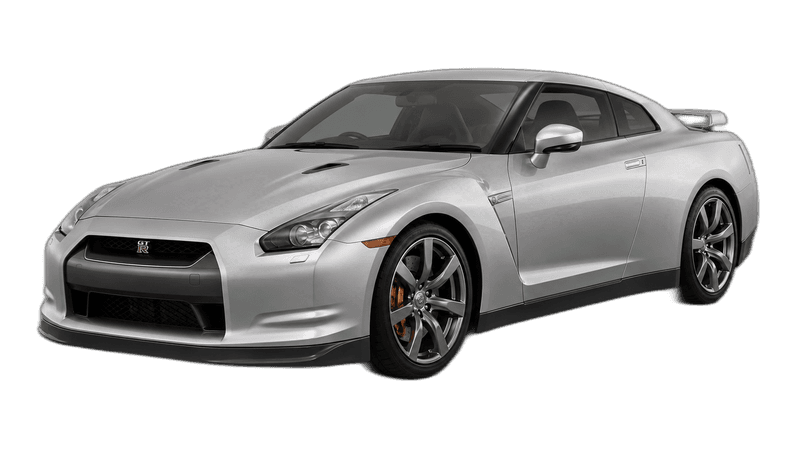
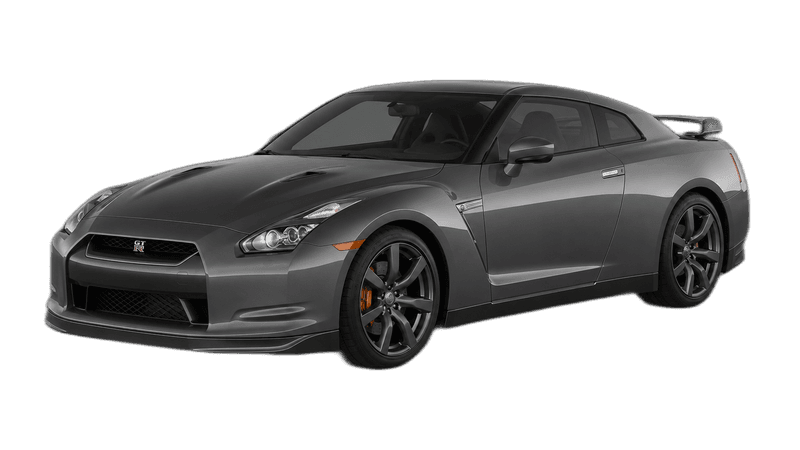
The Track Edition is the middle rung of the R35 GT-R range: more focused than the standard cars, less extreme than the full Nismo. This guide is scoped to the UK-market Nissan GT-R Track Edition engineered by Nismo, sold from the 2017 model year update. It is not about the whole R35 run, which started in 2007, and it is not about the Premium, Prestige, Black Edition or Nismo cars, although we say below where they differ. Our catalogue lists a 3.8L twin-turbo V6 (VR38DETT) producing 562 bhp and 637 Nm, with 0 to 100 km/h in 2.8 seconds, a top speed of 315 km/h and all-wheel drive. We have not driven this model for this article. This is a desk-research guide built from a Nissan Europe press release, a PistonHeads used buying guide and the government recall page, so it tells you what those documents say and where they stop.
Two points shape what follows. First, the Nissan release is a launch document, so it gives equipment but no acceleration, top speed, weight or brake figures. Second, the PistonHeads guide covers the whole 2016-on car rather than the Track Edition alone, so most of the used-car advice applies to every GT-R of that period.
Checking the figures
Nissan's release gives 570 PS and 637 Nm. The catalogue's 562 bhp is that 570 PS converted, because one metric horsepower is about 0.986 of a brake horsepower, and 570 PS works out at roughly 562 bhp. PistonHeads prints 570hp, which in a British magazine table is effectively the same metric figure. We also read, but do not cite, a Nissan USA press kit that rates the American car at 565 horsepower on the SAE basis, so an American advert and a British one may quote slightly different numbers for the same engine. Treat 562 bhp as our conversion, not a number Nissan printed.
The torque figure is direct. Nissan prints 637 Nm, and PistonHeads gives 470 lb ft, which at 1.3558 newton metres per lb ft is 637 Nm as well.
Acceleration needs care. Nissan's release gives no time at all. The catalogue's 2.8 seconds matches the 0 to 62 mph figure in the PistonHeads specification table, and 62 mph is almost exactly 100 km/h. It is a claim in a table, not a measured result, and PistonHeads gives the same 2.8 seconds for the Nismo, so do not read it as a gap between the two cars. Some secondary data sites list 2.7 seconds, but we found it in neither cited source, so we do not use it.
Top speed is 196 mph in the PistonHeads table, which is 315 km/h when converted. Nissan's release gives no top speed, so this too is a converted claim.
PistonHeads lists a weight of 1,827 kg for the 2016-on car. A brief PistonHeads drive of an earlier 2016 car, which we read but do not cite, quoted 1,740 kg and 550 PS for that earlier version, so the two figures describe different cars and should not be mixed.
On dates, Nissan's release is dated 26 September 2016, says the model is based on the 2017 model year GT-R first shown in New York in April 2016, and says customer deliveries begin in early November. We use 2017 as the first model year. PistonHeads says European noise rules ended European-market GT-R production in March 2022, so we use 2022 as the last year. That is a judgement call: we read no statement of the final Track Edition build date. The catalogue's old 2007 to 2025 range covered the whole R35 and is not the Track Edition.
Engine and gearbox
The engine is the VR38DETT, a 3,799 cc twin-turbocharged V6. Nissan says each engine is hand-assembled from start to finish by a single trained technician, a Takumi. PistonHeads lists 570hp at 6,800 rpm and 470 lb ft between 3,600 and 5,800 rpm. It says the 2017 model year update added around 20hp through more turbo boost, which does not sit neatly beside its own 570hp table, so we cannot reconcile the two statements. It also says a new V-motion grille improved engine cooling.
PistonHeads calls the engine inherently strong but not immune to failure. Its warning signs are blue smoke on a cold start, or blue or grey smoke when the turbos fire up. A bellhousing rattle from a loose flywheel shaft bearing is described as usually harmless and not a known problem on post-2016 cars. The timing is driven by chains. PistonHeads says failure is practically unheard of, but they can get noisier after about 40,000 miles, especially after neglected oil changes, and Nissan recommends oil changes every 3,000 to 5,000 miles.
The gearbox is a six-speed twin-clutch automatic. PistonHeads describes it as quick and generally efficient, though it can be damaged by repeated launches. Its advice is to shift between first and reverse when cold and listen for trouble. Going straight from reverse into second, or a flashing gear indicator, is a warning sign, and a whine in one gear may mean that gear is chipped. The guide says transmission control solenoids were faulty on earlier cars and that the 2017 update softened the transmission mapping. If the car will not exceed about 58 mph uphill it may be in a valet mode that a specialist can reset. Tuned or regularly launched cars can suffer clutch basket failure, so the guide suggests checking the launch count stored in the ECU.
Chassis, brakes and wheels
The drive is all-wheel drive. PistonHeads says the ATTESA E-TS system normally sends all torque to the rear and can divert up to half to the front, depending on speed, lateral acceleration, steering angle, tyre slip, surface and yaw rate. Tuned cars can break differential pinions, especially with poor set-up or the wrong tyre sizes.
The Track Edition is defined mostly by its chassis. Nissan lists bespoke Bilstein Damptronic suspension with a race-tuned set-up, plus a new lightweight anti-roll bar. PistonHeads, describing the 2017 update for all cars, mentions a thicker hollow rear anti-roll bar and a stiffer chassis. Neither source says whether the two descriptions are the same part, so ask which anti-roll bars a particular car carries. PistonHeads adds that the Track Edition borrowed some Nismo suspension and bonded-body upgrades, and found it more engaging than the standard car but not necessarily as relaxing.
The wheels are Nismo Racing Black forged 20-inch items. PistonHeads gives 9.5 by 20 inch wheels with 255/40 tyres at the front and 10.5 by 20 inch wheels with 285/35 tyres at the rear, which is the 2016-on specification rather than anything specific to this variant. It says the GT-R is tyre-sensitive: use the same tyres on all four corners and keep the geometry tight to avoid uneven wear. Rear wheel judder at low-speed steering lock is described as normal, while front judder is not.
Nissan gives no brake specification for the Track Edition. PistonHeads says the standard front discs are over 15 inches and can crack under hard use, and that some sellers fit new pads over worn, lipped discs. It describes carbon ceramic brakes with 410 mm front discs on the Nismo, which is one reason to confirm what the car in front of you actually has. Failures of the tyre pressure monitoring system have also been reported.
Many GT-Rs carry aftermarket suspension. PistonHeads says quality kits do not hurt value or on-road ability, but a car that has been modified needs closer scrutiny than one left standard.
Body, interior and electronics
Nissan describes a new aerodynamic exterior with a wider front bumper. The carbon rear spoiler is standard in the UK, and a carbon boot lid is an optional extra there. PistonHeads says the 2016-on car generated more downforce than any other Nissan production vehicle built up to that point. It says the body is mixed construction in aluminium, carbon composite and steel, and that some dark paints are soft and chip easily. Headlamps can suffer condensation, and the only fix is a new unit. The undertray is vulnerable to speed humps, and the hydraulic-ram pedestrian protection system is expensive to reinstate once it has triggered.
Inside, Nissan lists an 8-inch NissanConnect touchscreen and an 11-speaker Bose audio unit, with a carbon Track Edition badge on the dashboard. In the UK the seats are the black and red Recaro units from the Black Edition, with carbon-backed seats optional. PistonHeads describes a model-unique red and black interior and a titanium exhaust, and says a Nismo carbon parts option exists, so check the build sheet for what a specific car was supplied with.
The same guide is blunt about the practicalities. The rear seats are small and do not fold, and the boot is 315 litres. The 8-inch screen is called old-generation, with poor graphics, lag and no smartphone functionality. The low-mounted driving mirror can create a blind spot. The battery is small and can go flat after a few days of inactivity in cold weather, so ask how the car has been stored.
Recalls and history
Neither of our sources supplies a recall list. The Nissan release is a 2016 launch document, and the PistonHeads guide does not mention recalls or warranty at all. We did not run a DVSA lookup for this model, so we cannot say which campaigns, if any, apply to UK cars, and we do not claim any.
The DVSA recall check is the right place to start for a UK-registered car. The government page says you can use the registration number, or the manufacturer, model and year, and that the registration check shows safety recalls that have not been fixed. It says recalls for reasons other than safety are communicated by the manufacturer. It does not address vehicles first registered outside the UK, so an import needs checking with a Nissan dealer using the VIN instead.
PistonHeads gives a service pattern for the later cars: a 12-month or 9,000-mile schedule, with independent specialists considering 12,000-mile intervals acceptable. Its costs were typical of 2023, so we do not repeat them as prices. Ask for the full invoice history, the launch count, evidence of fluid changes in the gearbox and differentials, any accident repair and a list of modifications. Tuning is common: PistonHeads describes stage upgrades from modest remaps to four-figure power builds, and says big-power builds often need transmission upgrades.
Buying decision
If you want a fast, grippy car with a track bias, the Track Edition is a sensible place in the R35 range to look. Nissan positions it above the Premium, Prestige and Black Edition grades and below the Nismo, and its extras are the chassis changes and equipment listed above. PistonHeads' verdict is that its natural rivals include the Porsche 911 Turbo S, the Mercedes-AMG GT, the Aston Martin V8 Vantage and the Audi R8, and that the 2016 refresh was a significant improvement to the interior.
Differences are worth keeping straight. The Premium, Prestige and Black Edition sit below it in Nissan's line-up, and PistonHeads names Pure, Recaro and Prestige trims at launch without mentioning Premium or Black Edition, so we cannot compare those cars in detail. The Nismo is the more extreme car, with 600hp, 481 lb ft, carbon ceramic brakes and weight savings that PistonHeads puts at 27 to 40 kg depending on the source. Early 2016 cars, before the 2017 model year update, are a different specification: the brief drive we read but do not cite quoted 550 PS for one, and PistonHeads says the update changed the power, transmission mapping, chassis and interior.
Prefer a car with a full and documented service history, a clean launch count, a gearbox that shifts smoothly when cold, no smoke from the exhaust and a set of matching tyres with recent date codes. Check every open recall, and be cautious with heavily modified cars. Take a long test drive, have a GT-R specialist inspect it, and budget for tyres, brakes and fluids before you buy. We do not repeat dated used prices, because they go out of date quickly. Because we have not driven the car and found no long-term ownership source beyond the PistonHeads guide, treat this guide as a checklist, not a verdict.
Specifications
| Engine | 3.8L twin-turbo V6 (VR38DETT) |
|---|---|
| Displacement | 3.8L |
| Power | 562 bhp |
| Torque | 637 Nm |
| 0-100 km/h | 2.8s |
| Top Speed | 315 km/h |
| Drivetrain | AWD |
| Country | Japan |
| Body Style | 2-door 2+2 seater coupé |
| Years | 2017–2022 |
| Price Used | £85,000 |
Specifications are manufacturer-published figures.
Frequently Asked Questions
What is a Nissan GT-R Track Edition worth?
A representative example is worth about £85,000. Actual values vary with specification, condition and history.
How much power does the Nissan GT-R Track Edition have?
The Nissan GT-R Track Edition produces 562 bhp and 637 Nm of torque.
How fast is the Nissan GT-R Track Edition from 0 to 100 km/h?
The Nissan GT-R Track Edition accelerates from 0 to 100 km/h in 2.8 seconds.
What is the top speed of the Nissan GT-R Track Edition?
The Nissan GT-R Track Edition has a top speed of 315 km/h.
What engine does the Nissan GT-R Track Edition have?
The Nissan GT-R Track Edition uses a 3.8L twin-turbo V6 (VR38DETT).
When was the Nissan GT-R Track Edition built?
The Nissan GT-R Track Edition was built from 2017 to 2022.
Is the Nissan GT-R Track Edition all-wheel drive?
Yes. The Nissan GT-R Track Edition is configured with all-wheel drive.