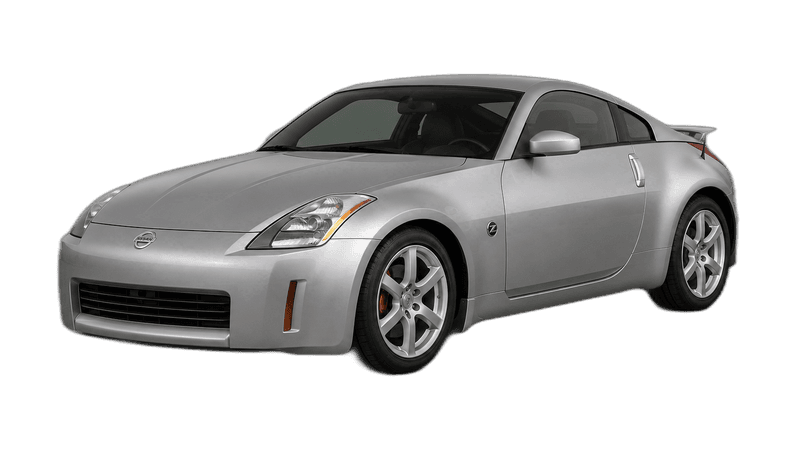
Nissan 350Z
£12,000
usedIndicative market price, updated periodically.
306bhp
Power
5.5s
0-100 km/h
250km/h
Top Speed
£12,000
Price Used
The Nissan 350Z produces 306 bhp, reaches 100 km/h in 5.5 seconds and has a top speed of 250 km/h. A representative example is worth about £12,000.
How hard it pulls.
Peak g-force the instant you bury the throttle, estimated from the car's 0–100 time and drivetrain.
Nissan 350ZEstimated peak launch g from the 0–100 time and drivetrain: an honest approximation, not a measured figure.
Dream Car Garage Editorial · Edited by José Teo Lorente Vallecillos · Last updated 30 October 2026
Overview
We have not driven this car. This review is based on published specifications and the sources listed below.
The 350Z brought the Z car back with modern weight
The 350Z returned Nissan's Z line to the centre of the affordable sports-car market in the early 2000s. Our catalogue uses the later high-output car rather than the first UK specification: a 3498 cc naturally aspirated V6 with 306 bhp, 364 Nm, 0 to 100 km/h in 5.5 seconds and a 250 km/h maximum, with rear-wheel drive. We have not driven this model for this article. This is a desk-researched ownership guide using Nissan's 2007 powertrain announcement, the PistonHeads 350Z buying guide and the DVSA recall service. Their evidence should shape an inspection, not replace one.
That scope matters. Nissan's 2007 release confirms the VQ35HR with 306 hp and 268 lb-ft of torque, but PistonHeads records the earlier UK car at 280 hp before the 2006 power increase and the 2007 HR at 313 hp in British terms. Market, year and transmission all affect the figures. Do not use our catalogue numbers as a universal claim for every 350Z. Use them as the anchor for the later 306 bhp car and verify the engine, year and market before deciding whether a seller's specification is credible.
Start with the engine's actual identity
The VQ35 family is durable when serviced, but the 350Z asks to be read through its maintenance file. Ask for oil-change intervals, coolant service, transmission fluid history and evidence that the engine has not been run low or overheated. PistonHeads notes that many imported Fairlady Z cars differ from European cars in equipment, suspension and insurance. An imported car is not automatically a problem, but it must be identified correctly and priced with its paperwork and equipment.
Listen for cold-start rattle, chain or tensioner noise, exhaust leaks and uneven idle. The engine should pull cleanly from low speed without hesitation and rev without harsh vibration. Check for oil around the engine and transmission, coolant evidence in the oil and signs of track use such as heat-marked brakes, worn tyres and missing underbody protection. Modifications are common. A quality exhaust or intake can be acceptable with invoices; forced induction, unexplained engine-management changes or no service history should move the car into specialist-diagnosis territory.
Suspension, brakes and steering carry the value
The 350Z is heavy for a two-seat sports car, and its suspension, wheel bearings, bushings and tyres reveal how it has been used. PistonHeads advises checking uneven tyre wear, alignment, suspension noise and the general condition of the running gear. On a test drive, the car should track straight, settle after bumps and turn in without vague wandering. Clunks over low-speed bumps can indicate worn drop links, bushes or top mounts. A very low car may look purposeful while hiding tired dampers and scraped underbody panels.
Brakes should be assessed by measured condition rather than appearance. Brembo equipment on higher trims is desirable, but pads, discs, hoses and fluid age still matter. Check for corrosion on hubs and fasteners, particularly on cars used in winter or stored outside. The steering should be linear and free from rack knock. Any warning lights, mismatched tyres or recent cosmetic refurbishment should prompt a closer look underneath.
Body, roof and import paperwork decide the final bill
Cosmetics matter on a 350Z because paint, bumper alignment and roadster roof condition are visible, but the expensive issues are structural and documentary. Check panel gaps, sill condition, jacking points, rear wheelarch lips and the condition under the bonnet and boot carpet. Stone chips are normal; fresh paint over corrosion is not. For a roadster, operate the roof repeatedly and inspect the fabric, rear window, seals and drainage. Water ingress can damage trim and electronics while making the car smell permanently damp.
Verify the VIN, import status, mileage history, service book, previous ownership and insurance category. PistonHeads warns that Fairlady imports can differ in specification, and Nissan's own materials show how much equipment changed across the model years. Use the DVSA recall service and Nissan to check outstanding campaigns. A clean MOT is useful, but it is not a structural survey.
Equipment changes are part of the identity
The 350Z changed in steps that matter to ownership. Early cars, the 2006 output increase, the later HR engine, trim levels, wheel designs and roadster equipment all affect value. Verify the exact year and market before comparing a low-mile coupe with a modified roadster or a grey-import Fairlady. Check that the wheels, brakes, seats, audio, climate equipment and badges match the claimed specification. Replacement trim and universal audio parts can make a car feel cheaper than its asking price. If the seller presents the car as a particular version, ask for the factory option evidence or a Nissan data check. That paperwork protects both originality and resale logic.
Buy the maintenance story, not only the output figure
The 350Z's appeal is a naturally aspirated V6 in a front-mid-engine, rear-wheel-drive package with enough torque to be usable every day. The ownership risk is not the concept; it is the difference between a serviced car and one that has been cheapened through neglect, hard track use or poor modification. Nissan gives the late high-output engine context, while PistonHeads supplies the buyer checks. Use them to build a priced list before negotiating.
The right car should have a clear engine identity, honest import paperwork, straight body evidence, healthy suspension and brakes, and no unresolved warning lights. This guide combines Nissan's historical specifications and the sources listed below. It assigns no exact production count to the derivative.
Specifications
| Engine | 3.5L (3498 cc) VQ35HR naturally aspirated V6 petrol, later high-output |
|---|---|
| Displacement | 3.5L |
| Power | 306 bhp |
| Torque | 364 Nm |
| 0-100 km/h | 5.5s |
| Top Speed | 250 km/h |
| Drivetrain | RWD |
| Country | Japan |
| Body Style | 2 seater coupe |
| Years | 2002–2009 |
| Price Used | £12,000 |
Specifications are manufacturer-published figures.
Frequently Asked Questions
What is a Nissan 350Z worth?
A representative example is worth about £12,000. Actual values vary with specification, condition and history.
How much power does the Nissan 350Z have?
The Nissan 350Z produces 306 bhp and 364 Nm of torque.
How fast is the Nissan 350Z from 0 to 100 km/h?
The Nissan 350Z accelerates from 0 to 100 km/h in 5.5 seconds.
What is the top speed of the Nissan 350Z?
The Nissan 350Z has a top speed of 250 km/h.
What engine does the Nissan 350Z have?
The Nissan 350Z uses a 3.5L (3498 cc) VQ35HR naturally aspirated V6 petrol, later high-output.
When was the Nissan 350Z built?
The Nissan 350Z was built from 2002 to 2009.
Is the Nissan 350Z all-wheel drive?
No. The Nissan 350Z is configured with rear-wheel drive.