
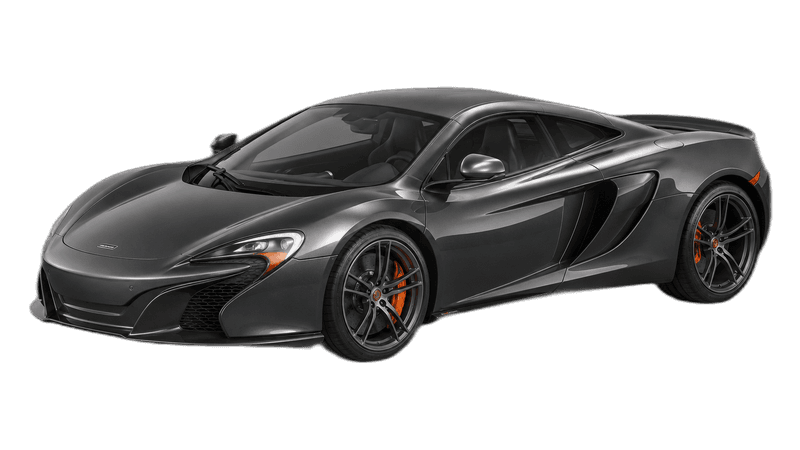
McLaren 650S
£130,000
usedIndicative market price, updated periodically.
641bhp
Power
3s
0-100 km/h
333km/h
Top Speed
£130,000
Price Used
How hard it pulls.
Peak g-force the instant you bury the throttle, estimated from the car's 0–100 time and drivetrain.
McLaren 650SEstimated peak launch g from the 0–100 time and drivetrain: an honest approximation, not a measured figure.
The McLaren 650S is a 2-door coupe by McLaren, with 641 bhp, 678 Nm of torque, a 0-100 km/h time of 3 seconds and a top speed of 333 km/h. Indicative used value: approximately £130,000. Actual values vary with specification, condition and history.
Dream Car Garage Editorial · Last updated 28 October 2026
Overview
We have not driven this car. This review is based on published specifications and the sources listed below.
A 650S, not a 12C or 675LT
The McLaren 650S is a rear-wheel-drive coupe powered by a 3,799 cc twin-turbo V8 producing 650 PS, approximately 641 bhp, and 678 Nm. McLaren quotes 3.0 seconds to 100 km/h and 333 km/h. It introduced revised bodywork, software and equipment relative to the 12C, while sharing much of its underlying engineering. The 675LT is a separate, lighter model and should not be used as a specification shortcut.
We have not driven this model for this article. This guide uses McLaren's official 650S page, the PistonHeads 650S/675LT buying guide and McLaren's recall portal. The 2020 guide's prices and warranty comments are historic context, not present estimates. No official 650S production total is established by the cited sources, so the catalogue count remains null.
Confirm the individual cooling-system record
PistonHeads discusses the catch tank, water pump, turbo pipes and hose clips. Ask for dated invoices and the reason for each repair rather than accepting a verbal assurance that the cooling system has been updated. Some work may require substantial access, so the invoice should identify the actual parts and labour rather than merely saying engine service.
Check coolant type, level and evidence of leaks, including the pink coolant discussed in the guide. Inspect accessible hoses and surrounding areas for staining or recent cleaning. A full coolant reservoir can coexist with an older leak repair, so ask for pressure-test or diagnostic evidence where the history suggests a recurring problem. Record any undertrays that remained fitted.
Transmission cooler and seepage assessment
The 650S shares the need for careful gearbox and oil-cooler inspection. PistonHeads describes transmission telltale seepage and cooler-related checks. Have a McLaren specialist locate any residue and determine whether it is historic, active or unrelated to the gearbox. Do not treat a cleaned underside as proof that a leak has been resolved.
Request diagnostic history for transmission warnings and assess normal engagement in suitable conditions. Avoid repeated launch demonstrations as a substitute for evidence. Ask for software updates and whether any symptom returned after repair. The car's twin-clutch system deserves its own diagnosis rather than comparisons with an unrelated automated manual.
PCC accumulators and lower-arm bushes
Proactive Chassis Control remains a defining system on the 650S. Inspect hydraulic components, accumulators and any pressure or ride-height warnings with a model-familiar technician. PistonHeads also highlights front lower-arm bushes. These are areas to measure and document, not a forecast that every 650S will require the same work.
Compare tyre wear with alignment and suspension condition. Check that the wheels are correct and that the tyres are matching, appropriately rated and within a suitable date range. Circuit use should be connected to subsequent inspections, fluid work and geometry reports rather than treated as automatic proof of abuse or careful ownership.
Standard carbon-ceramic brakes
Carbon-ceramic brakes were standard on the 650S, unlike the earliest 12C equipment options. Obtain measured disc and pad condition and a brake-fluid history. Surface appearance alone cannot establish remaining life. Ask whether the car has been used on track and what inspection followed, but do not turn that use into a blanket rejection.
Inspect the front splitter, undertrays and oil-cooler area for contact or leaks. If front lift is fitted, demonstrate it and check for warnings, settling or incomplete operation. A working lift does not prove that the splitter has avoided damage. Record exactly which underside areas were visible during the inspection.
TPMS, body and door operation
Ask whether the TPMS receiver plate is installed and investigate any persistent tyre-pressure warning. PistonHeads identifies this as a useful check on the earlier platform. Confirm the actual tyre pressures and sensor operation rather than simply clearing the dashboard message.
Demonstrate the dihedral doors, struts, seals and alignment. Inspect for water ingress, rear-light misting, panel repairs and paint variation. The 650S's revised front bodywork should be identified correctly rather than repaired with assumptions from a 12C or 675LT. Ask for invoices and photographs when significant cosmetic work is described.
IRIS, battery and cabin equipment
Test the IRIS screen, navigation, Bluetooth, camera and audio controls. Ask for software history and investigate any battery-drain or warning pattern. PistonHeads' experience belongs to the article's date, so do not assume that every unit has the same version or fault. Check the windows, mirrors, seats and climate system during a complete functional demonstration.
Review seat condition, switchgear and trim for wear consistent with the car's history. A low odometer does not prove that electronic equipment works or that the car has been stored correctly. Ask for battery-support and recommissioning records after extended inactivity.
Service file and recall evidence
Dated annual-service invoices, cooling and transmission work, suspension records and software updates should form a coherent account. Historic servicing prices in the buying guide are not current quotations. Obtain a model-specific inspection and written estimate for any immediate work, and ask the specialist to separate urgent findings from future monitoring.
Use McLaren's recall portal to select the appropriate regional route, then confirm the actual VIN with an authorised retailer. Retain evidence of completed campaigns. The portal's regional structure is not a single worldwide all-campaign database, and a clear result does not verify unrelated maintenance.
Method and limits
A useful 650S assessment combines cooling access, gearbox inspection, PCC and bush condition, measured carbon-ceramics, TPMS, doors and electronics. Record anything not demonstrated and arrange follow-up for material gaps. Keep the seller's account, diagnostic evidence and physical measurements distinct.
We have not driven this model for this article. This guide offers no current price, investment prediction or universal reliability claim. Official McLaren specifications establish the model, while the dated buying guide supplies ownership questions rather than a defect forecast. Production uncertainty remains unset, and the strongest purchase evidence is the individual car's documented condition and recall status.
Specifications
Engine
3.8L (3799 cc) twin-turbo V8
Displacement
3.8L
Power
641 bhp
Torque
678 Nm
0-100 km/h
3s
Top Speed
333 km/h
Drivetrain
RWD
Country
UK
Body Style
2-door coupe
Years
2014–2017
Price Used
£130,000
Specifications are manufacturer-published figures.
More from McLaren
Frequently Asked Questions
What are the specifications of the McLaren 650S?
The McLaren 650S is a 2-door coupe by McLaren, with 641 bhp, 678 Nm of torque, a 0-100 km/h time of 3 seconds and a top speed of 333 km/h. Indicative used value: approximately £130,000. Actual values vary with specification, condition and history.
How much does a McLaren 650S cost?
Indicative used value: approximately £130,000. Actual values vary with specification, condition and history.
What drivetrain does the McLaren 650S use?
The McLaren 650S is configured with rear-wheel drive.
What type of car is the McLaren 650S?
The McLaren 650S is a supercars manufactured by McLaren in UK. Production ran from 2014 to 2017.