Mazda MX-5 RF
£25,000
usedIndicative market price, updated periodically.
158bhp
Power
7.3s
0-100 km/h
214km/h
Top Speed
£25,000
Price Used
The Mazda MX-5 RF produces 158 bhp, reaches 100 km/h in 7.3 seconds and has a top speed of 214 km/h. A representative example is worth about £25,000.
How hard it pulls.
Peak g-force the instant you bury the throttle, estimated from the car's 0–100 time and drivetrain.
Mazda MX-5 RFEstimated peak launch g from the 0–100 time and drivetrain: an honest approximation, not a measured figure.
Dream Car Garage Editorial · Edited by José Teo Lorente Vallecillos · Last updated 2 November 2026
Overview
We have not driven this car. This review is based on published specifications and the sources listed below.
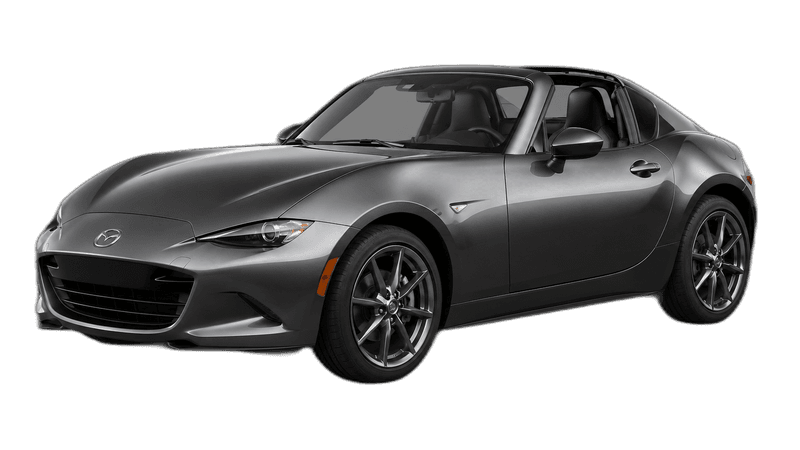
A fastback roof on the fourth-generation MX-5
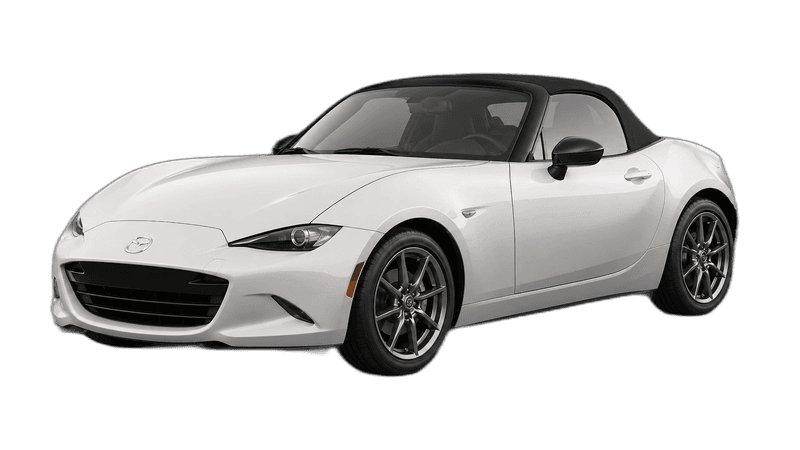
The Mazda MX-5 RF, short for Retractable Fastback, is a two-seat, rear-wheel-drive sports car in the fourth (ND) generation of the MX-5. Mazda describes its roof as a retractable hardtop made of front, middle and rear sections plus a rear screen: when it opens, the front and middle sections stow together, the rear glass sits behind the seats and the rear roof section stays in place. Our catalogue lists the 2.0L naturally aspirated inline-4 petrol (SKYACTIV-G) version, producing 158 bhp and 200 Nm, with 0 to 100 km/h in 7.3 seconds and a 214 km/h top speed. We have not driven this model for this article. This is a desk-researched ownership guide built from Mazda UK's pricing and specification release of October 2016, a PistonHeads used buying guide published in April 2021 and the government recall check. The PistonHeads guide covers the ND range in general, so we use it for the points that apply to the RF and say where it does not.
Checking the figures
Mazda's release gives the 2.0-litre SKYACTIV-G engine as 160 PS. That metric rating converts to the 158 bhp in our catalogue, and PistonHeads lists 158 hp at 6,000 rpm with 148 lb ft of torque at 4,600 rpm, which matches the 200 Nm we list. Adverts that say 160 and 158 describe the same engine. PistonHeads gives a 0 to 62 mph time of 7.3 seconds and a top speed of 133 mph for the 2.0, which is the 214 km/h figure, with a weight of 1,075 kg. Those are the figures for the soft top. The guide says the RF weighs about 40 kg more, which it says costs 0.2 to 0.3 seconds on the soft top's 0 to 62 mph time when discussing the 1.5. Applying that to the 2.0 is our own inference, but it suggests reading 7.3 seconds as a best case for the RF.
There are two other versions to keep apart. The 1.5-litre RF has 131 PS according to Mazda, with 129 hp in the PistonHeads table, and Mazda said it would reach UK dealers in May 2017, after the first cars. PistonHeads also says the 2.0 engine was uprated for the 2019 model year from 158 hp to 181 hp at 7,500 rpm, with 151 lb ft of torque, cutting the soft top's best 0 to 62 mph time to 6.5 seconds. So the figures in this guide are for the earlier 2.0, and a later car with 181 hp will have more power and a different engine tune, which you should confirm from its paperwork.
Engine and gearbox
Mazda says the 2.0 car has a limited-slip differential and 17-inch wheels, with Bilstein dampers and a strut brace on the Sport Nav models and the Launch Edition. The Launch Edition, which led the RF range when it went on sale on 4 March 2017, was a run of 500 cars with a twin-tone roof, BBS wheels, a black rear spoiler, Alcantara trim and Recaro seats. PistonHeads says the 1.5 does a fine all-round job, and that both engines were engineered to make a pleasantly mechanical noise, with the 2.0 adding a bark between 3,000 and 5,000 rpm. Its engine-related reports are limited: engine mounts can fail on harder-driven cars and some faulty throttle body modules have been reported.
The gearbox needs more attention. PistonHeads warns that some ND owners have had gearbox problems or even total failure, including difficulty selecting first to second or third to second, sometimes with under 2,000 miles on the clock and on gently driven cars as well as trackday cars. It adds, with the hedge that this may or may not be relevant, that the manual gearbox was adapted from a transverse design, and that the factory has issued several revisions, that quite a few first-generation gearboxes were replaced under warranty, and that a UK motorsport firm has developed its own updates. Test every gear on a cold and warm car, and ask for evidence of any replacement or revised gearbox. An automatic was available in the UK, but it is very rare: if you find one built between October 2016 and November 2018, make sure it does not downchange unexpectedly, because that needs a software reflash.
PistonHeads also describes a stop-start issue with the i-ELOOP system on some cars built between May 2015 and April 2017 that could, in the worst case, cause a fire, and tells buyers to make sure the remedial work has been done. The RF range only went on sale in March 2017, so only the earliest RFs fall inside that build window. Servicing follows a fixed annual plan of 12 months or 12,000 miles, rather than intervals based on use. Prices are dated, so we have not repeated them: ask for invoices showing what was done and when.
Chassis, brakes and wheels
The guide says the ND feels softer and more roll-prone than a Toyota GT86, which suits the car's character because of its low weight and balanced weight distribution. The Sport and GT cars have firmer Bilstein suspension, and PistonHeads says they do not ride quite as sweetly and some testers found high-speed roll was not as well controlled as expected. Owners have found that Eibach or BBR lowering springs strengthen the feeling of connection, so ask whether any aftermarket springs are fitted. The guide notes that cars with the limited-slip differential can show a fair amount of drivetrain backlash on gearchanges. It describes the electric power steering as a little light and short of feedback.
On the brakes, PistonHeads rates the stopping power as excellent, with 280 mm discs all round on the 2.0, and notes that MX-5 calipers have a habit of seizing. The rear calipers can also make a knocking noise from slider pin movement that can be mistaken for suspension noise. Hub carrier bush failure has been an issue, and because a complete new hub is needed, it is not cheap to put right. On some cars the spring coils could come together on bumps, and the factory fix is a C-shaped plastic piece fitted to the second coil from the top. Check the car for knocking over bumps, uneven tyre wear and signs of both fixes.
Roof, body and interior
Mazda says the RF keeps the same length, width and wheelbase as the soft-top MX-5 with a 5 mm increase in roof height, and that a sound-absorbing headliner and insulation around the rear wheel housings are meant to quieten the cabin with the roof closed. PistonHeads is less impressed: it calls the RF noisy with the top in place and says there is too much wind bluster in the cabin when it is down. It reports that roofs rub against the roll hoops if they are not lowered exactly as the manual says, causing wear to the front section, so inspect the roof panel and run the roof through several cycles. The guide says the roof mechanism reduced the centre console storage and the cubby behind the passenger seat, and removed the cubby behind the driver's seat entirely. Boot capacity is 130 litres, the same as the soft top. The optional safety pack, with rear and blind-spot assist, auto-dipping headlights and a reversing camera, is considered worth having, especially in the RF.
Inside, the guide reports rear-view mirrors and the headliner above the rear window coming loose, failing window switches, and a few reports of leaking air conditioning seals and loose door seals. Early infotainment systems were not fault-free but have been improved over time. A driver up to six feet tall should find a workable position, but taller drivers will find it a squeeze. Test every switch, the screen and the roof controls.
Recalls and history
PistonHeads describes the i-ELOOP stop-start issue as needing remedial works, not as a recall, and says early 2015 cars were summoned to dealers to have the retaining bracket for a textile exhaust shield fixed, which concerns early 2015 cars and so should not apply to an RF. Neither source supplies a full recall list for this car, so enter the registration in the DVSA recall service and ask the seller for dealer paperwork showing that any open work was completed. Ask for a full service history, accident repair records and any modifications.
Buying decision
The PistonHeads verdict is that the ND is a great little car with problems, none of them insurmountable, although some can be expensive, and that most will have no problems at all. It says the steel-roofed RF does not add much to the MX-5 legend, that RFs are not especially sought after, and that the 1.5 provides 95 per cent of the 2.0's measurable ability and probably all of its fun. The April 2021 prices are left out as dated; compare current adverts. Prefer a car with a documented service history, a gearbox that selects every gear cleanly, the i-ELOOP work done, a roof without wear marks and every recall closed.
Specifications
| Engine | 2.0L naturally aspirated inline-4 petrol (SKYACTIV-G) |
|---|---|
| Displacement | 2.0L |
| Power | 158 bhp |
| Torque | 200 Nm |
| 0-100 km/h | 7.3s |
| Top Speed | 214 km/h |
| Drivetrain | RWD |
| Country | Japan |
| Body Style | 2-seater retractable-fastback coupé |
| Years | 2017–present |
| Price Used | £25,000 |
Specifications are manufacturer-published figures.
Frequently Asked Questions
What is a Mazda MX-5 RF worth?
A representative example is worth about £25,000. Actual values vary with specification, condition and history.
How much power does the Mazda MX-5 RF have?
The Mazda MX-5 RF produces 158 bhp and 200 Nm of torque.
How fast is the Mazda MX-5 RF from 0 to 100 km/h?
The Mazda MX-5 RF accelerates from 0 to 100 km/h in 7.3 seconds.
What is the top speed of the Mazda MX-5 RF?
The Mazda MX-5 RF has a top speed of 214 km/h.
What engine does the Mazda MX-5 RF have?
The Mazda MX-5 RF uses a 2.0L naturally aspirated inline-4 petrol (SKYACTIV-G).
When was the Mazda MX-5 RF built?
Production of the Mazda MX-5 RF began in 2017.
Is the Mazda MX-5 RF all-wheel drive?
No. The Mazda MX-5 RF is configured with rear-wheel drive.