Mazda MX-5 NC
£8,000
usedIndicative market price, updated periodically.
158bhp
Power
7.9s
0-100 km/h
219km/h
Top Speed
£8,000
Price Used
The Mazda MX-5 NC produces 158 bhp, reaches 100 km/h in 7.9 seconds and has a top speed of 219 km/h. A representative example is worth about £8,000.
How hard it pulls.
Peak g-force the instant you bury the throttle, estimated from the car's 0–100 time and drivetrain.
Mazda MX-5 NCEstimated peak launch g from the 0–100 time and drivetrain: an honest approximation, not a measured figure.
Dream Car Garage Editorial · Edited by José Teo Lorente Vallecillos · Last updated 2 November 2026
Overview
We have not driven this car. This review is based on published specifications and the sources listed below.
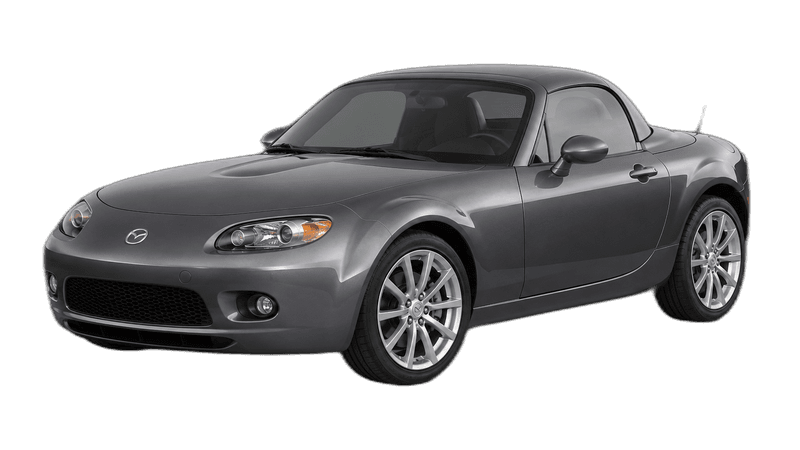
The third-generation MX-5 with the 2.0-litre engine
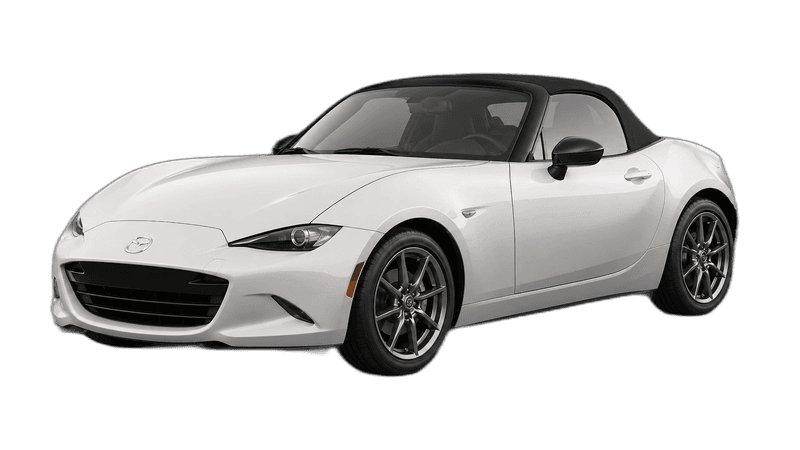
The Mazda MX-5 NC is the third generation of Mazda's small two-seat roadster, a rear-wheel drive car sold from 2005 and, according to PistonHeads, covering the years 2005 to 2015. It came as a soft-top and, from a year after launch, as the Roadster Coupe with a folding hardtop. This guide is scoped to the 2.0-litre Mazda MX-5 NC, including the Roadster Coupe, and the 1.8-litre version is out of scope. Our catalogue lists a 2.0L naturally aspirated inline-4 petrol (MZR) engine producing 158 bhp and 188 Nm, with 0 to 100 km/h in 7.9 seconds and a 219 km/h top speed. We have not driven this model for this article. This is a desk-researched ownership guide built from Mazda UK's press release for the 25th Anniversary Limited Edition of June 2014, a PistonHeads pocket buying guide dated January 2015 and the government recall check. Mazda's release describes one special edition rather than the whole range, and the PistonHeads guide is short, so use both as a starting point and confirm every detail on the car you are viewing.
Checking the figures
Mazda's 2014 release gives the 2.0-litre, 16-valve engine as 160ps. That metric rating converts to the 158 bhp in our catalogue (160 multiplied by 0.9863 is about 158), so adverts that say 160 PS and 158 bhp describe the same engine. PistonHeads prints it as 160 hp at 6,500 rpm, which is the metric figure under a different label, with 139 lb ft of torque at 5,000 rpm. We convert that to 188 Nm, the figure in our catalogue (139 multiplied by 1.3558 is about 188). Mazda's release does not state a torque figure.
For performance, PistonHeads gives 0 to 62 mph in 7.9 seconds for the 2.0, and 62 mph is almost exactly 100 km/h, so we use 7.9 seconds for 0 to 100 km/h. Mazda's release says only "sub-8 second" for 0 to 62 mph, which agrees. Mazda's release gives a 136 mph top speed, which converts to 219 km/h. That figure is for the Roadster Coupe in the special edition, and PistonHeads gives no top speed at all, so we have no source in this guide for the soft top. Treat 219 km/h as Mazda's claim for the hardtop and not as something every car will show. PistonHeads gives no kerb weight; it says only that the Roadster Coupe adds 40 kg over the soft-top.
Be careful with look-alikes. PistonHeads lists the 1.8-litre car at 126 hp, 123 lb ft and 9.4 seconds to 62 mph, so a quoted figure of 126 points to the smaller engine that this guide does not cover. The NC also sits between two other generations in our catalogue: the earlier NA and NB cars, and the later ND and RF, which have different engines. Our MX-5 RF guide lists a similar 158 bhp, but that is a different car with a different engine family and a lower 0 to 100 km/h time, so do not mix their findings. PistonHeads lists the engine at 1,798 cc and 1,999 cc for the two sizes, while our catalogue stores 1,998 cc, so treat the capacity as approximate.
Engine and gearbox
PistonHeads describes the 2.0-litre engine as shared with Ford and says the chain-drive camshafts are a reason for its reliability and longevity. The guide's engine advice is practical rather than alarming. It says the coolant is a specific Mazda formula that should be changed every two years, and that the service interval is 12,500 miles. Ask for invoices that show both, because a car that has been run on the wrong coolant or has missed services is the one to avoid. Many cars have an aftermarket exhaust fitted by a previous owner, so check that it is fitted properly and not too loud for how you will use the car. PistonHeads also says tuning kits can take the engine to as much as 270 hp, so ask whether the engine has been modified and what it cost to maintain afterwards.
The guide reports that both manual gearboxes can be notchy when cold but shift well once warm. It does not discuss the clutch, so inspect the biting point and listen for noise on a test drive, and ask when the clutch was last done. PistonHeads says the PowerShift automatic, a six-speed with steering-wheel paddles, uses little extra fuel but costs more in road tax. It places the six-speed manual and the PowerShift automatic in the late-2008 revision, yet its own table lists five- or six-speed manuals across the range, which includes the 1.8. Mazda's 2014 release shows a six-speed manual for the 2.0. We could not tell from these sources whether the earliest 2.0 cars had five or six gears, so confirm the gearbox on the car in front of you.
PistonHeads dates the revision to late 2008, and in that revision the 2.0's rev limit rose from 6,750 rpm to 7,000 rpm. It reports no change to the 160 hp rating, and nothing we read shows a change to the power figure at the facelift. Some sources and markets describe this revision as a 2009 facelift, but PistonHeads dates it to late 2008, and dating differs by market and model year, so read the registration date and the build plate rather than trusting a year in an advert. In mid-2012 six-speed cars gained a new induction system for crisper throttle response, according to the guide.
Chassis, brakes and wheels
PistonHeads says the steering on the launch car was not quite as crisp as the previous generation's, but was not feel-free, and that a new multi-link rear suspension helped the handling. The late-2008 revision lowered the roll centre, which it says improved turn-in and feel. Mazda's release describes a perfect 50:50 weight distribution and a low moment of inertia for the later car. The 2.0 manuals have a limited-slip differential as standard, and Sport models have Eibach springs and a front strut brace.
The guide says rear dampers typically wear out at around three years or 30,000 miles, which makes them a sensible negotiating point on an older car, so look for a bouncy or floaty rear on a test drive. It names a front anti-roll bar and drop links as a common rattle source, so listen over bumps. Mazda RX-8 anti-roll bars are a cheap aftermarket upgrade according to the guide, which also means a previous owner may have changed them.
PistonHeads says the brakes work well, but that front calipers can seize, so check whether the car pulls to one side under braking and whether one front wheel is hotter than the other after a drive. It mentions EBC Yellowstuff pads for track days, which suggests asking how the car has been used. Entry-level cars had steel wheels, now rare, and the guide says aftermarket wheels must not foul the wheelarches. Mazda's 2014 special edition used 17-inch Dark Gunmetal alloys. The guide says owners recommend Toyo T1R and Nankang NS-2R tyres for mixed road and track use, so look at tyre age and wear, and at the alloys for kerb damage.
Body, interior and electronics
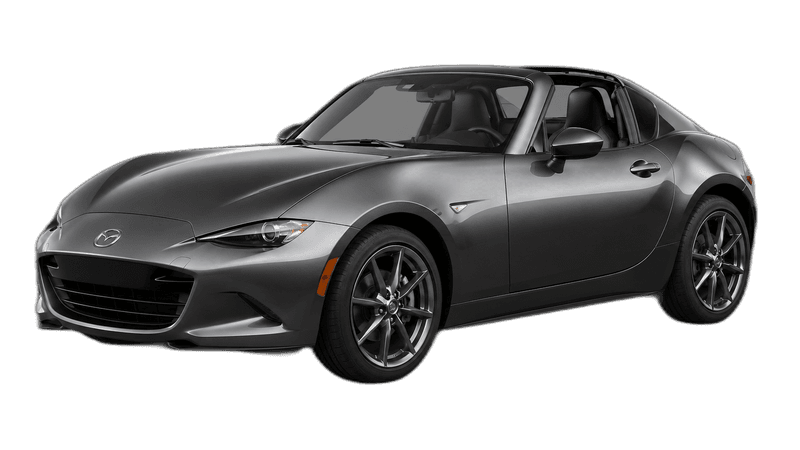
The Roadster Coupe is the car most buyers will meet. PistonHeads says its two-piece folding hardtop goes up or down in 12 seconds, that it keeps the soft-top's 150-litre boot, and that it costs a weight gain of only 40 kg. It also says the Roadster Coupe accounted for four out of every five NC MX-5s sold in the UK, so a soft-top is the less common choice. Mazda's release calls the hardtop power-operated and retractable. Run the roof through several full cycles, watching for slow or uneven movement and listening for noise.
The guide's most useful roof advice applies to both types: dampness points to blocked drainage valves, and cleaning or new valves are the fix. Check the carpets and the boot floor for damp and any smell of mildew. It says soft-tops respond to regular cleaning, and that the glass rear screen makes them more secure. Door windows can freeze shut in winter, and a silicone spray helps. The front number-plate plinth is fragile in parking knocks but cheap to replace. Early NCs chip their paint easily, so look at the front bumper and the windscreen pillars. PistonHeads says dealers can confirm whether the anti-corrosion warranty is still valid on newer cars, but it does not discuss rust beyond that, so inspect the sills, the wheelarches and the underside yourself.
Early cars have door-pocket cupholders that can rub a taller driver's calf, so sit in the car and try the position. PistonHeads does not cover the electrics, so test every switch, the windows, the central locking, the heated seats and the audio. Mazda's special edition had heated leather seats and an Alpine-engineered 6.1-inch touch screen navigation system with Bluetooth and USB. That was an equipment level of a 2014 limited edition, so do not assume a standard car has it. From mid-2012 the car also gained an Active Bonnet that PistonHeads says used an explosive charge to lift the bonnet and protect pedestrians, along with a new grille and chin spoiler, so ask about any front-end repair on a facelifted car.
Recalls and history
PistonHeads says nothing about recalls, and Mazda's release does not mention them either, so neither source supplies a recall list. Enter the registration in the DVSA recall service and ask the seller for dealer paperwork showing any open work was completed. This is especially worth doing on a 2012 or later car, because of the pedestrian-protection bonnet. Ask for a full service history with the 12,500-mile services and the two-yearly coolant changes, any accident repair evidence, and a record of modifications such as the tuning kits and exhausts the guide mentions.
Mazda's release says there have been more than 43 special editions of the MX-5 in the UK since 1990, across three generations. The 25th Anniversary was a run of 1,000 numbered cars, with 750 for the UK, so check what a car advertised as a special edition really is. PistonHeads mentions special editions only in general terms, and we cannot tell you which ones matter to buyers.
Buying decision
The PistonHeads verdict is that any third-generation MX-5 is a cost-effective everyday sports car on a budget. The guide includes new prices, used prices and several repair costs, but they are dated to January 2015, so we have not repeated them: compare current adverts and get quotes. The best car has a documented history with the coolant and service work done, a roof that moves smoothly and a dry cabin and boot, healthy rear dampers, calipers that release, no unexplained rattles and every recall closed. Decide on the roof first, because the Roadster Coupe is more common and a little heavier, and the soft-top is lighter. Then check the revision: cars from late 2008 have the higher rev limit and the lowered roll centre, and cars from mid-2012 add the induction change and the later front end, so decide which of those matter to you. Prefer a car that has not been tuned unless you want one.
Specifications
| Engine | 2.0L naturally aspirated inline-4 petrol (MZR) |
|---|---|
| Displacement | 2.0L |
| Power | 158 bhp |
| Torque | 188 Nm |
| 0-100 km/h | 7.9s |
| Top Speed | 219 km/h |
| Drivetrain | RWD |
| Country | Japan |
| Body Style | 2 seater convertible/cabriolet |
| Years | 2005–2015 |
| Price Used | £8,000 |
Specifications are manufacturer-published figures.
Frequently Asked Questions
What is a Mazda MX-5 NC worth?
A representative example is worth about £8,000. Actual values vary with specification, condition and history.
How much power does the Mazda MX-5 NC have?
The Mazda MX-5 NC produces 158 bhp and 188 Nm of torque.
How fast is the Mazda MX-5 NC from 0 to 100 km/h?
The Mazda MX-5 NC accelerates from 0 to 100 km/h in 7.9 seconds.
What is the top speed of the Mazda MX-5 NC?
The Mazda MX-5 NC has a top speed of 219 km/h.
What engine does the Mazda MX-5 NC have?
The Mazda MX-5 NC uses a 2.0L naturally aspirated inline-4 petrol (MZR).
When was the Mazda MX-5 NC built?
The Mazda MX-5 NC was built from 2005 to 2015.
Is the Mazda MX-5 NC all-wheel drive?
No. The Mazda MX-5 NC is configured with rear-wheel drive.