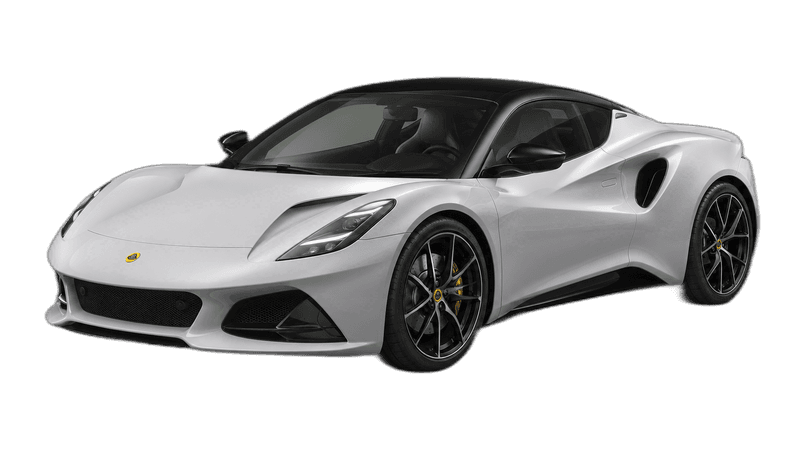
Lotus Emira V6 First Edition
£72,000
usedIndicative market price, updated periodically.
400bhp
Power
4.3s
0-100 km/h
290km/h
Top Speed
£72,000
Price Used
The Lotus Emira V6 First Edition produces 400 bhp, reaches 100 km/h in 4.3 seconds and has a top speed of 290 km/h. A representative example is worth about £72,000.
How hard it pulls.
Peak g-force the instant you bury the throttle, estimated from the car's 0–100 time and drivetrain.
Lotus Emira V6 First EditionEstimated peak launch g from the 0–100 time and drivetrain: an honest approximation, not a measured figure.
Dream Car Garage Editorial · Edited by José Teo Lorente Vallecillos · Last updated 30 October 2026
Overview
We have not driven this car. This review is based on published specifications and the sources listed below.
The Emira V6 brought Lotus into a more usable era
The Lotus Emira V6 First Edition was the launch expression of Lotus's modern sports car. Our catalogue uses the 2022-on phase: a 3456 cc supercharged Toyota 2GR-FE V6 with 400 bhp, 430 Nm, 0 to 100 km/h in 4.3 seconds and a 290 km/h maximum, with rear-wheel drive. We have not driven this model for this article. This is a desk-researched ownership guide using Lotus's official Emira V6 range confirmation, the PistonHeads Emira used buying guide and the DVSA recall service.
Lotus's official V6 range confirmation states that the Emira V6 maintains a 400 bhp charge-cooled supercharged 3.5-litre V6, with a standard six-speed manual or optional six-speed automatic, building on the First Edition and V6 First Edition launched in 2022 and 2023. PistonHeads records the V6 Emira from 2022 with 395 hp, 310 lb ft, 0 to 62 mph in 4.3 seconds for the manual and a 180 mph maximum. Our catalogue uses the 400 bhp Lotus figure as the anchor, while the inspection advice remains focused on condition and documented updates.
Gearbox feel, updates and driveshaft evidence are critical
The Emira V6's manual gearbox should be precise enough for daily use and strong enough for track work, but PistonHeads notes that the action can be baulky and that third-to-second or reverse-selection issues have been reported. A careful test should include cold and warm shifts, repeated second-third changes, reverse engagement and a slow manoeuvre that reveals notchiness. Lotus communications around loss of drive, driveshaft oil leaks and noise should be verified with a dealer or specialist printout, not accepted as a vague assurance.
The automatic has its own check protocol, but this catalogue entry is the manual First Edition. Ask for gearbox software or hardware updates, clutch hydraulics, driveshaft inspections and any gearbox grumble investigations. PistonHeads also mentions CPC module programming and oil-cooler line leaks. A diagnostic scan should include stored and pending codes across the engine, gearbox, body and driver-assistance modules. Ask the seller for the latest scan printout before you travel, because a clean-looking cabin can still hide stored module faults. The right car should have a calm electronic story, not a dashboard full of explanations.
Cooling, electrical and steering systems need modern diagnostic evidence
The Emira uses a modern bonded aluminium chassis and a more equipment-rich cabin than older Lotus models. That makes battery health and electrical diagnosis part of the inspection. PistonHeads notes weak battery behaviour and electrical quirks, so check the battery date, charging system, parasitic drain and the way the car wakes and sleeps. Test the windows, door mirrors, alarm, infotainment, climate system, lights, wipers and driver-assistance functions. Faults that look minor can be expensive if they require module coding or trim removal.
The hydraulic steering pump should be checked for leaks and noise, and the steering should feel consistent without vibration or wandering. PistonHeads also points to TPMS and wheel-speed sensor contamination, undertray and spring-seat creaks, and HVAC shield or climate-module work. A road test should include full lock, low-speed bumps, steady cruising and a brisk third-gear pull. Listen for creaks from the suspension, pump noise from the steering and any vibration through the brakes. The undertray should be secure and free from speed-hump damage.
Body, cabin and water management are part of the purchase
The Emira is a modern coupe, but water ingress and trim issues still matter. Inspect the door seals, roof panel, bulkhead, carpets, boot and cabin for damp or musty smells. PistonHeads notes window, door-mirror, headliner, alarm and water-ingress reports. The paint should be checked for blistering, inconsistent panels and chip repair, especially on the nose and wheel arches. The seats, trim and controls should feel solid, and the cabin should be quiet enough for the car's grand-touring role.
The First Edition specification should be verified from the VIN and order documents. Wheels, tyres, brakes, suspension settings and interior details should match the advertised car. Track or fast-road modifications need invoices and a clear reason. The Emira is heavy enough that brake and tyre condition matters: inspect discs, pads, hoses, fluid and tyre age. A car with frequent road use should feel settled, with no brake judder, no wandering and no unresolved warning messages.
Official updates and paperwork define the right car
Because the Emira is new enough for manufacturer updates, the service file should show what has been done rather than what the seller believes should have been done. Ask for dealer printouts covering recalls, service campaigns, gearbox or driveshaft work, CPC updates, oil-cooler lines and battery diagnosis. A road test should include a cold start, slow manoeuvring, a full-throttle pull in a safe gear and long enough in traffic for the gearbox, battery and cooling system to show normal behaviour. If the seller cannot provide campaign evidence for the exact car, treat that as valuation work still to be done. Use the DVSA recall service as the public check, then confirm the result through Lotus. A low-mileage car with a thin file is not automatically better than a used car with complete dealer evidence.
The right Emira V6 First Edition should have smooth gearbox behaviour, complete campaign work, a stable battery and electrical system, dry cabin seals, clean steering and brakes, and a specification that matches the First Edition identity. This guide combines Lotus, PistonHeads and DVSA evidence. It treats the four-cylinder Emira Turbo as a different powertrain and keeps the V6's 400 bhp Lotus figure distinct from PistonHeads' 395 hp record.
Specifications
| Engine | 3.5-litre (3456 cc) supercharged Toyota 2GR-FE V6 petrol |
|---|---|
| Displacement | 3.5L |
| Power | 400 bhp |
| Torque | 430 Nm |
| 0-100 km/h | 4.3s |
| Top Speed | 290 km/h |
| Drivetrain | RWD |
| Country | UK |
| Body Style | 2 seater fixed-head coupé |
| Years | 2022–present |
| Price Used | £72,000 |
Specifications are manufacturer-published figures.
Frequently Asked Questions
What is a Lotus Emira V6 First Edition worth?
A representative example is worth about £72,000. Actual values vary with specification, condition and history.
How much power does the Lotus Emira V6 First Edition have?
The Lotus Emira V6 First Edition produces 400 bhp and 430 Nm of torque.
How fast is the Lotus Emira V6 First Edition from 0 to 100 km/h?
The Lotus Emira V6 First Edition accelerates from 0 to 100 km/h in 4.3 seconds.
What is the top speed of the Lotus Emira V6 First Edition?
The Lotus Emira V6 First Edition has a top speed of 290 km/h.
What engine does the Lotus Emira V6 First Edition have?
The Lotus Emira V6 First Edition uses a 3.5-litre (3456 cc) supercharged Toyota 2GR-FE V6 petrol.
When was the Lotus Emira V6 First Edition built?
Production of the Lotus Emira V6 First Edition began in 2022.
Is the Lotus Emira V6 First Edition all-wheel drive?
No. The Lotus Emira V6 First Edition is configured with rear-wheel drive.