
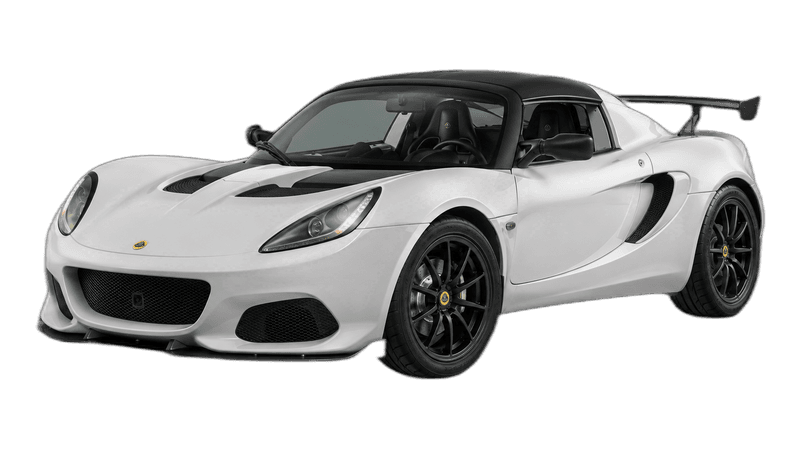
Lotus Elise Sport 220
£42,000
usedIndicative market price, updated periodically.
217bhp
Power
4.3s
0-100 km/h
233km/h
Top Speed
£42,000
Price Used
How hard it pulls.
Peak g-force the instant you bury the throttle, estimated from the car's 0–100 time and drivetrain.
Lotus Elise Sport 220Estimated peak launch g from the 0–100 time and drivetrain: an honest approximation, not a measured figure.
The Lotus Elise Sport 220 is a 2 seater fixed-head coupé by Lotus, with 217 bhp, 250 Nm of torque, a 0-100 km/h time of 4.3 seconds and a top speed of 233 km/h. Indicative used value: approximately £42,000. Actual values vary with specification, condition and history.
Dream Car Garage Editorial · Edited by José Teo Lorente Vallecillos · Last updated 30 October 2026
Overview
We have not driven this car. This review is based on published specifications and the sources listed below.
The Sport 220 is the sharper final-era Elise
The Lotus Elise Sport 220 belongs to the later S3-era family, but it keeps the core Elise formula: a bonded aluminium chassis, very low weight and a supercharged four-cylinder engine. Our catalogue uses the 2016–2021 phase: a 1798 cc supercharged Toyota inline-4 with 217 bhp, 250 Nm, 0 to 100 km/h in 4.3 seconds and a 233 km/h maximum, with rear-wheel drive. We have not driven this model for this article. This is a desk-researched ownership guide using Lotus's Elise history, the PistonHeads Elise S3 used buying guide and the DVSA recall service.
Lotus records the 2011 model-year update with either a 1.6-litre engine or a supercharged 1.8 producing 220 bhp, and the Sport 220 name later made that supercharged character explicit. PistonHeads identifies the Sport 220 as a 217 hp supercharged 1.8, with air conditioning, cruise control, hardtop and audio among the important options. That matters because the specification is not uniform. A stripped car, a comfort-equipped car and a car with track-oriented parts should be compared by equipment and invoices, not by the badge alone.
The supercharged Toyota engine is strong, but the gearbox must be tested
The Toyota-sourced supercharged engine gives the Sport 220 its urgency, yet the ownership value still rests on service evidence. Ask for oil-change invoices, coolant work, spark plugs, drive-belt records and any supercharger service. PistonHeads notes that the supercharged 1.8 can suffer second-and-third synchro crunch, so the test route should include cold and warm shifts, especially second to third and third to second. A slight notch can be normal in a precise sports gearbox; a crunch, block-out or jumping-out needs diagnosis.
The clutch should take up cleanly without slip or judder. Check for oil around the engine and gearbox, coolant level stability and signs of overheating. A car used on track should have shorter service intervals, brake-fluid history, tyre records and evidence that the engine has been allowed to warm and cool correctly. The supercharger and intake system should be standard or documented. A poor remap, noisy pulley, damaged intercooler duct or untraceable engine warning light should reduce confidence until the cause is known.
Recalls and fluid systems deserve specific attention
PistonHeads records an oil-cooler pipe recall in November 2014 for cars built between May 2007 and November 2011, and a fuel-leak recall in February 2020 for 762 cars built between May 2012 and June 2019. The Sport 220 sits in the later period, so recall evidence is part of the file. Use the DVSA service by registration and then confirm the work with a Lotus specialist or dealer printout. A seller should be able to show that relevant actions are complete rather than expecting the buyer to accept a generic clean MOT.
Inspect the oil-cooler lines, fuel lines, fuel-tank area and underbody for dampness, corrosion or recent repairs. The aluminium chassis and subframes should be dry and undamaged, with no unexplained welding, fresh seam sealant or impact repairs. Clamshell cracks around the front intake, wheel arches and rear transom should be assessed carefully. Because the Sport 220 is light and low, underbody damage can happen without a dramatic appearance above.
Chassis, roof and electrical details decide daily usability
The later Elise still uses the familiar lightweight construction, so the inspection should focus on structural honesty and water management. Test the removable roof and hardtop if fitted, then check the carpets, seat bases, pedals and centre console for damp. PistonHeads mentions water and electrical issues, plus battery drain if the radio or dashboard remains awake. The lights, indicators, heater fan, dashboard, infotainment where fitted and air conditioning should all be operated for long enough to reveal faults.
The suspension should feel controlled rather than harsh. Dampers, bushes, ball joints, wheel bearings and alignment all matter on a car whose steering is central to the experience. Brakes should be inspected for disc condition, pad material, hose age and fluid history. Wheels should be the correct size and offset, with no heavy kerb damage and with tyres matched to the car's use. A Sport 220 used regularly on the road should feel precise, stable and easy to place; a car that darts or vibrates may need more than a quick alignment.
Equipment and paperwork separate comparable cars
The Sport 220 could be ordered with different comfort and trim equipment, and those details affect both value and usability. Verify the claimed options from the VIN, order form or dealer printout. Air conditioning, cruise control, hardtop, audio and special trim should be present if they are part of the advertised car. Check the seats for support and wear, the seat runners for smooth adjustment and the pedals for the driver's preferred position. Even a focused sports car should be comfortable enough to use properly.
A careful route should include a cold start, slow manoeuvring, a brisk third-gear pull and a period in traffic. The supercharger should sound healthy, the gearbox should be clean when warm and the cabin should remain dry after a wash or rain. Ask for a complete service file, old MOTs, recall printouts and invoices for clamshell, chassis, gearbox or suspension work. Modifications are common on Elises, but the Sport 220 should not be treated as a blank project. The right car has a confirmed recall history, clean synchros, a dry cabin, a straight chassis and a specification that matches its paperwork. This guide combines Lotus, PistonHeads and DVSA evidence. It keeps Sprint and Cup derivatives outside this catalogue entry.
Specifications
Engine
1.8-litre (1798 cc) supercharged Toyota inline-4 petrol
Displacement
1.8L
Power
217 bhp
Torque
250 Nm
0-100 km/h
4.3s
Top Speed
233 km/h
Drivetrain
RWD
Country
UK
Body Style
2 seater fixed-head coupé
Years
2016–2021
Price Used
£42,000
Specifications are manufacturer-published figures.
More from Lotus
Featured in Carpedia
Frequently Asked Questions
What are the specifications of the Lotus Elise Sport 220?
The Lotus Elise Sport 220 is a 2 seater fixed-head coupé by Lotus, with 217 bhp, 250 Nm of torque, a 0-100 km/h time of 4.3 seconds and a top speed of 233 km/h. Indicative used value: approximately £42,000. Actual values vary with specification, condition and history.
How much does a Lotus Elise Sport 220 cost?
Indicative used value: approximately £42,000. Actual values vary with specification, condition and history.
What drivetrain does the Lotus Elise Sport 220 use?
The Lotus Elise Sport 220 is configured with rear-wheel drive.
What type of car is the Lotus Elise Sport 220?
The Lotus Elise Sport 220 is a sports cars manufactured by Lotus in UK. Production ran from 2016 to 2021.