
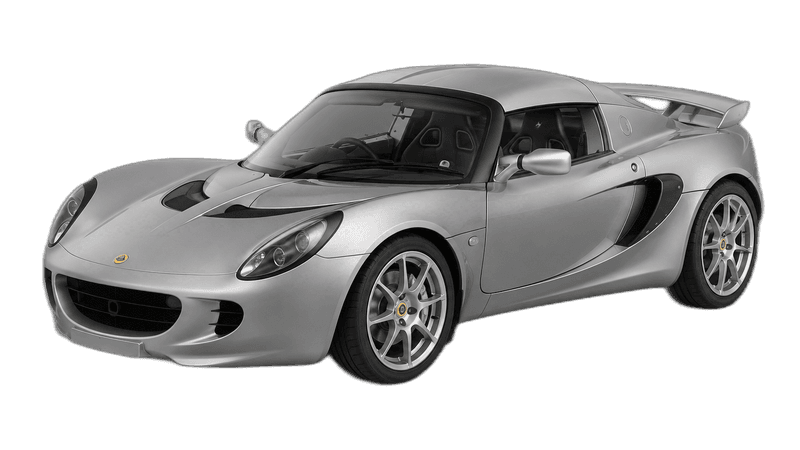
Lotus Elise S2 111R
£28,000
usedIndicative market price, updated periodically.
189bhp
Power
5.2s
0-100 km/h
241km/h
Top Speed
£28,000
Price Used
How hard it pulls.
Peak g-force the instant you bury the throttle, estimated from the car's 0–100 time and drivetrain.
Lotus Elise S2 111REstimated peak launch g from the 0–100 time and drivetrain: an honest approximation, not a measured figure.
The Lotus Elise S2 111R is a 2 seater fixed-head coupé by Lotus, with 189 bhp, 181 Nm of torque, a 0-100 km/h time of 5.2 seconds and a top speed of 241 km/h. Indicative used value: approximately £28,000. Actual values vary with specification, condition and history.
Dream Car Garage Editorial · Last updated 30 October 2026
Overview
We have not driven this car. This review is based on published specifications and the sources listed below.
The S2 broadened the Elise without losing the formula
The second-generation Elise kept the bonded aluminium chassis and low body mass, but it covered several different powertrains. Our catalogue uses the Toyota-engined 111R phase from 2004 to 2011: a 1796 cc Toyota 2ZZ-GE naturally aspirated inline-4 with 189 bhp, 181 Nm, 0 to 100 km/h in 5.2 seconds and a 241 km/h maximum, with rear-wheel drive. We have not driven this model for this article. This is a desk-researched ownership guide using Lotus's Elise history, the PistonHeads Elise S2 used buying guide and the DVSA recall service.
Lotus's own history places the second-generation Elise in 2000 and the Toyota VVTL-i engine switch in spring 2004, with an 8,500 rpm redline. It also records the 2008 supercharger evolution that took the 189 bhp car to 217 bhp. PistonHeads gives the 111R 189 hp, 0 to 62 mph in 4.9 seconds, a 150 mph maximum and an 860 kg weight. That context matters because an S2 can be a K-series car, a Toyota 111R, a supercharged SC or one of several special editions. The 111R should be identified by engine, gearbox and paperwork, not by badges alone.
Engine identity is the first inspection gate
The S2's value depends on knowing exactly which engine is fitted. PistonHeads lists K-series cars with 120, 134 or 156 hp, then Toyota 1ZZ and 2ZZ options. The 111R uses the higher-output Toyota 2ZZ-GE and a six-speed manual. Ask for clear photographs of the engine, the VIN plate and the service file, then check that the engine cover, exhaust manifold, gearbox casing and engine-management details match the claimed specification. A Toyota-engined car is not automatically a 111R, and a supercharged car should not be valued as a standard 111R without evidence.
For the Toyota engine, the chain drive is generally robust, but the service history still matters. Oil changes, coolant condition, leaks, correct plugs and regular full-temperature runs all help preserve the engine. PistonHeads notes that supercharged cars can show second-and-third synchro crunch, so the gearbox test is important even though this catalogue entry is the naturally aspirated 111R. The six-speed shift should be precise when cold and warm. Check clutch take-up, slave-cylinder operation and any history of gearbox removal.
The bonded chassis needs a structural, not cosmetic, inspection
The Elise S2 uses a bonded aluminium structure with separate subframes and lightweight clamshells. PistonHeads warns of galvanic corrosion and points out that accident-height tolerance can be as tight as 2 mm on some checks. That makes a proper Lotus-aware inspection essential. Look under the car for impact damage, repaired chassis areas, uneven subframe mounts, fresh underbody paint and corrosion around steel inserts. The front and rear clamshells should fit evenly, and cracks around lamp apertures, wheel arches, tow-eye areas and radiator ducts should be explained.
A road test should reveal whether the car tracks straight over camber changes and brakes without pulling. Uneven tyre wear can indicate poor geometry, kerb impact or hard track use. PistonHeads also points to air-conditioning pipe leaks on equipped cars, roof leaks and the condition of the ProBax seats. Test the roof panels in rain or with a hose, and inspect carpets, seat runners, pedals and the bulkhead for damp. Water in an Elise is not only a comfort issue; it can attack electrical connections and hardware.
Suspension, brakes and tyres show the quality of setup
The 111R rewards correct geometry. Dampers, bushes, ball joints, wheel bearings, anti-roll-bar links and alignment settings should be checked by condition and ride behaviour, not by appearance. A tight car should feel alert without tramlining or crashing over small bumps. The unassisted steering should be accurate and free from play, and the brakes should pull the light body down evenly. PistonHeads notes that 2006 brought an LSD and traction-control options, so the specification should be verified from the car rather than assumed from the model year.
Brake discs, pads, hoses, fluid and calipers should be judged by use. Track work is not automatically bad on an Elise, but it should be documented with invoices for fluids, tyres, brake parts and geometry resets. Check wheel edges for kerb damage and the front clamshell for stone impact. The factory wheels and correct tyre sizes matter because an Elise's steering feel can be changed by the wrong offset, oversized wheel or poor-quality tyre.
Documents and configuration complete the valuation
An S2 111R should come with a clear VIN, engine identity, service invoices, old MOT history and evidence of Lotus or specialist work. Check that seats, steering wheel, roof, wheels, lights and trim match the year and market. Modifications are common, from sports exhausts and harnesses to upgraded radiators and different dampers. They can be well chosen, but they need receipts, a reason and the correct installation. A car returned to standard after track use should receive the same scrutiny as an obviously modified car.
A road test should include a cold start, a full-throttle pull in a safe gear, low-speed manoeuvring and a long enough run for the cooling fans and clutch to show their behaviour. If the seller cannot explain warning lights, uneven tyres or replacement panels calmly, walk away rather than trying to price every unknown. Use the DVSA recall service to check outstanding actions, then verify any open campaigns through a Lotus specialist. The right 111R should have a confirmed Toyota engine identity, a straight bonded chassis, dry roof seals, precise gearbox action, healthy cooling and a suspension setup suited to road use. This guide combines Lotus, PistonHeads and DVSA evidence. It avoids applying K-series problems to Toyota cars and keeps supercharged derivatives separate.
Specifications
Engine
1.8-litre (1796 cc) Toyota 2ZZ-GE inline-4 petrol
Displacement
1.8L
Power
189 bhp
Torque
181 Nm
0-100 km/h
5.2s
Top Speed
241 km/h
Drivetrain
RWD
Country
UK
Body Style
2 seater fixed-head coupé
Years
2004–2011
Price Used
£28,000
Specifications are manufacturer-published figures.
More from Lotus
Frequently Asked Questions
What are the specifications of the Lotus Elise S2 111R?
The Lotus Elise S2 111R is a 2 seater fixed-head coupé by Lotus, with 189 bhp, 181 Nm of torque, a 0-100 km/h time of 5.2 seconds and a top speed of 241 km/h. Indicative used value: approximately £28,000. Actual values vary with specification, condition and history.
How much does a Lotus Elise S2 111R cost?
Indicative used value: approximately £28,000. Actual values vary with specification, condition and history.
What drivetrain does the Lotus Elise S2 111R use?
The Lotus Elise S2 111R is configured with rear-wheel drive.
What type of car is the Lotus Elise S2 111R?
The Lotus Elise S2 111R is a sports cars manufactured by Lotus in UK. Production ran from 2004 to 2011.