
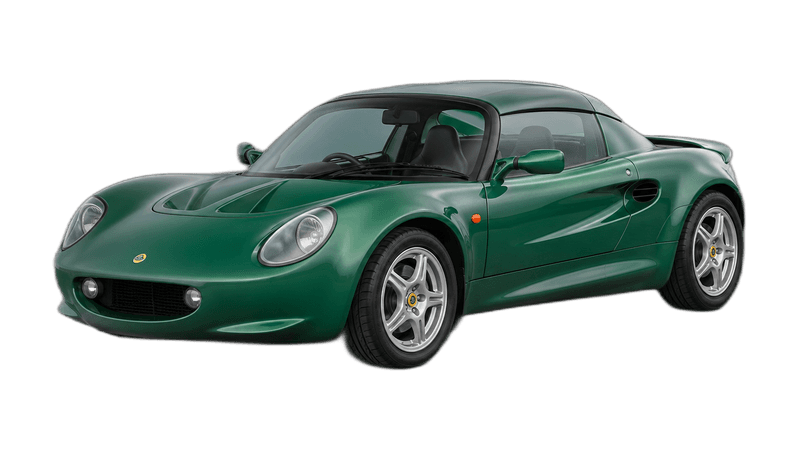
Lotus Elise S1
£32,000
usedIndicative market price, updated periodically.
118bhp
Power
5.8s
0-100 km/h
203km/h
Top Speed
£32,000
Price Used
How hard it pulls.
Peak g-force the instant you bury the throttle, estimated from the car's 0–100 time and drivetrain.
Lotus Elise S1Estimated peak launch g from the 0–100 time and drivetrain: an honest approximation, not a measured figure.
The Lotus Elise S1 is a 2 seater fixed-head coupé by Lotus, with 118 bhp, 165 Nm of torque, a 0-100 km/h time of 5.8 seconds and a top speed of 203 km/h. Indicative used value: approximately £32,000. Actual values vary with specification, condition and history.
Dream Car Garage Editorial · Last updated 30 October 2026
Overview
We have not driven this car. This review is based on published specifications and the sources listed below.
The first Elise made weight the main feature
The Lotus Elise S1 turned a small engine and a very light bonded aluminium structure into a benchmark sports car. Our catalogue uses the 1996–2000 phase: a 1796 cc Rover K-series naturally aspirated inline-4 with 118 bhp, 165 Nm, 0 to 100 km/h in 5.8 seconds and a 203 km/h maximum, with rear-wheel drive. We have not driven this model for this article. This is a desk-researched ownership guide using Lotus's own Elise history, the PistonHeads Elise S1 used buying guide and the DVSA recall service. Their evidence should shape a specialist inspection.
Lotus launched the Elise at Frankfurt in September 1995, and its own history records the original 1.8-litre car with 118 bhp, a five-speed gearbox and 100 km/h in 5.9 seconds. The body was fibreglass over an extruded and bonded aluminium chassis, which gave the car its low mass and direct responses. PistonHeads records a 755 kg weight, a 120 hp output at 5,500 rpm and 122 lb ft of torque at 3,000 rpm. Those small differences in quoted output and timing do not change the ownership question: the right S1 is defined by chassis condition, engine cooling history and careful assembly rather than by headline power alone.
The Rover engine is simple only when the file proves it
The K-series engine has a loyal following, but an Elise S1 should not be bought on reputation alone. PistonHeads says the head gasket and plastic dowels should be treated as essential evidence, with multi-layer steel gasket upgrades preferred. Ask when the gasket was last done, who did it, whether the head was checked and what coolant system work followed. A clean invoice trail matters more than a verbal claim that the problem has been solved. Overheating, coolant loss, mayonnaise under the oil cap, bubbles in the expansion tank and oil around the head joint all require diagnosis before purchase.
The cambelt schedule is usage-sensitive. PistonHeads quotes the old 50,000-mile or five-year interval, but a car used hard, stored often or serviced irregularly should be judged by condition and date rather than by distance alone. Ask for belt, tensioner and water-pump invoices, then inspect the engine for leaks around the cam cover, coolant hoses, thermostat housing and radiator. The original radiator is fragile, and an alloy replacement is often sensible. The clutch and slave cylinder should operate smoothly, while the red plastic clutch line on an original car should have been replaced. Woolly shift feel can be improved with refreshed bushes, but a gearbox that crunches or jumps out needs a more serious conversation.
The bonded tub and subframes decide whether the car is viable
The Elise S1 is not a conventional steel car. Its bonded aluminium chassis is light and stiff, but damage can be difficult or uneconomic to repair. Inspect the underside for impact scars, cracks, previous repairs and signs that the chassis has been separated from damaged subframes. PistonHeads highlights galvanic corrosion around steel suspension pickups and inserts, plus corrosion in the rear steel subframe. Bubbling paint, white deposits, distorted bolt holes or fresh seam sealant should be treated as structural questions, not cosmetic ones.
The front and rear clamshells should fit evenly, with consistent panel gaps and no unexplained fresh paint. A low car can have suffered speed-bump or driveway damage even without a recorded accident, so the underside inspection is more important than a polished engine bay. The pop-up or fixed headlamp details, front splitter, rear arches and side sill edges should match the car's age and mileage. The hardtop and soft roof both need a water test. Damp carpets, a misted rear window, musty trim or corroded pedal hardware can turn a light sports car into a persistent leak-repair project.
Brakes, geometry and tyres reveal how the car has been used
Early Elise S1 brakes include the unusual MMC setup on some cars, and PistonHeads notes that they can feel different from conventional cast-iron brakes. Whatever the specification, the value is in condition: disc thickness, pad material, hose age, caliper operation, fluid history and a firm pedal after repeated use. The steering should be precise without free play, and the car should not wander under braking or follow camber changes excessively. Tyres should be appropriate for the car, matched across an axle and consistent with the alignment settings.
Suspension bushes, dampers, ball joints, wheel bearings and track-rod ends all age quickly on a car this light and low. A short road test should include cold start, full warm-up, slow manoeuvres, a third-gear pull and a series of low-speed bumps. Listen for knocks from the front, creaks from the bonded structure, rubbing from the wheels and whines from the transmission. The car should feel light and accurate, not nervous. A specialist geometry check is worthwhile because the S1's responses depend on correct setup rather than power.
Provenance and specialist knowledge protect the buyer
The S1 attracts cars with mixed histories, engine swaps, track use and storage damage. Ask for the chassis number, original engine details, old MOT records, service invoices and evidence of Lotus or specialist work. The roof panels, seats, dashboard, wheels and trim should be consistent with the year. Modifications can be sensible, especially cooling and reliability parts, but they need invoices and a clear explanation. A car with a refreshed chassis, documented engine work and a dry interior is a different proposition from a car that merely looks bright in photographs.
Use the DVSA recall service to check outstanding safety actions and confirm any manufacturer campaigns through a Lotus specialist. The right Elise S1 should have a straight tub, a cooling file for the K-series, healthy clutch hydraulics, precise gear selection, dry roof seals and suspension that feels tight rather than fragile. This guide combines Lotus, PistonHeads and DVSA evidence. It assigns no exact production count to the derivative.
Specifications
Engine
1.8-litre (1796 cc) Rover K-series inline-4 petrol
Displacement
1.8L
Power
118 bhp
Torque
165 Nm
0-100 km/h
5.8s
Top Speed
203 km/h
Drivetrain
RWD
Country
UK
Body Style
2 seater fixed-head coupé
Years
1996–2000
Price Used
£32,000
Specifications are manufacturer-published figures.
More from Lotus

Frequently Asked Questions
What are the specifications of the Lotus Elise S1?
The Lotus Elise S1 is a 2 seater fixed-head coupé by Lotus, with 118 bhp, 165 Nm of torque, a 0-100 km/h time of 5.8 seconds and a top speed of 203 km/h. Indicative used value: approximately £32,000. Actual values vary with specification, condition and history.
How much does a Lotus Elise S1 cost?
Indicative used value: approximately £32,000. Actual values vary with specification, condition and history.
What drivetrain does the Lotus Elise S1 use?
The Lotus Elise S1 is configured with rear-wheel drive.
What type of car is the Lotus Elise S1?
The Lotus Elise S1 is a sports cars manufactured by Lotus in UK. Production ran from 1996 to 2000.