
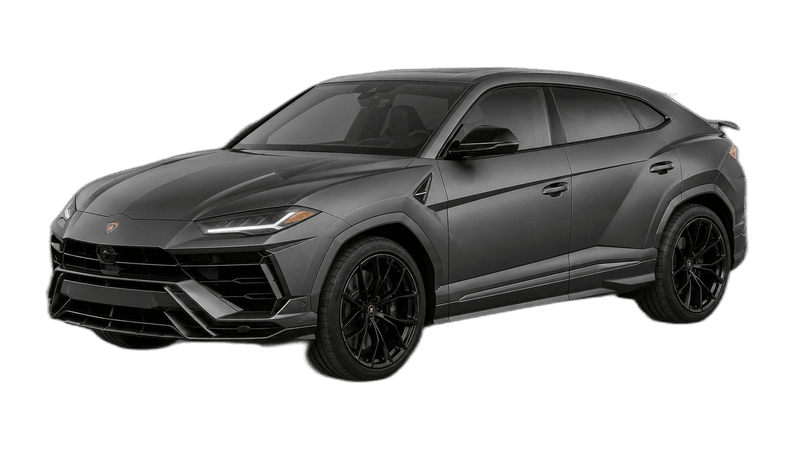
Lamborghini Urus S
£215,000
usedIndicative market price, updated periodically.
657bhp
Power
3.5s
0-100 km/h
305km/h
Top Speed
£215,000
Price Used
How hard it pulls.
Peak g-force the instant you bury the throttle, estimated from the car's 0–100 time and drivetrain.
Lamborghini Urus SEstimated peak launch g from the 0–100 time and drivetrain: an honest approximation, not a measured figure.
The Lamborghini Urus S is a 4/5 seater suv/sports utility vehicle by Lamborghini, with 657 bhp, 850 Nm of torque, a 0-100 km/h time of 3.5 seconds and a top speed of 305 km/h. Indicative used value: approximately £215,000. Actual values vary with specification, condition and history.
Dream Car Garage Editorial · Last updated 2 November 2026
Overview
We have not driven this car. This review is based on published specifications and the sources listed below.
Scope of this guide
This guide is scoped to the Lamborghini Urus S, the petrol super SUV with the 4.0L twin-turbo V8 petrol engine, 666 PS (657 bhp) and all-wheel drive that Lamborghini announced at the end of September 2022 as the successor to the original Urus. It is not a guide to the first-generation Urus of 2018 to 2022 (650 PS, which is about 641 bhp, and a slower 3.6 second claim; it has its own entry in our catalogue), to the Urus Performante, which shares the S's power but is a more track-focused car, or to the Urus SE plug-in hybrid of 2024, which replaced both petrol models. Where those cars differ we say so below, because an advert that says only "Urus" can describe any of them.
We have not driven this model for this article. Everything here comes from three cited sources: Lamborghini's own press release for the Urus S (we read the copy republished by Zawya, because Lamborghini's media site redirected us to its home page when we tried to open it), PistonHeads' road test of 9 February 2023, and the government recall checker. We also read Autocar's first report on the car, Wikipedia, a Canadian report on the end of petrol production and a report on the 2024 US recall, and we flag every point that rests on them. Where sources disagree we say so instead of choosing quietly. We give no prices, because they move and we cannot verify them.
The figures at a glance
- Engine: 4.0L twin-turbo V8 petrol, 3996 cc (PistonHeads prints 3,996cc), a front-mounted V8. Our stored data describes it as a 90-degree V8, but none of the three pages we read gives the cylinder angle, so check it against the handbook.
- Power: 666 PS, which is 666 CV in Lamborghini's wording, at 6,000 rpm according to PistonHeads. We convert at 0.98632 bhp per PS, which gives 656.9, so we store 657 bhp. Wikipedia also prints 657 hp, Autocar prints 656bhp (it truncates), and PistonHeads prints 666hp, which is the metric figure with a different label. The kilowatt figure is about 490 kW.
- Torque: 850 Nm, or 627 lb ft, which PistonHeads prints for 2,300 to 4,500 rpm. Lamborghini's release says maximum torque is available from 2,300 rpm up to 6,000 rpm, so the two sources disagree about where the plateau ends. We have not resolved it.
- 0-100 km/h: 3.5 seconds, from Lamborghini. PistonHeads prints 3.5 seconds for 0-62 mph, which is a very slightly longer distance, so treat the two as one claim. Lamborghini also gives 12.5 seconds to 200 km/h and a 33.7 metre stop from 100 km/h.
- Top speed: 305 km/h, which is about 190 mph. PistonHeads prints 190mph, and Autocar prints 189mph.
- Drive: all-wheel drive through an eight-speed ZF automatic gearbox (the gearbox comes from Wikipedia's infobox, which cites a source we did not open).
- Weight: 2,197 kg DIN without driver on PistonHeads' spec box, and Wikipedia gives about 2,200 kg. Lamborghini's release states 3.3 kg per PS, which agrees: 2,197 divided by 666 is 3.30.
What changed from the first Urus
The headline is a modest power increase. PistonHeads says the figure rose by 16 PS, from 650 to 666, and Lamborghini says the S uses the same powertrain calibration as the Performante, with a retuned exhaust that gives a more distinct sound at start-up and a sharper note in each drive mode. Acceleration to 100 km/h improved from the 3.6 seconds Wikipedia gives for the first car to 3.5 seconds. Autocar describes a redesigned bonnet and bumpers with new air vents, a black stainless steel skid plate matching the black grille, and a new choice of interior options, and says the roof appears unchanged. PistonHeads lists optional body-coloured bonnet vents and says that for the first time there are two Urus models, the S and the Performante, with the S continuing where the original car left off.
Inside, Lamborghini lists two new interior trims, Bi-color Sportivo and Bi-color Sophisticated, both using the Performante's stitching pattern. If an advert claims either of them, it should match the car's build specification.
How it drives, according to the road test
PistonHeads' reviewer Matt Bird found the S more approachable and calmer on demand than the launch-era Urus, praised the driving position and build quality, and called the head-up display brighter and larger than rivals'. The active anti-roll system kept the body very flat, with pitching only under hard braking with the ceramic brakes, and the rear steering made direction changes feel sharp. The criticisms were poor rear visibility, no rear wiper, a gearbox that felt dated next to the Aston Martin DBX, steering that lacks the Porsche Cayenne Turbo GT's feel, and a loud exhaust in its most aggressive setting that is not especially musical. The review concluded that it is not the most rewarding SUV to drive quickly, which is the Performante's job. Lamborghini lists six drive modes plus an Ego mode and adaptive air suspension, and we have not tested any of it ourselves.
Wheels, tyres and ride
PistonHeads' test car ran on 22 inch wheels, with 23 inch wheels available. The reviewer warned that going larger than 22 inches gives the air suspension too much to do against low-speed bumpiness, and that large wheels hurt the ride. For a used buyer that is practical advice: look at which wheel size the car has, inspect the rims for kerb damage, and check the tyre make and date codes, since the options list names Pirelli P Zero as the 22 inch tyre. We found no published tyre life or running cost, so anyone who quotes one is estimating.
How many were built, and when
We found no source that gives a production count for the Urus S alone. Wikipedia sums annual production for every Urus from 2017 to 2025 to about 43,000, but that is our addition of its table, not a stated figure, and it covers all variants. Our catalogue therefore gives no count for the S.
For dates, Lamborghini's announcement was at the end of September 2022 (the Zawya copy is undated, so we rely on press coverage for that). The recall paperwork reported by autoevolution gives a US-market build window for the S of 27 June 2022 to 2 February 2024. Lamborghini's Americas head Andrea Baldi told a Canadian outlet that the petrol-only Urus S and Performante would retire before the end of 2024, with every remaining car already claimed. We could not find a formal last-production date.
What to check before buying
- Confirm which Urus you are looking at: the S with 666 PS and the 2022 facelift styling, the earlier 650 PS car, the Performante, or the SE hybrid. Ask for the build specification and the chassis number.
- Ask for a full dealer service history from a Lamborghini main dealer or a specialist who can show software update records.
- Inspect all four wheels for kerb damage, and ask which wheel size and tyre are fitted.
- Check the brake discs. PistonHeads' test car had ceramic brakes, so find out whether the car you are viewing has them and whether they are original.
- Test the air suspension through its full height range, and listen for faults on the first drive.
- Test every drive mode, the Ego mode settings, the head-up display and the camera systems.
- Look at the bonnet latch and the gaps between bonnet and front bumper, then check the recall status described below.
- Ask whether any remaining warranty transfers to you. We did not find the terms, so we cannot state them.
Recalls and the DVSA check
We did not run the government checker, because it needs a registration number or the manufacturer, model and year, and we are not looking at a specific car. The page says the MOT checking service shows outstanding safety recalls for a car with a registration, while the vehicle recalls checker needs the make, model and year, and non-safety recalls come from the manufacturer directly.
We did find a United States recall, campaign 24V348, reported by autoevolution on 27 May 2024 for the Urus S and Urus Performante. It describes a hood latch striker that could separate and fail, leaving the bonnet unlatched so that it might open or detach while driving. The report covers 2,133 US vehicles, estimates that about two percent are affected, and says dealers inspect the hood and fit a striker support plate if needed, free of charge. A reported Lamborghini explanation instead blames rivet studs that could open small gaps at high speed, so the two accounts differ. We have not established whether a UK car is covered, so run the registration through the checker and ask the dealer for the vehicle identification number history. Absence of a result in our sources is not a clean bill of health.
About the photograph
The picture at the top of this page shows a yellow car at the London Concours in June 2024. The Commons description says only "Lamborghini Urus", and we identified it as the S from its file name and its bumper and bonnet styling, which is a judgement call. We blurred the number plate and cropped and resized the image.
Verdict
The Urus S in this guide is a 4.0L twin-turbo V8 petrol, 657 bhp, 850 Nm, a claimed 3.5 seconds to 100 km/h and 305 km/h, all-wheel drive, and a very capable, calm super SUV that leaves outright focus to the Performante. It is a recent car with plenty of unknowns around support and running costs, so insist on a full history, confirm the specification against the build sheet, and check the recall status. We have not driven it, so use the sources above and a proper inspection to decide.
Specifications
Engine
4.0L twin-turbo V8 petrol
Displacement
4.0L
Power
657 bhp
Torque
850 Nm
0-100 km/h
3.5s
Top Speed
305 km/h
Drivetrain
AWD
Country
Italy
Body Style
4/5 seater suv/sports utility vehicle
Years
2022–2024
Price Used
£215,000
Specifications are manufacturer-published figures.
More from Lamborghini
Frequently Asked Questions
What are the specifications of the Lamborghini Urus S?
The Lamborghini Urus S is a 4/5 seater suv/sports utility vehicle by Lamborghini, with 657 bhp, 850 Nm of torque, a 0-100 km/h time of 3.5 seconds and a top speed of 305 km/h. Indicative used value: approximately £215,000. Actual values vary with specification, condition and history.
How much does a Lamborghini Urus S cost?
Indicative used value: approximately £215,000. Actual values vary with specification, condition and history.
What drivetrain does the Lamborghini Urus S use?
The Lamborghini Urus S is configured with all-wheel drive.
What type of car is the Lamborghini Urus S?
The Lamborghini Urus S is a suvs manufactured by Lamborghini in Italy. Production ran from 2022 to 2024.