
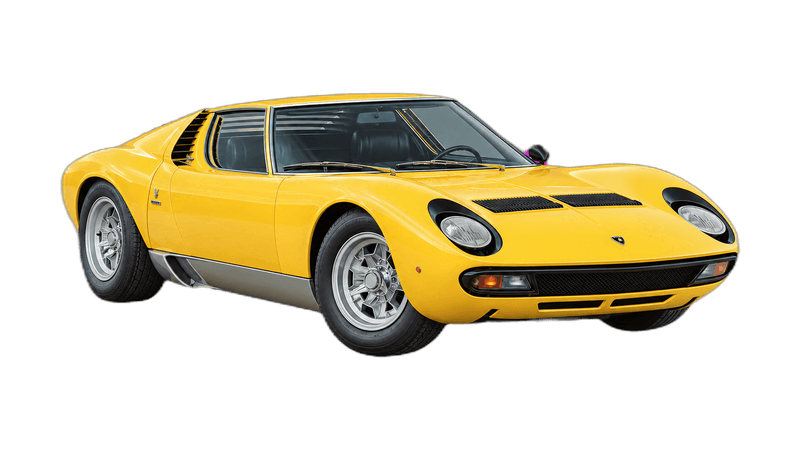
Lamborghini Miura P400 SV
380bhp
Power
The Lamborghini Miura P400 SV is a 2-door coupé by Lamborghini, with 380 bhp.
Dream Car Garage Editorial · Edited by José Teo Lorente Vallecillos · Last updated 28 October 2026
Overview
We have not driven this car. This review is based on published specifications and the sources listed below.
The final development of the Miura
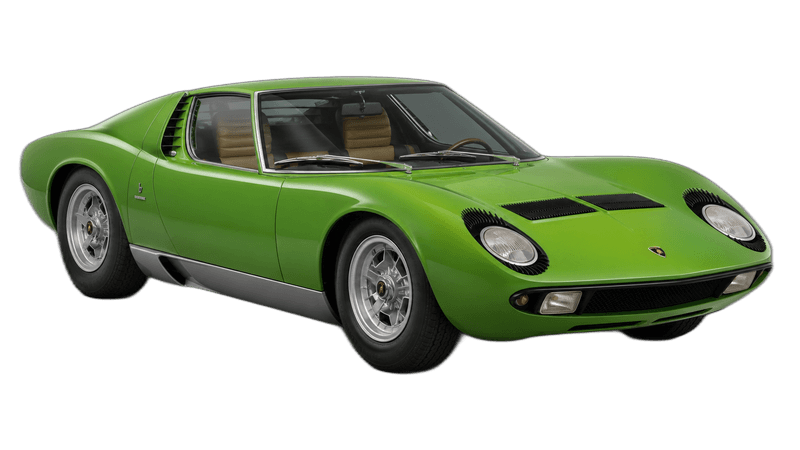
The Lamborghini Miura P400 SV was unveiled at the Geneva motor show in March 1971. It was the last and most developed version of the Miura, with a 3.9-litre V12 producing 385 PS, about 380 bhp, at 7850 rpm and 294 lb-ft at 5750 rpm. The car weighs around 1293 kg, reaches about 180 mph and accelerates from 0 to 62 mph in 5.7 seconds.
The SV is distinguished by a stiffened steel monocoque, revised rear suspension pick-up points and lower wishbones, wider rear wheels and tyres, and a revised rear body. It has a 90-litre front fuel tank, ventilated Girling disc brakes with separate front and rear circuits, and a five-speed transaxle. Lamborghini built 150 SV examples.
This is a desk-researched ownership guide. We have not driven this model for this article. The Miura is a historic car with a strong specialist community, but individual examples vary widely. The guide is an inspection framework, not a substitute for a marque expert.
Engine, carburettors and split sump
The V12 has four triple-choke Weber 40 IDL 3L carburettors and chain-driven double overhead camshafts. It is a high-revving engine with a distinctive sound and a demanding maintenance regime. A cold start, a warm-up and a careful listen for mechanical noise are essential.
Carburettor fires are a known risk on the Miura. The carburettors sit above the engine and can leak fuel onto hot components. Ask whether the fuel system has been refurbished, whether the carburettors have been rebuilt and whether a fire-suppression system has been fitted. Do not assume that a clean engine bay means the risk has been addressed.
The split-sump option was introduced in the autumn of 1971. It separates the engine oil from the gearbox oil, which helps protect the bearings under hard driving. A car without the split sump should be assessed for its use and condition. A conversion should be documented and carried out by a specialist.
Check the oil pressure, the oil condition and the evidence of leaks. The engine is expensive to rebuild, and parts can be difficult to source. Ask for the compression and leak-down results and the details of any recent work.
Fuel system and fire safety
The Miura's fuel system deserves separate attention. The carburettors, fuel lines, pump and tank are all part of a system that was designed in the 1960s. Modern fuel can affect older seals and hoses, and a leak near the exhaust or the hot engine is a serious risk.
Ask whether the fuel tank has been cleaned or replaced, whether the lines are original and whether the carburettors have been rebuilt. A fire-suppression system is a sensible addition for a car that is used regularly. Check that any extinguisher is in date and that the electrical system has been inspected for chafed wiring.
A hot start and a cold start can reveal different problems. A car that is hard to start when hot may have a fuel-vapour or ignition issue. Do not accept a workaround such as an electric fuel pump wired to a switch without understanding why it was fitted.
Chassis, suspension and rust
The Miura uses a steel monocoque with tubular subframes. Rust is a major concern, particularly in the sills, the floor, the front and rear structures and the suspension mounting points. A car that has been restored may look perfect on the surface but hide poor repairs underneath.
Inspect the chassis on a lift with the wheels removed. Look for fresh underseal, irregular welds, patches and ripples. Check the suspension pick-up points and the subframes for cracks. The SV's stiffened chassis and revised rear suspension are part of its identity, so confirm that the correct parts are fitted.
The steering, suspension and brakes should be inspected for wear and correct setup. The car has ventilated Girling discs and separate front and rear circuits. Ask for the brake fluid history and the condition of the calipers and lines.
Bodywork and interior
The Miura's body is low and wide, with a curved windscreen and a distinctive rear. Check the panel gaps, the paint finish and the condition of the glass. Accident damage and poor repairs can be difficult to detect, so a specialist should inspect the car with a paint thickness gauge and a lift.
The interior is simple and driver-focused. Check the seats, the dashboard, the instruments and the switchgear. Original trim and parts are valuable, and incorrect replacements can reduce the car's appeal. The Miura's cabin is narrow, so confirm that the driving position suits the intended driver.
Provenance and originality
Ask for the chassis number, the build records, the ownership history and the restoration invoices. Matching numbers are valuable, but they are not the only measure of quality. A car with a clear history and a well-documented restoration is a better prospect than a car with unexplained gaps.
The 150-car SV production figure is a useful context, not a guarantee of value. A Miura should be bought on condition, originality and documentation. Be cautious with cars that have been converted to SV specification or fitted with non-original bodywork. A conversion should be disclosed and priced accordingly.
Inspection and ownership planning
Use a recognised Miura specialist. The inspection should cover the engine, the carburettors, the fuel system, the gearbox, the chassis, the suspension, the brakes, the body and the documentation. Ask for a cold start, a compression test and a written report.
The cost of restoring a Miura can be substantial, particularly if the chassis or the engine needs work. A project car should be priced with that in mind. This guide makes no claim about transaction prices, future values or universal reliability.
Sources and limitations
Lamborghini's official Miura history supplies the model context, while the Supercar Nostalgia SV article and the Car and Classic Miura guide provide the technical and ownership details. The guide is a desk-researched framework, not a substitute for a specialist inspection.
Specifications
Engine
3.9 L naturally aspirated V12
Displacement
3.9L
Power
380 bhp
Drivetrain
RWD
Country
Italy
Body Style
2-door coupé
Years
1971–1973
Production
150
Specifications are manufacturer-published figures.
More from Lamborghini
Frequently Asked Questions
What are the specifications of the Lamborghini Miura P400 SV?
The Lamborghini Miura P400 SV is a 2-door coupé by Lamborghini, with 380 bhp.
How many Lamborghini Miura P400 SV were made?
Lamborghini produced 150 units of the Lamborghini Miura P400 SV.
What drivetrain does the Lamborghini Miura P400 SV use?
The Lamborghini Miura P400 SV is configured with rear-wheel drive.
What type of car is the Lamborghini Miura P400 SV?
The Lamborghini Miura P400 SV is a sports cars manufactured by Lamborghini in Italy. Production ran from 1971 to 1973.