
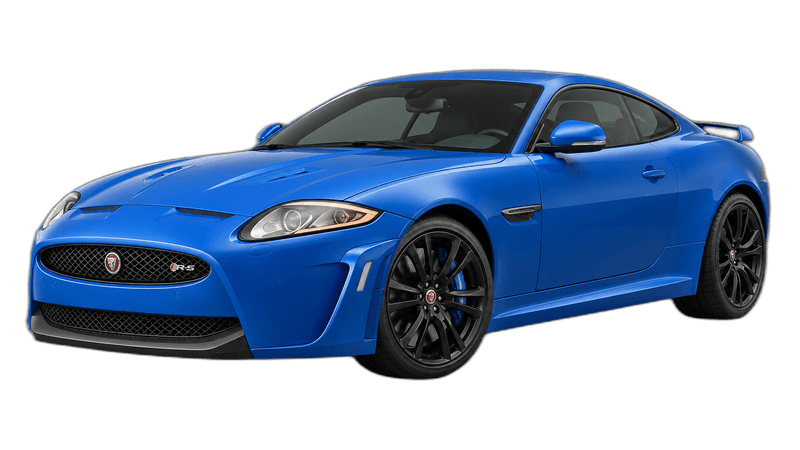
Jaguar XKR-S
£42,000
usedIndicative market price, updated periodically.
542bhp
Power
4.4s
0-100 km/h
300km/h
Top Speed
£42,000
Price Used
How hard it pulls.
Peak g-force the instant you bury the throttle, estimated from the car's 0–100 time and drivetrain.
Jaguar XKR-SEstimated peak launch g from the 0–100 time and drivetrain: an honest approximation, not a measured figure.
The Jaguar XKR-S is a 2+2 seater fixed-head coupé by Jaguar, with 542 bhp, 680 Nm of torque, a 0-100 km/h time of 4.4 seconds and a top speed of 300 km/h. Indicative used value: approximately £42,000. Actual values vary with specification, condition and history.
Dream Car Garage Editorial · Last updated 1 November 2026
Overview
We have not driven this car. This review is based on published specifications and the sources listed below.
The sharper XK flagship
The Jaguar XKR-S was the high-output derivative of the aluminium X150 XK, built to add focus without losing the model's long-distance usability. Our catalogue covers the 2011 to 2014 XKR-S with a 5.0L supercharged V8 petrol engine, 542 bhp, 680 Nm, 0 to 100 km/h in 4.4 seconds and a 300 km/h maximum, with rear-wheel drive. We have not driven this model for this article. This is a desk-researched ownership guide based on Jaguar's XKR-S launch release, PistonHeads' XK X150 used buying guide and the DVSA recall service.
Jaguar announced the XKR-S at 550 PS, 680 Nm and 0 to 100 km/h in 4.4 seconds, with a 300 km/h maximum. The catalogue's 542 bhp reflects the conversion from metric PS to brake horsepower. That makes this a comparatively clear figure, but the buying task is still not about headline numbers. The X150 generation spans 4.2 and 5.0 engines, normally aspirated and supercharged versions, and several equipment phases. Confirm that the car is a genuine XKR-S, not an XKR with stickers or a later body kit.
Supercharged V8 and cooling
The XKR-S uses Jaguar's 5.0-litre supercharged V8, and the first checks are cooling and supercharger health. PistonHeads' X150 guide stresses correct oil, service history and attention to neglected supercharged engines that can rattle as mileage rises. Start the car cold and listen for chain rattle, then warm it fully and listen again. A smooth idle, clean throttle response and absence of belt or supercharger noise matter more than a polished engine cover.
Cooling is a known watch point on the X150. Thermostat faults, radiator clogging, fan problems and general age can turn a grand tourer into an overheating liability. Check coolant level and condition, look for dried residue around hoses and the expansion tank, and confirm that the fans operate properly. Ask about water pump and thermostat replacements. The XKR-S was sold as a performance car, but any individual example may still have led a gentle life. A full warm test drive is essential.
The six-speed automatic should shift smoothly and respond consistently. The X150 guide recommends gearbox oil and filter attention around 60,000 miles, which is sensible on a heavy, high-torque GT. On the road, check for delayed engagement, shudder or flare. Rear-wheel drive means tyres and differential condition matter. Uneven wear, whining under load or a history of hard launches should all prompt closer inspection.
Suspension, brakes and electrical systems
The XKR-S has stiffer, more focused chassis settings than the standard XKR, but age affects every X150. PistonHeads highlights CATS adaptive dampers failing around the 60,000-mile mark, along with lower wishbones and bushes. Listen for knocks over broken roads and check for fluid leaks on the dampers. If the car rides harshly and floats at the same time, suspect worn components rather than character.
Brakes should be strong and straight. Inspect discs, pads, calipers and fluid history. The XK is heavy, and the XKR-S is fast enough to expose tired brakes quickly. Check the electronic handbrake carefully; PistonHeads notes failures around five years of age, and replacement or repair can be more than a minor inconvenience. Test hill holding, release and warning-light behaviour.
Electrical health is another major checkpoint. Battery drain can create multiple faults across modules, and the X150 uses plenty of electronics. A diagnostic scan is worthwhile. Test windows, mirrors, seats, climate control, parking sensors and the infotainment system. Water in the footwells can point to blocked air-conditioning drains or poor repairs. The aluminium body resists conventional rust, but it can hide accident damage, so check panel gaps, paint thickness and the pedestrian-bonnet system for fault codes or previous deployment.
A long test drive is especially important on an XKR-S. The engine should pull cleanly from cold and hot, the gearbox should avoid flare under load, and the car should remain composed over broken surfaces. Listen for suspension knocks, feel for brake vibration and watch the temperature gauge during sustained running. PistonHeads' X150 advice is essentially to let the car reveal its condition through use, not just a short dealer loop.
Body, provenance and recalls
The X150's aluminium construction is a strength, but repairs need expertise. Look for waviness, mismatched panels, corrosion around fasteners and trim rub where panels have been disturbed. Check the boot and cabin for damp carpets, musty smells and evidence of water tracking. Inspect the luggage area and footwells for damp because air-conditioning drain and weatherseal faults can present as electrical gremlins or repeated module warnings after rain or a wash. Check the cabin during the first viewing, not after the seller has aired the car. Inside, inspect seat bolsters, steering-wheel wear and switchgear operation. A low-mileage car with brittle trim may need more recommissioning than a higher-mileage car with continuous use.
Use the DVSA recall service and match the result to invoices. PistonHeads' XK guide also notes early XKR electronic differential vibration issues that should have been addressed under warranty on affected cars. Ask for evidence if the seller mentions differential work, and pay attention to any vibration under acceleration. Documentation is the difference between a sorted XKR-S and a costly project.
The best XKR-S is a genuine, documented car with a full service file, healthy cooling system, smooth supercharger and gearbox, functional dampers and brakes, a stable electrical system and straight aluminium bodywork. It offers a distinct blend of speed and GT manners, but the purchase case rests on careful inspection rather than the badge alone.
Specifications
Engine
5.0L supercharged V8 petrol
Displacement
5.0L
Power
542 bhp
Torque
680 Nm
0-100 km/h
4.4s
Top Speed
300 km/h
Drivetrain
RWD
Country
UK
Body Style
2+2 seater fixed-head coupé
Years
2011–2014
Price Used
£42,000
Specifications are manufacturer-published figures.
More from Jaguar
Frequently Asked Questions
What are the specifications of the Jaguar XKR-S?
The Jaguar XKR-S is a 2+2 seater fixed-head coupé by Jaguar, with 542 bhp, 680 Nm of torque, a 0-100 km/h time of 4.4 seconds and a top speed of 300 km/h. Indicative used value: approximately £42,000. Actual values vary with specification, condition and history.
How much does a Jaguar XKR-S cost?
Indicative used value: approximately £42,000. Actual values vary with specification, condition and history.
What drivetrain does the Jaguar XKR-S use?
The Jaguar XKR-S is configured with rear-wheel drive.
What type of car is the Jaguar XKR-S?
The Jaguar XKR-S is a gts manufactured by Jaguar in UK. Production ran from 2011 to 2014.