
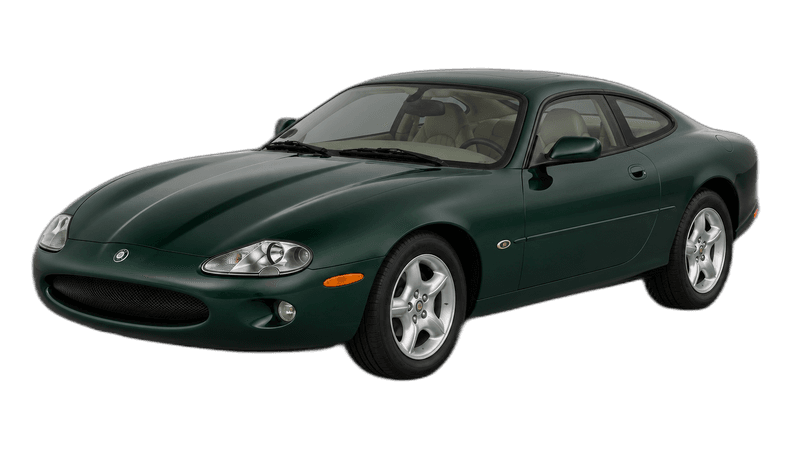
Jaguar XK8 Coupe
£15,000
usedIndicative market price, updated periodically.
290bhp
Power
6.5s
0-100 km/h
250km/h
Top Speed
£15,000
Price Used
How hard it pulls.
Peak g-force the instant you bury the throttle, estimated from the car's 0–100 time and drivetrain.
Jaguar XK8 CoupeEstimated peak launch g from the 0–100 time and drivetrain: an honest approximation, not a measured figure.
The Jaguar XK8 Coupe is a 2+2 seater fixed-head coupé by Jaguar, with 290 bhp, 393 Nm of torque, a 0-100 km/h time of 6.5 seconds and a top speed of 250 km/h. Indicative used value: approximately £15,000. Actual values vary with specification, condition and history.
Dream Car Garage Editorial · Last updated 2 November 2026
Overview
We have not driven this car. This review is based on published specifications and the sources listed below.
Scope of this guide
This guide is scoped to the Jaguar XK8 Coupe (internal code X100) with the 4.0L V8 naturally aspirated AJ26 engine, a rear-wheel drive 2+2 fixed-head coupe built from 1996 to 2002 and sold with a five-speed ZF automatic gearbox. It is not a guide to the XK8 Convertible, to the supercharged XKR, or to the 4.2 litre cars that replaced the 4.0 around 2002 and 2003 and ran until production ended in 2005. Where those cars differ we say so, because an advert that says only "XK8" can describe any of them, and several of the faults below depend on exactly which engine is under the bonnet.
We have not driven this model for this article. Everything here comes from three cited sources: the Jaguar Heritage page for a 1996 XK8 Coupe, the powertrain section of PistonHeads' buying guide to the XK8 and XKR, and the government recall checker. We also read other sections of the same PistonHeads guide, Jaguar's October 1996 North American launch release and 1997 specification sheet as republished by The Auto Channel, and Wikipedia, and we flag every point that rests on them. Several prices and repair costs come from a 2013 guide and are far out of date, so we give them only as a scale.
The figures at a glance
- Engine: 4.0L V8 naturally aspirated, the all-aluminium AJ26 with two overhead camshafts per bank and 32 valves, 3996 cc, with a bore and stroke of 86.0 by 86.0 mm. Jaguar Heritage describes it as the first Jaguar V8.
- Power: 290 bhp at 6100 rpm. Jaguar's heritage page and its 1996 release both say 290, and PistonHeads prints 294 hp. Those are the same engine measured in two units: 290 bhp x 1.01387 is about 294 PS. Our catalogue used to say 294 bhp, which is the metric figure, so we have changed it to 290 bhp.
- Torque: 393 Nm, from the 290 lb ft at 4250 rpm that PistonHeads prints (290 x 1.3558 is about 393). Jaguar's 1997 US specification sheet gives 284 lb ft, or 385 Nm, at 4200 rpm on the SAE net basis, so the exact figure depends on the test standard.
- 0-100 km/h: 6.5 seconds. That is a 0-60 mph time, printed by both PistonHeads and Jaguar's 1997 sheet for the coupe, and a true 0-62 mph or 0-100 km/h time would be a little longer, perhaps a tenth of a second. Wikipedia prints 6.7 seconds for the coupe, while Jaguar's sheet gives 6.7 for the convertible, so published numbers vary by about 0.2 seconds. Our catalogue previously held 6.6 seconds, which no source we read supports.
- Top speed: 250 km/h. Jaguar Heritage says both the XK8 and XKR were limited to 155 mph (250 km/h), PistonHeads says every XK is limited to 155 mph, and Jaguar's 1997 sheet gives 156 mph (251 km/h) for the electronically limited coupe. The limiter, not the engine, sets the number.
- Drive: rear-wheel drive through a five-speed ZF automatic with Normal and Sport modes. There was no manual option on the 4.0, and PistonHeads says it was only ever offered with an automatic.
- Weight: 1666 kg (3673 lb) for the coupe on Jaguar's 1997 sheet, against 1754 kg for the convertible.
What the car is
The XK8 was shown at the Geneva Motor Show in March 1996, deliberately in the place where the E-type had appeared 35 years earlier. Jaguar Heritage says it replaced the XJS after 21 years, and that Fergus Pollock styled it under Geoff Lawson. PistonHeads notes that it sits on a modified XJS platform, which explains the handbrake with limited adjustment and a layout familiar to anyone who has worked on the older car. The coupe and convertible went on sale in North America in October 1996 at 64,900 dollars for the coupe, according to Jaguar's release. Jaguar Heritage gives the UK price of its car as 47,950 pounds when new.
The body is steel with plastic front and rear bumpers, not the aluminium that Jaguar used from the later X150 generation. Production ran to 2005, with 91,406 X100 cars built according to PistonHeads, and Jaguar Heritage saying more than 90,000. other sources we saw give 90,064, so treat any total as approximate. We found no figure for 4.0 litre coupes alone and so our catalogue gives no production count.
How the cars differ
The XKR arrived in 1998 with a supercharged 4.0 and 375 hp on PistonHeads' numbers (Jaguar Heritage says 370 bhp), using a Mercedes-Benz five-speed gearbox rather than the ZF unit. From the 2003 model year the normally aspirated car became a 4.2 litre engine, the AJ34, with 305 hp, steel-lined bores and a six-speed automatic, and PistonHeads quotes 6.1 seconds to 60 mph for it against 6.5 for the 4.0. Sources disagree on whether the changeover was in 2002 or 2003, which is why we treat 2002 as the last year of the 4.0 coupe. The convertible shares the engine but is a different car, with a lower quoted top speed of 154 mph on Jaguar's sheet and different structural concerns around the sills and roof.
The AJ26 engine and the Nikasil question
The early 4.0 engine used Nikasil-coated cylinder bores. PistonHeads says the liners could erode, particularly with short trips, too little warm-up and high-sulphur fuel, and that the symptoms are poor starting, sluggish performance as the cylinders leak, and piston slap. Jaguar replaced many engines under warranty and goodwill, and PistonHeads says to look for a plate reading Genuine Jaguar Exchange Product on the crankcase. Steel-lined AJ26 engines replaced the Nikasil units in 2000, and PistonHeads gives the first steel-lined engine number as 0008181043 or higher, adding that some XK8s used up existing stock, so the number is the only reliable check.
Its advice for an original Nikasil engine with no plate is that one used regularly on longer drives is considered low risk, and modern low-sulphur fuel helps. If you are unsure, PistonHeads suggests a blow-by test, where 9 to 19 litres of air per minute is good and over 30 litres per minute means a seriously worn engine. We have not checked these thresholds against a workshop manual, so ask a specialist what they use.
Tensioners, water pump and other engine points
The second known weak point is the plastic timing chain tensioners. PistonHeads says that both the 4.0 and 4.2 engines used plastic parts that deteriorate and break up, that the upper ones fail most often, and that in the worst case the engine is destroyed. The fix is steel tensioners, which were fitted to later 4.2 engines and many exchange 4.0 engines. The guide put replacing all chains and tensioners at about 1,200 pounds at an independent specialist in 2013, so expect more now. Lower tensioners also break but do not destroy the engine, and replacing them is a sensible precaution.
The same guide says the early one-piece water pump has a plastic impeller that can break up, potentially wrecking the engine, and that a two-piece replacement costs about 130 pounds in 2013 terms. It also lists sticky thermostats, radiators that corrode from leaves and debris, and hesitation on throttle input that usually points to a faulty throttle sensor or a dirty throttle body. Budget for the tensioners and pump unless the history shows they have been done.
Gearbox, chassis and body
The ZF five-speed automatic was marketed as sealed for life, but PistonHeads says regular fluid changes every couple of years help, and a steel retaining clip can wear through its surround and fall out, which causes slipping or a delay before Drive engages. The rolling chassis section reports worn rear bushes that make the car feel floaty, rear A-frame bushes that knock, rear dampers that wear fairly quickly, and wheel bearings that should be replaced promptly. Cars built up to 2000 can develop steering column wear felt as a knock, and the fix is a post-2000 column that the guide calls very expensive. Cars with the CATS adaptive damping can suffer worn wiring to the suspension, which shows as a dash warning light.
On the body, PistonHeads says the lacquer on Jaguars of this period is prone to peeling and that metallic finishes seem worse. The aluminium bolts holding the rear bumper screw into steel and corrode, so shake it. It also lists the sill joint below the door handle, the wheel arches under the plastic splash guards, the front footwells, and brake pipes as rust points. The driver's outer seat bolster wears first, and a badly worn one hints at an owner who skimped on maintenance. Early cars ran 245/50 ZR17 tyres, with 18 inch wheels optional.
What to check before buying
- Confirm the engine. Look for the exchange plate, check the engine number against the steel-liner cut-off, and ask for a blow-by test on an original Nikasil unit.
- Ask for invoices for the timing chain tensioners, lower tensioners and water pump, or price them in.
- Check that the gearbox engages Drive without delay and that its fluid has been changed.
- Look for peeling lacquer, rear bumper sag, sill cracks and brake pipe rust.
- Test every window, the aerial, electric seats and steering column, and ask whether both key fobs work.
- Buy on history and condition, not mileage. One owner quoted by PistonHeads says low-mileage cars can be poor buys if servicing was neglected, and that if any invoices are missing you should walk away.
- Get an independent specialist inspection, and confirm the car's identity against the V5C and the engine plate.
Recalls and the DVSA check
We did not run the government checker because we are not looking at a specific car. The page says a car can be checked with its registration number or, without one, by manufacturer, model and year, and that the manufacturer will tell you about non-safety recalls. It states no date cut-off, but it is a weak fit for a car launched in 1996: we have not tested whether it holds entries for Jaguars of this age, so an empty result is not evidence that none exist. We found no recall notice for the 4.0 XK8 in any source we read, and that is not a clean bill of health either. For a car this old, also ask a Jaguar dealer or marque specialist what they can check from the VIN, and ask the seller for any recall paperwork.
About the photograph
The picture at the top of this page shows a 1997 XK8 Coupe with the automatic 4.0 engine, photographed at Charlecote Park in England and used under a Creative Commons licence. The photographer, Vauxford, published it on Wikimedia Commons under CC BY-SA 4.0, and we cropped and resized it. The car's own number plate was already masked in the Commons upload, and we blurred part of a neighbouring car's plate at the edge before cropping. The car is an early 4.0 automatic, so it matches the specification in this guide.
Verdict
The XK8 Coupe in this guide is 290 bhp, 393 Nm, 6.5 seconds to 60 mph and 250 km/h, rear-wheel drive and automatic only, a comfortable grand tourer that is cheap to buy and can be expensive to fix. Its two big risks are the early Nikasil bores and the plastic tensioners, and both can be checked or priced before purchase. A 2013 owner called it reliable and good looking but not especially involving to drive, and another warned of sizeable garage bills. We have not driven it, so use the sources and a proper inspection rather than our word.
Specifications
Engine
4.0L V8 naturally aspirated
Displacement
4.0L
Power
290 bhp
Torque
393 Nm
0-100 km/h
6.5s
Top Speed
250 km/h
Drivetrain
RWD
Country
UK
Body Style
2+2 seater fixed-head coupé
Years
1996–2002
Price Used
£15,000
Specifications are manufacturer-published figures.
More from Jaguar
Frequently Asked Questions
What are the specifications of the Jaguar XK8 Coupe?
The Jaguar XK8 Coupe is a 2+2 seater fixed-head coupé by Jaguar, with 290 bhp, 393 Nm of torque, a 0-100 km/h time of 6.5 seconds and a top speed of 250 km/h. Indicative used value: approximately £15,000. Actual values vary with specification, condition and history.
How much does a Jaguar XK8 Coupe cost?
Indicative used value: approximately £15,000. Actual values vary with specification, condition and history.
What drivetrain does the Jaguar XK8 Coupe use?
The Jaguar XK8 Coupe is configured with rear-wheel drive.
What type of car is the Jaguar XK8 Coupe?
The Jaguar XK8 Coupe is a gts manufactured by Jaguar in UK. Production ran from 1996 to 2002.