
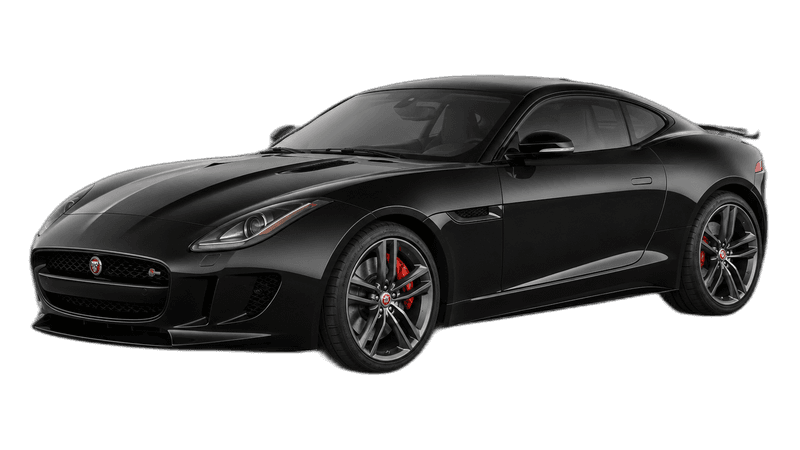
Jaguar F-Type V6 S
£32,000
usedIndicative market price, updated periodically.
375bhp
Power
4.9s
0-100 km/h
275km/h
Top Speed
£32,000
Price Used
How hard it pulls.
Peak g-force the instant you bury the throttle, estimated from the car's 0–100 time and drivetrain.
Jaguar F-Type V6 SEstimated peak launch g from the 0–100 time and drivetrain: an honest approximation, not a measured figure.
The Jaguar F-Type V6 S is a 2 seater convertible/coupe by Jaguar, with 375 bhp, 460 Nm of torque, a 0-100 km/h time of 4.9 seconds and a top speed of 275 km/h. Indicative used value: approximately £32,000. Actual values vary with specification, condition and history.
Dream Car Garage Editorial · Last updated 1 November 2026
Overview
We have not driven this car. This review is based on published specifications and the sources listed below.
The V6 S is the balance point
The Jaguar F-Type V6 S sits in the middle of the early F-Type range: quicker and better equipped than the base car, but lighter and less demanding than the supercharged V8 models. Our catalogue covers the 2013 to 2020 V6 S with a 3.0L supercharged V6 petrol engine, 375 bhp, 460 Nm, 0 to 100 km/h in 4.9 seconds and a 275 km/h maximum, with rear-wheel drive. It was sold as a convertible and, from 2014, as a coupe. We have not driven this model for this article. This is a desk-researched ownership guide based on Jaguar's 18MY F-Type brochure, the PistonHeads F-Type used buying guide and the DVSA recall service.
Jaguar's brochure lists the 3.0-litre supercharged V6 in 340 PS and 380 PS forms, while PistonHeads identifies the V6 S as the 375 hp launch version with 339 lb ft. The catalogue's 375 bhp and 460 Nm are consistent with that model positioning, but the exact output depends on market, year and specification. The first task is to identify the car in front of you: early V6 S, later facelift car, convertible or coupe, standard limited-slip differential and adaptive suspension or not. A vague listing that simply says F-Type V6 is not enough.
Engine first, then the surrounding systems
The supercharged V6 is the reason to buy this car. PistonHeads describes it as strong, but still asks buyers to listen for tappet noise and supercharger wheeze. A light whine is normal; a harsh rattle, metallic chatter or uneven idle is not. Cold start and fully warm running both matter. Check the oil level and condition, look for coolant marks around the thermostat housing, water pump and radiator end tanks, and ask for invoices for plugs, belts and tensioners. The F-Type is not an exotic service puzzle, but it does not forgive skipped maintenance.
Battery condition is unusually important because low voltage creates module faults across the car. A cheap or failing battery can produce warning lights, lazy windows, roof errors and electrical confusion that looks expensive. Ask when the battery was replaced and whether the car has been stored on a maintainer. A diagnostic scan before purchase is worthwhile. It can reveal stored faults that the seller has cleared but not repaired.
The eight-speed ZF automatic is generally the right transmission for this car. Jaguar marketed it as sealed for life, but PistonHeads advises planning a gearbox oil change around 70,000 miles. If the change has been done, the invoice is a strong sign of responsible ownership. On the road, the gearbox should shift cleanly, kick down promptly and avoid shudder at low speed. Harsh engagement when cold can be characteristic; persistent flare, bang or hesitation needs investigation.
Chassis, brakes and the convertible question
The V6 S launched with adaptive suspension and a mechanical limited-slip differential, and those parts should be present and functional. Cycle the Dynamic mode and listen for damper knocking. Look for uneven tyre wear, especially inner shoulder wear that suggests alignment problems. Check the front and rear bushes, subframe alignment and wheel rims for evidence of kerb or pothole damage. A well-kept V6 S should feel tight but not nervous; wandering, tramlining or a crash over broken roads points to worn suspension rather than character.
Brakes need the usual performance-car inspection. Look beyond pad thickness to disc condition, fluid age, caliper paint condition and evidence of track use. The standard brakes are adequate for road use, but repeated hard use without fluid changes ages them quickly. If the car has uprated pads or discs, ask why and who installed them. Modified suspension can improve feel, but it also changes geometry and may hide worn components.
Convertibles add a separate checklist. Operate the roof several times, including from a cold start. It should rise and fold without jerking, creaking or leaving the header rail misaligned. Inspect the seals for grit damage and check the side glass for scratches caused by trapped dirt. Look under the folded roof area for damp carpets, blocked drains or repairs to the hydraulic mechanism. Coupes avoid some of that complexity, but still need a close check of panel gaps, paint flaking around doors and rear arches, bonnet alignment and signs of previous accident work.
Recalls and provenance
PistonHeads lists several F-Type campaigns that matter depending on build date and market: fuel rail and fire-risk work, alternator cable, all-wheel-drive anti-roll-bar specification, rear-spoiler management, belt ancillary fixings and seatbelt pretensioners. The DVSA check is not optional here. Enter the registration, print the result and match any completed work to invoices. A car with open recalls is not automatically a bad car, but the seller should not be vague about them.
Provenance matters because the F-Type range covers a long model run and several updates. The 18MY brochure confirms the V6 remained central to the range, while earlier and later cars differ in lighting, infotainment and driver assistance. Build date, facelift status, options and accident history are more important than a glossy detail. Check the VIN against the service book, look for consistent mileage across MOT or inspection records, and be cautious of a fresh import with no documented UK or European history.
The best V6 S is a mechanically standard car with regular fluid changes, a strong battery, working adaptive dampers, clean roof operation and documented recall work. It is the F-Type for buyers who want the shape, sound and balance without the heavier fuel and running demands of the V8. Buy on evidence, not on exhaust noise alone.
Specifications
Engine
3.0L supercharged V6 petrol
Displacement
3.0L
Power
375 bhp
Torque
460 Nm
0-100 km/h
4.9s
Top Speed
275 km/h
Drivetrain
RWD
Country
UK
Body Style
2 seater convertible/coupe
Years
2013–2020
Price Used
£32,000
Specifications are manufacturer-published figures.
More from Jaguar
Frequently Asked Questions
What are the specifications of the Jaguar F-Type V6 S?
The Jaguar F-Type V6 S is a 2 seater convertible/coupe by Jaguar, with 375 bhp, 460 Nm of torque, a 0-100 km/h time of 4.9 seconds and a top speed of 275 km/h. Indicative used value: approximately £32,000. Actual values vary with specification, condition and history.
How much does a Jaguar F-Type V6 S cost?
Indicative used value: approximately £32,000. Actual values vary with specification, condition and history.
What drivetrain does the Jaguar F-Type V6 S use?
The Jaguar F-Type V6 S is configured with rear-wheel drive.
What type of car is the Jaguar F-Type V6 S?
The Jaguar F-Type V6 S is a sports cars manufactured by Jaguar in UK. Production ran from 2013 to 2020.