
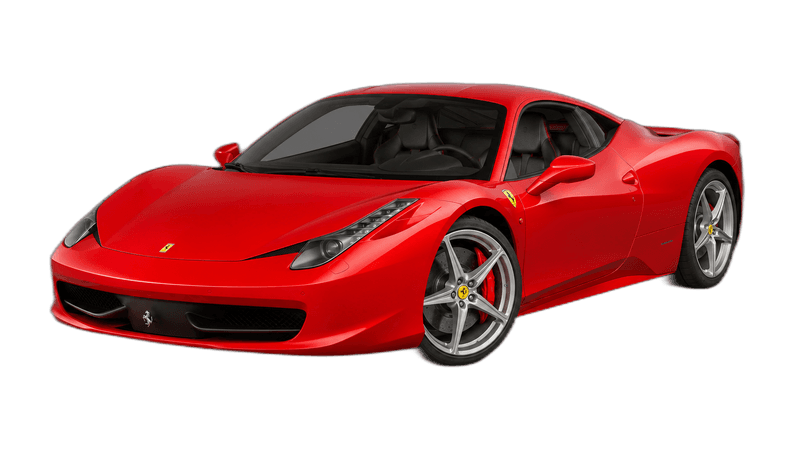
Ferrari 458 Italia
£175,000
usadoIndicative market price, updated periodically.
562cv
Potencia
3.4s
0-100 km/h
325km/h
Velocidade Maxima
£175,000
Preco Usado
Como puxa.
A força g máxima no instante em que pisas a fundo, estimada a partir do 0–100 e da tração.
Ferrari 458 ItaliaG de arranque estimada a partir do 0–100 e da tração: uma aproximação honesta, não um valor medido.
The Ferrari 458 Italia is a 2 seater fixed-head coupé by Ferrari, producing 562 bhp, and 540 Nm of torque, with a 0-100 km/h time of 3.4 seconds, and a top speed of 325 km/h, Valued at approximately £175,000.
Dream Car Garage Editorial · Last updated 24 October 2026
Visão Geral
We have not driven this car. This review is based on published specifications, owner reports and market listings.
The case for the 458 Italia
The Ferrari 458 Italia arrived in 2009 as the replacement for the F430. It uses a 4.5-litre naturally aspirated V8 producing 562 bhp, a 7-speed dual-clutch gearbox and rear-wheel drive. It was the first mid-engined Ferrari to use a dual-clutch transmission, and the last mainstream Ferrari V8 to be naturally aspirated. That alone makes it special.
The 458 is a beautiful car, but it is also a genuinely usable supercar. The cabin is comfortable, the visibility is good for the class and the ride is more compliant than expected. The dual-clutch gearbox is smooth in traffic and brutal when you press the throttle. The engine revs to 9,000 rpm and makes a noise that no turbocharged V8 can match.
The 458 is also a significant car in Ferrari's history. It was the last of the line before the turbocharged 488, and it is the bridge between the analogue F430 and the modern turbo era. Values have been strong, and the best cars are now collector items.
What it costs to run
A minor service at a Ferrari specialist is £1,000 to £1,500, and a major service is £2,500 to £4,000. The 458 uses a timing chain, but the engine still needs regular oil changes and belt-driven accessories. The dual-clutch gearbox needs a fluid and filter change every few years, and the clutch wear should be checked with a diagnostic tool.
Tyres are £1,200 to £1,600 for a set of 20-inch rubber. Brake discs and pads are £3,000 to £5,000 for the carbon-ceramic system. Fuel consumption is 15 to 20 mpg on a run and the low teens in town. Expect high insurance premiums and top-band road tax. A Ferrari warranty or a comprehensive specialist warranty is worth having.
Known weak points
The 458 is generally reliable by supercar standards, but it has known weak points. The gearbox actuator and the F1 hydraulic system can fail, and the repair is expensive. The clutch packs wear, especially on cars that have been used in traffic or on track. A clutch wear reading is essential before buying.
Check the adaptive dampers for fluid misting and any suspension warning. The front lift system, if fitted, can fail. The exhaust manifolds can crack, and the catalytic converters can fail. Electrical faults are common; check the battery condition and look for parasitic drain if the car has stood. The interior has sticky buttons and switches, a common Ferrari issue. Soft paint means stone chips are common on the nose.
The 458's dual-clutch gearbox is more robust than the F430's F1 system, but the clutch packs still wear. A Ferrari specialist can read the clutch wear, and a replacement is £4,000 to £6,000. The gearbox oil and filter should be changed every few years, and the differential can develop a whine. The front lift, if fitted, is useful but adds another failure point.
The 458 is also sensitive to kerb damage and poorly repaired bodywork. The aluminium chassis is expensive to repair, and a minor accident can be a write-off. A pre-purchase inspection by a Ferrari specialist is essential.
What to check before buying
Check the service book and the invoices behind it. A full Ferrari dealer or specialist history is essential. Check that the major services have been done on time and that the clutch wear has been measured. Ask for a fault-code scan and a report from a Ferrari specialist.
Inspect the gearbox and the hydraulic system for leaks. Check the suspension for leaks and the front lift for operation. Check the brakes for disc wear and cracks. A car with carbon-ceramic brakes needs a careful inspection; replacement is expensive. Check the tyres for even wear and the wheels for kerb damage.
Check the engine noise from a cold start and after a run. Check for exhaust leaks, oil leaks and coolant residue. A road test should confirm clean shifts and no hesitation. Check the steering, brakes and suspension. Inspect the paint and the body panels for accident damage. Check the front lift, the adaptive dampers and the exhaust bypass valves. The 458 has a complicated electronic differential and stability system, so a fault-code scan is essential. Check the battery condition and the charging system. Electrical faults can be expensive, so test the infotainment, climate and safety systems.
Market and depreciation
The 458 Italia has been a strong market performer. At the time of writing, a good Italia with 20,000 to 40,000 miles was £150,000 to £200,000. The Spider was £170,000 to £220,000, and the Speciale was £250,000 to £300,000. Low-mileage, high-spec cars were at the top of those ranges.
The market has cooled from its peak, but the 458 remains desirable. The last naturally aspirated V8 Ferrari is a significant car, and the supply is limited. The Speciale is the collector car, with more power, less weight and a more focused chassis. The Spider is the open-top version and carries a premium. The Italia is the value pick, but it is still a £150,000 car. Full history, low mileage and a good spec protect value better than a patchy record.
Who it suits
The 458 Italia suits the collector who wants a beautiful, usable supercar with a great engine and a brilliant gearbox. It is comfortable enough for a long drive, fast enough for a track day and special enough for a Sunday morning. It does not suit someone who wants a cheap car to run or a car they can maintain at any garage. It also does not suit someone who needs four seats.
If you want a more analogue experience, the F430 is the obvious alternative. If you want more performance, the 488 is faster but less characterful. If you want a track-focused car, the 458 Speciale is the one to have.
Alternatives
The Ferrari F430 is the previous generation, with a naturally aspirated V8 and a more analogue feel. The Lamborghini Huracán is the 458's closest rival, with a V10 and all-wheel drive, but it is less comfortable. The McLaren 650S is faster and more exotic, but it is less reliable. The Porsche 911 Turbo S is more usable and more affordable, but it lacks the Ferrari's drama.
The 458 Italia is a modern classic. It is not the fastest car in its class, but it is one of the most rewarding.
How this review was compiled
This review is based on Ferrari's published technical and service information, owner reports from FerrariChat and the Ferrari Owners' Club, UK Ferrari specialist servicing guides and current Auto Trader listings. These are indicative figures, not a valuation.
Especificacoes
Motor
4.5 litre4499 cc(274.546 cu in) V 8 in 90° vee naturally aspirated petrol
Cilindrada
4.5L
Potencia
562 cv
Binario
540 Nm
0-100 km/h
3.4s
Velocidade Maxima
325 km/h
Tracao
RWD
País
Italy
Carroceria
2 seater fixed-head coupé
Anos
2009–2015
Preco Usado
£175,000
Specifications are manufacturer-published figures.
Mais de Ferrari
Destaque na Carpedia
Perguntas Frequentes
What are the specifications of the Ferrari 458 Italia?
The Ferrari 458 Italia is a 2 seater fixed-head coupé by Ferrari, producing 562 bhp, and 540 Nm of torque, with a 0-100 km/h time of 3.4 seconds, and a top speed of 325 km/h, Valued at approximately £175,000.
How much does a Ferrari 458 Italia cost?
The Ferrari 458 Italia has a used market value of approximately £175,000.
Is the Ferrari 458 Italia AWD or RWD?
The Ferrari 458 Italia uses a RWD drivetrain configuration in a 2 seater fixed-head coupé body style.
What type of car is the Ferrari 458 Italia?
The Ferrari 458 Italia is a supercars manufactured by Ferrari in Italy. Production ran from 2009 to 2015.