
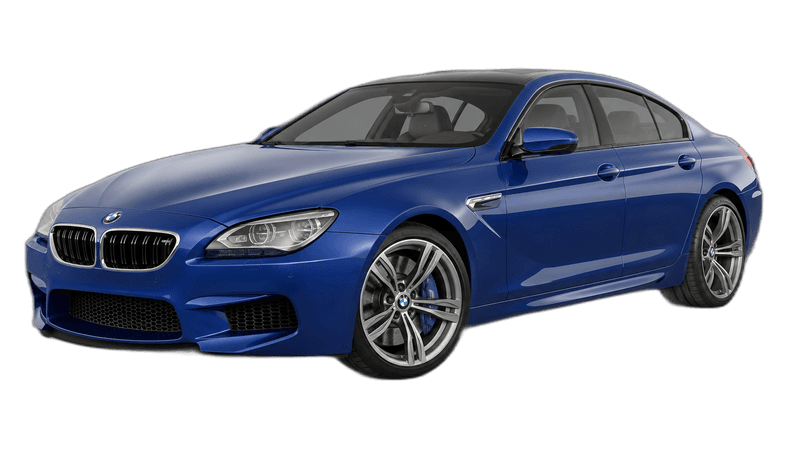
BMW M6 Gran Coupe (F06)
£32,000
usedIndicative market price, updated periodically.
552bhp
Power
4.2s
0-100 km/h
250km/h
Top Speed
£32,000
Price Used
How hard it pulls.
Peak g-force the instant you bury the throttle, estimated from the car's 0–100 time and drivetrain.
BMW M6 Gran Coupe (F06)Estimated peak launch g from the 0–100 time and drivetrain: an honest approximation, not a measured figure.
The BMW M6 Gran Coupe (F06) is a 4-door coupe by BMW, with 552 bhp, 680 Nm of torque, a 0-100 km/h time of 4.2 seconds and a top speed of 250 km/h. Indicative used value: approximately £32,000. Actual values vary with specification, condition and history.
Dream Car Garage Editorial · Last updated 30 October 2026
Overview
We have not driven this car. This review is based on published specifications and the sources listed below.
The four-door M6 proposition
The F06 M6 Gran Coupé is not simply an M5 with a different badge or a two-door M6 with easier access. Its long, low body and individual rear seating give it a particular balance of grand-touring presentation and practical compromise. We have not driven this model for this article. This guide uses BMW's archived model history and the PistonHeads M6-family buying guide to explain the specification and inspection priorities. It does not treat a family-wide report as proof that every Gran Coupé has the same faults.
Standard and Competition are separate specifications
The Gran Coupé arrived in spring 2013 within an M6 family that continued to 2018. The standard F06 uses a 4395 cc S63 twin-turbo V8 with 680 Nm, rear-wheel drive and a seven-speed M DCT. BMW quotes 560 PS, equivalent to approximately 552 bhp in this catalogue, and 0 to 100 km/h in 4.2 seconds. The standard limited maximum is 250 km/h; a higher limit was associated with the optional M Driver's Package.
BMW's history separates the early Competition Package from the later 2015 upgrade. The earlier package offered 575 PS, while the later version reached 600 PS and 700 Nm with a quoted 3.9-second acceleration time. Those figures do not belong to the standard 552 bhp car described here. Confirm the original build and current state of tune before comparing performance or maintenance requirements. Cosmetics, an exhaust note and the seller's chosen description cannot independently establish a factory Competition specification.
Try the body before buying the engine
The wheelbase is 113 mm longer than that of the two-door M6, and BMW describes four full seats with an occasional centre rear position. That is not the same as five equally accommodating seats. PistonHeads highlights the rear-seat headroom compromise. Bring the passengers who will use the car and check access, foot space and head clearance with the front seats set for the actual driver and passenger.
The carbon-fibre-reinforced roof helps distinguish the model, but the more immediate ownership questions concern visibility, parking and luggage. Check whether the boot opening suits the objects you carry rather than relying on a volume figure. BMW quotes expanded capacity with the backrests folded, which is a different configuration from normal passenger use. A low seating position, wide doors and a long body may work well for one household and poorly for another. Test those details before allowing the engine specification to settle the decision.
What a useful service history contains
Ask for invoices that identify the oil, filters and work performed, not only a sequence of digital entries. The PistonHeads guide discusses S63 oil consumption, an early oil-pump issue and reports involving injectors and bearings. It does not establish a universal failure rate. Treat these as prompts for a knowledgeable specialist to review the particular engine, applicable campaigns and previous repairs, rather than as a mandatory rebuild schedule.
Ask whether oil levels have needed attention between services and whether any warning messages were investigated. Check the ownership account against workshop evidence. A replacement component is not automatically a negative if its reason and installation are documented, while a claim of no problems cannot replace an inspection. Modifications need the same clarity: record software, exhaust, cooling and drivetrain changes, and establish whether the maintenance plan was adapted to them.
Inspect the hot and cold powertrain
Arrange a genuine cold start, followed by an assessment after the engine reaches normal temperature. Uneven running, smoke, leaks and abnormal noises need a diagnosis, not an explanation based solely on internet anecdotes. Have the specialist inspect the cooling system and accessible turbocharger-related pipework, and review fault history. An inaccessible component should be recorded as an inspection limitation rather than silently marked as healthy.
The seven-speed DCT is not the older M6's single-clutch SMG. Its condition should be assessed through low-speed manoeuvres, normal acceleration and warm operation. Ask about previous clutch or mechatronic work and obtain estimates for any observed faults before purchase. Review differential condition and service evidence at the same time. A brief demonstration of rapid shifts does not test every part of the transmission, and deliberately repeated launches are not necessary for a sensible pre-purchase assessment.
Brakes and wheels can change the budget
Identify the fitted braking system before comparing cars. PistonHeads distinguishes the steel brakes from optional carbon ceramics, commonly associated with different caliper colours, but the hardware and build record should confirm the answer. Have a specialist assess wear, damage and remaining serviceability using criteria appropriate to the actual discs. An older article's replacement price is not a current local quotation.
Check wheel size and specification against the original order and any declared changes. The guide covers several body styles and Competition phases, so do not assume one wheel fitment applies throughout. Inspect inner rims, tyres and evidence of uneven wear, then check suspension and alignment where necessary. Adaptive dampers and associated controls should work without unexplained faults. Road noise, vibration or knocks should be described precisely in the inspection report rather than bundled into a vague statement that large wheels make every M6 behave that way.
Cabin equipment and electrical checks
The Gran Coupé's appeal includes its cabin finish and available equipment, so check those features as carefully as the engine. Operate any soft-close doors, head-up display, cameras, seat functions and upgraded audio. Confirm adaptive lighting and other advertised options against the car rather than assuming that an expensive original list price meant every feature was standard. Check leather, trim and seals for damage or signs of water entry.
Low usage does not exempt a car from battery and electrical checks. Ask how it has been stored and maintained, inspect the charging arrangements and have stored faults interpreted professionally. Use the DVSA recall service for UK safety campaigns and ask BMW for a VIN-specific check. That is particularly important when a buying guide discusses an issue affecting only part of production or a related model family.
Make the decision on the individual F06
Request an itemised assessment of immediate work, scheduled maintenance and optional refurbishment. That makes comparisons more useful than ranking cars by mileage or specification alone. A standard example with clear history may fit your needs better than a more powerful version with unanswered questions; the reverse can also be true after inspection. No investment return or present valuation is implied. The M6 Gran Coupé is most convincing when its four-door packaging genuinely works for its owner and its service file makes the costs of maintaining that particular S63, DCT and chassis understandable.
Specifications
Engine
4.4L (4395 cc) S63 twin-turbo V8 petrol
Displacement
4.4L
Power
552 bhp
Torque
680 Nm
0-100 km/h
4.2s
Top Speed
250 km/h
Drivetrain
RWD
Country
Germany
Body Style
4-door coupe
Years
2013–2018
Price Used
£32,000
Specifications are manufacturer-published figures.
More from BMW

Frequently Asked Questions
What are the specifications of the BMW M6 Gran Coupe (F06)?
The BMW M6 Gran Coupe (F06) is a 4-door coupe by BMW, with 552 bhp, 680 Nm of torque, a 0-100 km/h time of 4.2 seconds and a top speed of 250 km/h. Indicative used value: approximately £32,000. Actual values vary with specification, condition and history.
How much does a BMW M6 Gran Coupe (F06) cost?
Indicative used value: approximately £32,000. Actual values vary with specification, condition and history.
What drivetrain does the BMW M6 Gran Coupe (F06) use?
The BMW M6 Gran Coupe (F06) is configured with rear-wheel drive.
What type of car is the BMW M6 Gran Coupe (F06)?
The BMW M6 Gran Coupe (F06) is a gts manufactured by BMW in Germany. Production ran from 2013 to 2018.