
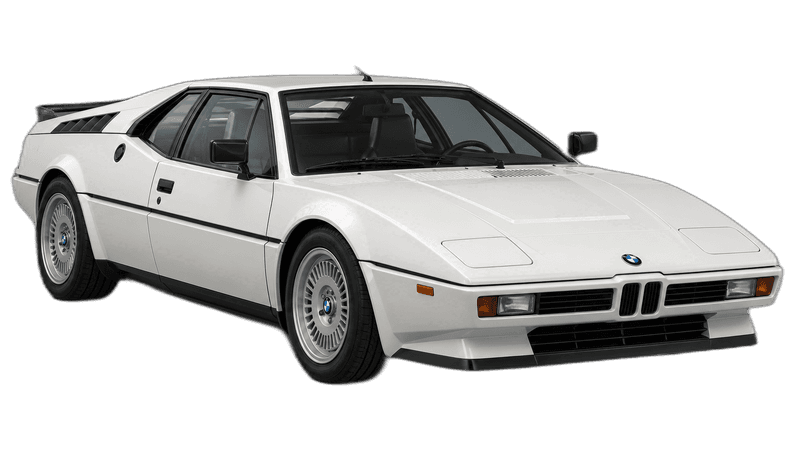
BMW M1
273bhp
Power
265km/h
Top Speed
The BMW M1 is a 2-door coupé by BMW, with 273 bhp, 330 Nm of torque and a top speed of 265 km/h.
Dream Car Garage Editorial · Last updated 28 October 2026
Overview
We have not driven this car. This review is based on published specifications and the sources listed below.
BMW's mid-engine supercar
The BMW M1 was built from 1978 to 1981. It is BMW's only true mid-engine supercar and the car that gave the M division a halo model before the M635CSi and the first M5. The engine is a 3.5-litre M88/1 inline-six with four valves per cylinder, producing 277 PS, about 273 bhp, and 330 Nm. A five-speed ZF transaxle drives the rear wheels. The car weighs around 1300 kg and has a top speed of about 265 km/h.
BMW assigned 460 chassis numbers, but specialist registries count 453 completed cars, including 399 road cars, 14 Group 4 racing cars and about 40 Procar racers. The difference is a reminder to confirm the identity of an individual car rather than relying on a single production figure.
This is a desk-researched ownership guide. We have not driven this model for this article. The M1 is a low-volume, hand-built car with a complex history, so the guide focuses on the inspection points that separate a well-documented example from a costly project.
The M88 engine and injection system
The M88/1 is a twin-cam, 24-valve inline-six with mechanical fuel injection. It produces 277 PS at 6500 rpm and 330 Nm at 5000 rpm. The engine is responsive and rewards proper setup, but it is not a modern unit that can be diagnosed with a generic scan tool.
A cold start is essential. Listen for timing-chain noise, top-end rattles and uneven running. The Kugelfischer-Bosch injection system needs a specialist who understands its adjustment and wear patterns. Ask who last serviced the pump and whether the throttle linkage and cold-start system are correct.
Check the oil pressure, the oil condition and the evidence of leaks. A compression test and a leak-down test are useful. The camshaft and valve clearances should be checked, and the timing chain and tensioner should be inspected. A neglected engine can be expensive to rebuild, and parts are not always easy to find.
The ZF five-speed transaxle should shift cleanly. Listen for bearing noise and check for oil leaks. The limited-slip differential should operate without clonks or whines. A test drive should include a range of speeds and a check of the clutch take-up.
Spaceframe, body and rust
The M1 uses a tubular spaceframe with a glassfibre body. The chassis was initially developed with Lamborghini, then completed by Marchesi and Italdesign, with final assembly by Baur. That history makes documentation important.
Inspect the tubular chassis around the suspension pick-up points, the sills and the floor. Rust can hide under the body and may not be obvious from the outside. A lift inspection with the wheels removed is essential. Look for fresh underseal, irregular welds and repairs that do not match the factory finish.
The glassfibre body can develop stress cracks, particularly around the doors, the front wings and the rear quarters. Check the panel fit and the paint finish. A car that has been raced or modified may have flared arches, a different wing or non-standard cooling vents. Those changes should be documented and reversible.
The Giugiaro-designed body is low and wide. Check the doors, the front boot and the rear engine cover. The pop-up headlights should operate correctly. Replacement glass, trim and body parts are expensive, so inspect every panel carefully.
Procar history and modifications
The M1 Procar championship helped establish the car's competition reputation. Some road cars have been converted to a Procar-style specification, and some genuine racing cars have been used on the road. The two are not the same, and the distinction matters.
Ask for the car's history, the chassis number and the supporting documents. A genuine Procar car should have a continuous competition record. A converted road car should be described as such, with the details of the conversion and the parts used.
Modifications can affect usability and value. A car with a non-standard engine, gearbox or body kit should be assessed by a specialist. Originality is difficult and expensive to restore, so a modified car should be priced accordingly.
Brakes, suspension and safety
The M1 uses ventilated disc brakes and double-wishbone suspension. Inspect the discs, pads, calipers and lines. Check the suspension joints, bushes and Bilstein dampers for wear. The steering is unassisted, so a heavy or vague feel may indicate a problem rather than a character trait.
The car is low and visibility is limited. Check the mirrors, the lights and the seat belts. A fuel tank and electrical system of this age should be inspected for leaks and chafed wiring. If the car has been modified for track use, confirm that the safety equipment is current and that the changes are documented.
Cabin and equipment
The cabin is driver-focused, with a low seating position and offset pedals. Check that the driving position suits the intended driver. The instruments, switchgear and trim are period components that can be hard to replace. Test the lights, the wipers, the heater and the electric windows if fitted.
The M1 has limited visibility and a wide turning circle. A test drive should include a car park and a narrow road, not just an open highway. The steering is unassisted and should feel direct, not heavy through neglect.
Documentation and inspection
Ask for the BMW Classic documentation, the build sheet, the service history and the ownership file. Matching numbers are valuable, but they are not the only measure of quality. A car with a clear history and a well-maintained engine is a better prospect than a low-mileage car with no records.
Use a BMW M1 specialist. The inspection should cover the engine, the injection system, the transaxle, the chassis, the body, the suspension, the brakes and the documentation. Ask for a cold start, a compression test and a written report.
Sources and limitations
BMW M's official history article supplies the engine, performance and production context, while the Car Collector International guide and Classic Car Reviews provide the ownership and inspection topics. The guide makes no claim about transaction prices, future values or universal reliability. A specialist inspection and a documented provenance check remain necessary.
Specifications
Engine
3.5 L naturally aspirated inline-six
Displacement
3.5L
Power
273 bhp
Torque
330 Nm
Top Speed
265 km/h
Drivetrain
RWD
Country
Germany
Body Style
2-door coupé
Years
1978–1981
Specifications are manufacturer-published figures.
More from BMW




Frequently Asked Questions
What are the specifications of the BMW M1?
The BMW M1 is a 2-door coupé by BMW, with 273 bhp, 330 Nm of torque and a top speed of 265 km/h.
What drivetrain does the BMW M1 use?
The BMW M1 is configured with rear-wheel drive.
What type of car is the BMW M1?
The BMW M1 is a sports cars manufactured by BMW in Germany. Production ran from 1978 to 1981.