

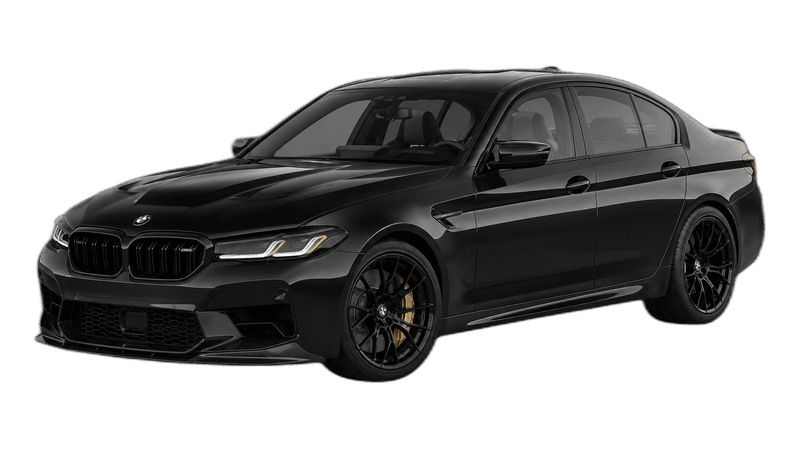
BMW M3 CS (G80)
£110,000
usedIndicative market price, updated periodically.
542bhp
Power
3.4s
0-100 km/h
302km/h
Top Speed
£110,000
Price Used
How hard it pulls.
Peak g-force the instant you bury the throttle, estimated from the car's 0–100 time and drivetrain.
BMW M3 CS (G80)Estimated peak launch g from the 0–100 time and drivetrain: an honest approximation, not a measured figure.
The BMW M3 CS (G80) is a 4-door sedan by BMW, with 542 bhp, 650 Nm of torque, a 0-100 km/h time of 3.4 seconds and a top speed of 302 km/h. Indicative used value: approximately £110,000. Actual values vary with specification, condition and history.
Dream Car Garage Editorial · Last updated 28 October 2026
Overview
We have not driven this car. This review is based on published specifications and the sources listed below.
The xDrive CS, not a rear-drive M3
The BMW M3 CS uses a 2,993 cc twin-turbocharged inline-six producing 550 PS, approximately 542 bhp, and 650 Nm. Its eight-speed Steptronic transmission works with M xDrive and the Active M Differential. BMW quotes 3.4 seconds to 100 km/h and 302 km/h with the standard M Driver's Package. This entry covers the four-door 2023 CS, not a rear-drive M3 CS from another generation or the Touring.
We have not driven this model for this article. The sources are BMW's CS announcement, the PistonHeads G80 M3 Competition buying guide and BMW's VIN recall service. The independent guide concerns the broader G80 family and should not be read as a CS-specific failure register. No official model-specific production total is established by these sources, so the catalogue count remains unset.
Campaign and service history first
The G80 guide discusses an October 2021 service information bulletin concerning main bearing shells on certain engines. Do not turn that into a claim that every CS has the same problem or that every car required the same work. Ask a BMW specialist to check the actual engine's campaign and repair history, including any applicable inspection or replacement records.
Dated annual-service invoices should identify oil, fluid, software and diagnostic work. Preserve stored fault information before it is cleared. A low mileage or a recent service does not by itself answer questions about earlier warnings or campaign completion. Obtain current quotations for any identified work rather than repeating prices from the independent article.
Steptronic and xDrive inspection
The eight-speed Steptronic is a torque-converter automatic, not the DCT used by earlier M cars. Assess its normal operation and review software and fluid history. M xDrive adds a transfer case, while the Active M Differential manages rear-axle torque. A model-familiar specialist should inspect both areas and their diagnostic history rather than treating the CS as a conventional rear-drive M3.
Check for leaks, warning messages and unexplained repairs around the transmission and driveline. Do not use repeated launches or aggressive manoeuvres as a substitute for workshop evidence. The guide's comments are generation-wide context; the individual car's behaviour, records and measurements determine whether further investigation is needed.
Adaptive suspension and tyre wear
Inspect the adaptive dampers, springs, bushes and mounting points for leaks, noise and previous repairs. Compare an alignment report with wear across all four tyres. The CS's weight reduction and bespoke chassis calibration do not make clunks or uneven wear normal by definition. Ask for the setup and geometry record after suspension, wheel or steering work.
The CS uses mixed-size wheels and track-oriented tyre equipment. Confirm the approved sizes, tyre model, dates and condition, including any alternative fitted for climate or road use. New tyres do not explain why an earlier set wore unevenly. Inspect wheel damage and repairs, then relate those findings to the suspension and geometry evidence.
Brakes: identify the fitted system
M Compound brakes are standard, with carbon-ceramic brakes optional. Do not describe every CS as carbon-ceramic equipped. Establish the installed system from the car and build record, then measure discs and pads and check fluid history. If carbon ceramics are fitted, use the appropriate specialist assessment rather than a visual assumption about remaining life.
Circuit use should be connected to dated brake, tyre and geometry inspections. It is not automatic evidence of damage, and its absence is not proof of condition. Ask for current estimates for identified work. The braking report should state which system is installed and which measurements were actually taken.
CFRP and weight-reduction equipment
The CS uses CFRP for the bonnet and several other components, with BMW quoting a weight reduction of about 20 kg against the M3 Competition. Inspect the bonnet, roof, splitter, mirror caps and interior composite parts for damage and previous repairs. Verify equipment against the build record rather than accepting a CS badge or a single carbon panel as proof of identity.
Inspect the underbody and aero mounting areas for contact. Replacement composite parts should have an invoice and a documented repair method. A cosmetic repair and a structural concern are different findings; ask the specialist to distinguish them and to record any areas that could not be accessed.
Cabin, equipment and daily checks
Try the lightweight seats, adjustment and headroom with the intended driver. Inspect Alcantara and other trim for wear, and test the belts, windows, mirrors, climate control, cameras and infotainment. The CS's equipment should be verified rather than inferred from another M3. A seat or option that looks appropriate in a photograph may not suit the intended owner or be present on this chassis.
Check for software updates and evidence of previous electrical investigation. Test all equipment used regularly rather than assuming a low-mileage car is fault-free. The inspection report should list any unavailable demonstration and arrange a follow-up where it materially affects the assessment.
Recall and provenance checks
Enter the full VIN in BMW's recall service and retain retailer confirmation of applicable campaigns. A service bulletin or recall affecting another G80 does not prove that this CS is affected. Keep the result with the build record, service invoices and inspection findings, and do not treat it as a substitute for mechanical assessment.
We have not driven this model for this article. No current price, investment return or universal failure rate is claimed, and the production count remains unset. Correct xDrive and transmission identification, campaign evidence, measured suspension and brakes, and a complete document file are more useful than a generic M3 checklist or a scarcity-based sales pitch.
Specifications
Engine
3.0L (2993 cc) twin-turbo inline-six
Displacement
3.0L
Power
542 bhp
Torque
650 Nm
0-100 km/h
3.4s
Top Speed
302 km/h
Drivetrain
AWD
Country
Germany
Body Style
4-door sedan
Years
2023–2024
Price Used
£110,000
Specifications are manufacturer-published figures.
More from BMW

Frequently Asked Questions
What are the specifications of the BMW M3 CS (G80)?
The BMW M3 CS (G80) is a 4-door sedan by BMW, with 542 bhp, 650 Nm of torque, a 0-100 km/h time of 3.4 seconds and a top speed of 302 km/h. Indicative used value: approximately £110,000. Actual values vary with specification, condition and history.
How much does a BMW M3 CS (G80) cost?
Indicative used value: approximately £110,000. Actual values vary with specification, condition and history.
What drivetrain does the BMW M3 CS (G80) use?
The BMW M3 CS (G80) is configured with all-wheel drive.
What type of car is the BMW M3 CS (G80)?
The BMW M3 CS (G80) is a super saloons manufactured by BMW in Germany. Production ran from 2023 to 2024.