
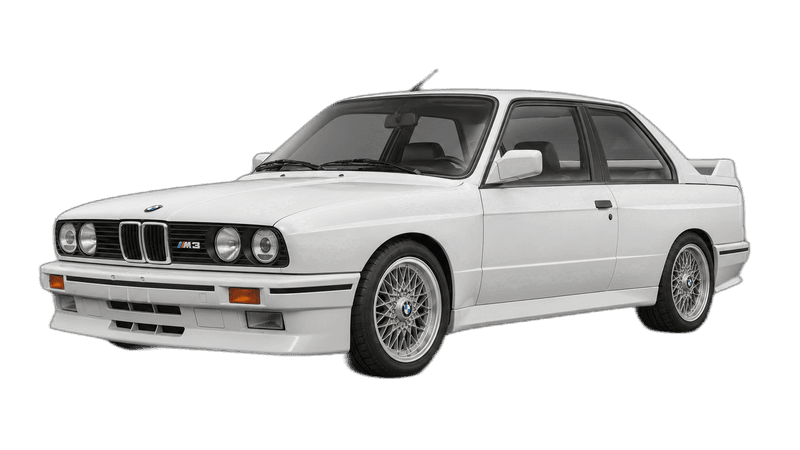
BMW M3 Competition (G80)
£65,000
usedIndicative market price, updated periodically.
503bhp
Power
3.5s
0-100 km/h
250km/h
Top Speed
£65,000
Price Used
How hard it pulls.
Peak g-force the instant you bury the throttle, estimated from the car's 0–100 time and drivetrain.
BMW M3 Competition (G80)Estimated peak launch g from the 0–100 time and drivetrain: an honest approximation, not a measured figure.
The BMW M3 Competition (G80) is a 4-door saloon by BMW, producing 503 bhp, and 650 Nm of torque, with a 0-100 km/h time of 3.5 seconds, and a top speed of 250 km/h, Valued at approximately £65,000.
Dream Car Garage Editorial · Last updated 24 October 2026
Overview
We have not driven this car. This review is based on published specifications, owner reports and market listings.
Establish which G80 is being offered
This entry concerns the G80 M3 Competition, with automatic transmission, rather than the manual standard M3 offered in some markets. Identify rear-wheel drive or M xDrive from the build record. The S58-powered saloon follows the S55 F80, but should not inherit every earlier specification or inspection concern without evidence. The engine, controls and chassis equipment need to be understood as a distinct package before assessing a used example.
This is a desk-researched guide. We have not driven this model for this article. The case for considering it is practical access combined with a highly capable performance drivetrain, not a claim that we measured its handling or reliability. A prospective owner needs to establish which configuration suits ordinary journeys and which equipment is worth maintaining, rather than choosing solely by a power figure.
Transmission and market distinctions
The wider G80 range includes manual and automatic configurations, but market availability differs. UK Competition cars should not be described as if a manual gearbox were the normal local factory offering. Obtain the country of first sale, VIN specification and actual transmission. An imported manual needs its own documentation, insurance quotation and support assessment rather than assumptions drawn from an American advertisement.
Competition and M xDrive are also separate specification questions. Do not infer all-wheel drive from the M3 name or assume every production year has the same output. Record the build date and derivative, then compare like-for-like cars. Retrofitted badges, wheels or software do not authenticate a factory version, and a registration year alone may not identify every update.
Engine condition and service evidence
Review oil servicing, cooling-system work, ignition maintenance and any history of warning messages. Ask an M-experienced technician to inspect for leaks, damaged plumbing and signs of overheating. A recent service reset is not a diagnosis, and a clean engine bay cannot establish that an earlier fault has been repaired correctly. Obtain invoices showing what was found and what was done.
The S58 is not the S55. Advice about crank hubs or other widely discussed earlier-generation issues should not be copied automatically. Ask which inspections and maintenance are supported for this build and its history. Published reports help identify questions; they do not provide a controlled failure rate or guarantee that an engine is healthy because one preventive job was completed.
Drivetrain and chassis
Test the installed transmission from cold and after warming, including slow movement, reverse and normal acceleration. Investigate warnings, abnormal shifts or clutch symptoms rather than assuming they can be removed with an adaptation reset. A service plan should follow the particular gearbox and intended use, not a single interval applied to all modern BMW transmissions.
On M xDrive cars, have the transfer system and differentials assessed alongside tyre specification and condition. Matching and appropriate tyres matter; all-wheel drive is not a cure for worn rubber or poor alignment. Use modes only in suitable conditions following the handbook. A viewing does not require deliberately disabling assistance or attempting a high-speed demonstration to establish basic function.
Suspension, brakes and repairs
Identify the dampers, wheels and brake system actually installed. Carbon-ceramic equipment, where present, needs an appropriate condition assessment and different replacement estimates from conventional brakes. Ask for measured findings and investigate uneven tyre wear, vibration or suspension noise. Such symptoms should not be dismissed as unavoidable consequences of a powerful car without diagnosis.
Inspect the underside, panel alignment and records of accident repairs. Ask whether replacement glass or bodywork required camera or sensor calibration and obtain evidence of completion. A visually tidy car may still need electronic or chassis work after an incident. A normal history check is useful but cannot replace a physical inspection or reveal every privately funded repair.
Daily-use checks
Try the seats, particularly specialised bucket options, before paying. Check pedal reach, access and comfort with the people who will use the car. Rear doors make entry easier than in a coupe, but do not decide whether the seating or ride is suitable for every family. Test on representative roads rather than only a smooth demonstration route.
Demonstrate climate control, displays, cameras, locks, phone connection and both keys. Confirm which connected services transfer and work in the current market. Check VIN-specific recalls and campaigns directly rather than using an old model-wide list. Low mileage does not remove age-related servicing or resolve the implications of extended storage, so reconcile dates as well as distance.
Modifications, cover and budget
Ask about software, exhaust, suspension and wheel changes, including any previous configuration later returned visually to standard. Obtain installer records and verify insurance and local testing requirements. A power measurement does not establish long-term durability or emissions compliance. If a warranty matters, read the actual exclusions, claim process and repair arrangements rather than assuming every standard-looking example retains identical cover.
Build a budget from the inspection: routine work, consumables, unresolved faults, insurance, tax and fuel. Add preparation and recovery if circuit use is planned. No current workshop quotation survey supports a universal annual figure here, and a future update should not be assumed to cure an unresolved fault. Obtain a written estimate or keep the uncertainty explicit before agreeing the price.
Comparing values and alternatives
Match build, derivative, transmission, equipment and condition before comparing advertisements. A manual import, a local Competition and an M xDrive example are not equivalent offers. Asking prices differ from completed transactions. The evidence here does not establish that a particular configuration must appreciate, that depreciation is finished or that a special badge provides a financial safeguard.
The G82 M4 changes rear access and body style, while the F80 M3 offers a different S55-era package with electrically assisted steering. An E9x M3 provides another engine and steering formula. Compare individual examples and support needs rather than an asserted universal winner. Published buying guidance informs these questions; only the car's records and an appropriate inspection can establish its purchase case.
Specifications
Engine
3.0L twin-turbo inline-6 petrol (S58)
Displacement
3.0L
Power
503 bhp
Torque
650 Nm
0-100 km/h
3.5s
Top Speed
250 km/h
Drivetrain
AWD
Country
Germany
Body Style
4-door saloon
Years
2021–present
Price Used
£65,000
Specifications are manufacturer-published figures.
More from BMW




Featured in Carpedia
Frequently Asked Questions
What are the specifications of the BMW M3 Competition (G80)?
The BMW M3 Competition (G80) is a 4-door saloon by BMW, producing 503 bhp, and 650 Nm of torque, with a 0-100 km/h time of 3.5 seconds, and a top speed of 250 km/h, Valued at approximately £65,000.
How much does a BMW M3 Competition (G80) cost?
The BMW M3 Competition (G80) has a used market value of approximately £65,000.
Is the BMW M3 Competition (G80) AWD or RWD?
The BMW M3 Competition (G80) uses a AWD drivetrain configuration in a 4-door saloon body style.
What type of car is the BMW M3 Competition (G80)?
The BMW M3 Competition (G80) is a super saloons manufactured by BMW in Germany. Production started in 2021.