
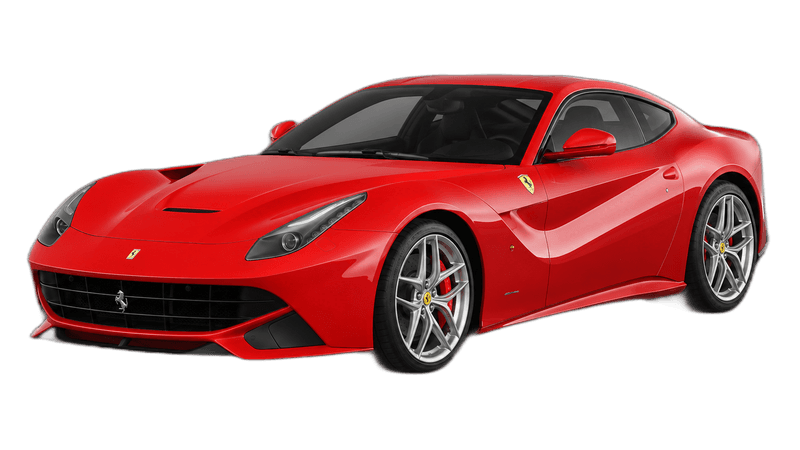
Ferrari F12 Berlinetta
£220,000
usatoIndicative market price, updated periodically.
730cv
Potenza
3.1s
0-100 km/h
340km/h
Velocita Massima
£220,000
Prezzo Usato
The Ferrari F12 Berlinetta produces 730 bhp, reaches 100 km/h in 3.1 seconds and has a top speed of 340 km/h. A representative example is worth about £220,000.
Quanto spinge.
La forza g di picco nell'istante in cui affondi l'acceleratore, stimata dal tempo 0–100 e dalla trazione.
Ferrari F12 BerlinettaG di partenza stimata dal tempo 0–100 e dalla trazione: un'approssimazione onesta, non un dato misurato.
Dream Car Garage Editorial · Edited by José Teo Lorente Vallecillos · Last updated 27 October 2026
Panoramica
We have not driven this car. This review is based on published specifications and the sources listed below.
Ferrari's front-engine V12 starting point
The F12berlinetta arrived in 2012 with a 6.3-litre naturally aspirated V12 producing 730 bhp and 690 Nm. A seven-speed dual-clutch transmission drives the rear wheels, with 0-100 km/h in 3.1 seconds and a top speed around 340 km/h. Its aluminium spaceframe, hydraulic steering and magnetorheological dampers give it a different inspection context from the later 812 generation.
This is a desk-researched ownership guide. We have not driven this model for this article. Ferrari did not publish an official total production figure for this catalogue identity, so no count is assigned here. The useful evidence is the individual chassis, service history, original equipment and present condition.
V12, fuel level and service records
The engine should be observed cold and warm, with oil, coolant and visible hoses inspected. PistonHeads advises against allowing the F12 to run unusually low on fuel because of pump and software sensitivity described by owners. That is not a reason to claim a universal failure. It is a practical prompt to ask about fuel-related warnings and to keep the tank appropriately filled before assessment.
Verify annual service invoices and the actual dates of Ferrari's seven-year service package or any later warranty. A booklet stamped in the past does not prove current coverage. Ask what remains active on this VIN and what work was performed outside the schedule.
The dual-clutch gearbox should be evaluated by a specialist through its normal operating range. Manettino and launch functions belong in an appropriate diagnostic and road-test plan, not an improvised demonstration. Request records for software updates, clutch or sensor work and any warning-related diagnosis.
Hydraulic steering, dampers and geometry
The F12's hydraulic steering distinguishes it from the electric system introduced with the 812. Inspect the hydraulic system, assistance and fluid condition rather than judging it by later-car expectations. Steering response should be assessed alongside suspension and geometry measurements.
Magnetorheological dampers, springs and bushes need a physical inspection with the undertrays removed where appropriate. Compare damper condition and measured geometry with tyre age and wear. Inner-edge or uneven wear can indicate an alignment issue, but a new set of tyres should not be accepted as proof that the cause was resolved.
The optional front lift is useful on a low car. Confirm whether it is fitted, test its operation and listen for hesitation or abnormal pump noise. Check the underbody, front splitter and rear aero surfaces for contact or poor repairs.
Active brake cooling and carbon-ceramic brakes
The F12 uses active brake-cooling ducts and carbon-ceramic brakes. The ducts, visible linkages and surrounding aero parts should be inspected for damage and correct operation. Do not assume that a clean front bumper means the mechanisms beneath it are unaffected.
Carbon-ceramic discs need measured condition rather than a visual assurance. Ask for disc and pad measurements, fluid history and any warning-related diagnosis. Correct wheel and tyre specification matters to braking and chassis behaviour, so check all four corners and document replacements.
PistonHeads also highlights the value of a thorough inspection of brake performance and chassis systems. That work should be carried out by someone familiar with Ferrari diagnostics, not inferred from a short road drive.
Bodywork, fuel flap and cabin electrics
Ask about the fuel flap opening unexpectedly and inspect its operation. The same guide notes paint corrosion around rear-wing vents on some cars, so examine those areas and ask for rectification invoices. Paint or panel repairs should be documented rather than hidden by detailing.
Cabin and electrical quirks can include climate behaviour after restart, a warm no-start, a window not seating correctly and EPB or ABS warnings. A restart may clear a symptom, but it does not establish the cause. Request diagnostic records and test the windows, parking brake, screens and warning behaviour with the seller's permission.
Inspect the seat option in person. Carbon and Daytona-style seats offer different support and adjustment. Check paddle position, JBL speaker condition, passenger display, USB and camera functions. Carbon trim, Tailor Made details and other factory personalisation features should be linked to the factory record rather than assumed from appearance.
Storage and recommissioning should be documented with the same care as the annual service schedule. Ask how long the car was left unused, whether the battery was maintained and what work was performed before it returned to the road. A recent start-up video does not establish oil condition, brake performance or the absence of stored faults. Where possible, arrange the inspection from a genuinely cold start and let the specialist compare cold behaviour with the warmed-up car. The written report should identify any fluid, tyre or electrical work needed because of storage, without assuming that every stored F12 requires the same recommissioning.
Provenance and independent inspection
A Ferrari specialist should inspect the car with access to diagnostics, the underbody, brakes and service file. The report should separate measured findings from seller assurances and list anything that could not be examined. Storage, recent recommissioning and modifications need a clear explanation.
Original equipment and invoices are more useful than an unofficial total production estimate. Keep this coupe's identity separate from the 799-car F12tdf allocation. A full history and a careful inspection provide a better basis for decision than rarity language or a prediction about future demand.
Sources and limitations
We have not driven this model for this article. Ferrari's official F12berlinetta history page establishes the model identity, while the PistonHeads F12 guide supplies the technical and ownership evidence. Ferrari's recall page explains how to check open campaigns with the full 17-digit VIN. This guide makes no claim about transaction prices, future value or universal reliability. VIN-based campaign checks and an independent Ferrari inspection remain necessary.
Specifiche
| Motore | 6.3L (6262 cc) naturally aspirated V12 |
|---|---|
| Cilindrata | 6.3L |
| Potenza | 730 cv |
| Coppia | 690 Nm |
| 0-100 km/h | 3.1s |
| Velocita Massima | 340 km/h |
| Trazione | RWD |
| Paese | Italy |
| Carrozzeria | 2-door coupe |
| Anni | 2012–2017 |
| Prezzo Usato | £220,000 |
Specifications are manufacturer-published figures.
Domande Frequenti
What is a Ferrari F12 Berlinetta worth?
A representative example is worth about £220,000. Actual values vary with specification, condition and history.
How much power does the Ferrari F12 Berlinetta have?
The Ferrari F12 Berlinetta produces 730 bhp and 690 Nm of torque.
How fast is the Ferrari F12 Berlinetta from 0 to 100 km/h?
The Ferrari F12 Berlinetta accelerates from 0 to 100 km/h in 3.1 seconds.
What is the top speed of the Ferrari F12 Berlinetta?
The Ferrari F12 Berlinetta has a top speed of 340 km/h.
What engine does the Ferrari F12 Berlinetta have?
The Ferrari F12 Berlinetta uses a 6.3L (6262 cc) naturally aspirated V12.
When was the Ferrari F12 Berlinetta built?
The Ferrari F12 Berlinetta was built from 2012 to 2017.
Is the Ferrari F12 Berlinetta all-wheel drive?
No. The Ferrari F12 Berlinetta is configured with rear-wheel drive.
Altre di Ferrari
In evidenza su Carpedia
What Cars Should I Put in My Dream Garage?
A comprehensive guide to building a dream garage at every budget. Five balanced 5-car garages, from under GBP 100K total to unlimited, each covering daily driving, weekends, track days, road trips, and special occasions.
The 10 Greatest V12 Engines Ever Made
A celebration of the twelve-cylinder engine, the most intoxicating configuration ever devised, and the ten units that defined it.