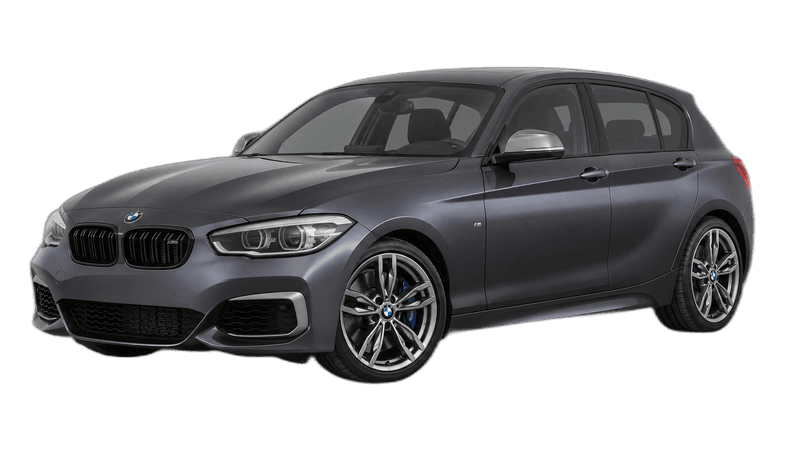
BMW M140i (F20)
£28,000
usatoIndicative market price, updated periodically.
335cv
Potenza
4.8s
0-100 km/h
250km/h
Velocita Massima
£28,000
Prezzo Usato
The BMW M140i (F20) produces 335 bhp, reaches 100 km/h in 4.8 seconds and has a top speed of 250 km/h. A representative example is worth about £28,000.
Quanto spinge.
La forza g di picco nell'istante in cui affondi l'acceleratore, stimata dal tempo 0–100 e dalla trazione.
BMW M140i (F20)G di partenza stimata dal tempo 0–100 e dalla trazione: un'approssimazione onesta, non un dato misurato.
Dream Car Garage Editorial · Edited by José Teo Lorente Vallecillos · Last updated 2 November 2026
Panoramica
We have not driven this car. This review is based on published specifications and the sources listed below.
The last small rear-wheel-drive BMW six
The BMW M140i was sold from 2016 to 2019 as the fastest version of the second-generation F20 and F21 1 Series. Our catalogue lists the car with a 3.0L turbocharged inline-6 petrol (B58) engine, 335 bhp, 500 Nm, 0 to 100 km/h in 4.8 seconds and a 250 km/h maximum, sent to the rear wheels. We have not driven this model for this article. This is a desk-researched ownership guide built from CAR magazine's launch report, a PistonHeads used buying guide first published in October 2022 and the government recall check, and every claim below is attributed to those sources rather than to our own mileage.
Power figures need a note. UK road tests and the PistonHeads guide quote 335 bhp, while continental launch coverage used 340 PS, which is the same rating in metric horsepower. The PistonHeads author also points out that owners report standard cars measuring more than the claimed output on rolling roads, and that the guide's own power and weight data should be treated as relative rather than definitive. Use the numbers to compare cars with each other, not to settle an argument.
Where it sits in the 1 Series story
The M140i replaced the M135i in 2016. Both cars shared the 3.0-litre straight-six layout, but the newer car used the B58 engine that BMW had introduced shortly before in its larger saloons. PistonHeads says it gave around 14 hp and 37 lb ft more than the car it replaced, with peak power at 5,500 rpm and peak torque arriving from about 1,520 rpm. The result was a small, light, rear-wheel drive hatchback with real performance and a six-cylinder soundtrack, in a market that had mostly moved to front-drive or all-wheel-drive rivals.
An all-wheel-drive M140i xDrive existed and was quicker to 62 mph, but it was not officially sold in the UK, so right-hand drive examples are rare. PistonHeads describes a refresh in late 2017 that brought the dashboard and dials from the M240i, sharper iDrive graphics, standard adaptive suspension and adaptive LED headlights, and says special editions such as the Shadow Edition added black trim and blue brake calipers. The car ended in 2019, when the next 1 Series moved to a front-biased platform with a four-cylinder engine. That is why some enthusiasts see the M140i as the last of its kind.
Engine and exhaust checks
The PistonHeads guide describes the B58 as a strong unit with a good reliability record, so most of the checking is about details around it. Start with the exhaust valve, which the guide says was prone to rattling, sticking or failing outright. It adds that BMW usually replaced these under warranty, sometimes fitting the Performance exhaust instead, so ask whether work was done and by whom. Cars built before June 2018 do not have the gasoline particulate filter, which is why they are simpler to fit with an aftermarket back box. Later cars can take one too, but the guide warns of extra work to clear the resulting engine warning light, so check what has been changed and ask for receipts.
Some earlier cars lost coolant slowly without any visible leak, and the most popular theory points at the filler cap letting fluid escape. The loss is gradual, so a quick look at the level on a cold engine is enough to catch it. The original oil filter also gained a reputation for coming apart, which is a good reason to insist on the service schedule. There are no conventional oil or coolant temperature gauges, so the information has to be called up on the screen between the dials, and the dipstick is digital. Owners suggest changing the oil and filter at least every 12 months or 8,000 miles, using 0W30 or 5W30 oil, with the first service at around 20,000 miles or two years.
Many owners tune these engines. The guide says a Stage 1 remap is a common change and that figures vary widely between workshops, so treat any modified car as a different proposition. Ask for the dyno sheet, the tuner's name and whether the remap can be returned to standard, and be wary of a car with an unrecorded history of changes.
Gearbox and driveline
The default gearbox was a six-speed manual with automatic rev matching on downshifts, and the optional eight-speed automatic cut the 0 to 62 mph time to 4.6 seconds and improved economy. The PistonHeads author says the overwhelming majority of buyers chose the automatic, and that used cars split at roughly twelve automatics for every manual. The automatic can be slow to answer a heavy kickdown unless you use the paddles in Sport mode, and reflashes exist to sharpen it. Its Eco Pro mode forces very early upshifts and can disengage the clutch to coast, which some drivers find strange.
Manual cars were deleted from the range around July 2018, so a manual buyer is limited to earlier production. On a test drive, check the clutch bite point and listen for noise on a light throttle. The standard rear differential was open, which means traction on wet roads can be a limiting factor, and the guide says the M Performance limited-slip differential transformed the car for owners who fitted it. Ask whether a limited-slip unit is installed and who installed it.
Chassis, tyres and noise
For most owners the standard suspension was acceptable, though Comfort could feel slightly soft and Sport slightly firm. Adaptive M suspension was an option that owners liked, and it became standard after the late-2017 refresh, according to PistonHeads. On wet roads the car needs quick steering inputs, and the guide says some owners enjoy that while others find it a handful. The steering was supposedly improved over the M135i, but the author found the improvement hard to spot at speed.
Road noise is high, as it was in the M135i. Owners regularly recommended Michelin Pilot Sport 4S tyres, ideally with a second set of winter wheels. Check the tread depth on all four tyres, look for uneven wear that might point to alignment problems, and ask what brand is fitted, because a mix of cheap and premium tyres across an axle suggests a car that has been bought down to a budget. PistonHeads says five-door cars also have an underbody brace, something that was standard on the three-doors, so ask what the car you are viewing has.
Interior and practicality
The interior is the least special part of the car. The PistonHeads guide mentions cheap-looking plastics, no standard Apple CarPlay and a driving position that some find awkward on manual cars because the clutch pedal sits in line with the middle of the seat. There is a spare 12-volt socket under the front lip of the glovebox that many owners never find. The rear seats are acceptable for headroom and comfort, although the transmission tunnel makes life awkward for a fifth passenger, and the three-door gives easier access for rear passengers while the five-door suits car parks better.
The boot is 360 litres with the seats up and 1,200 litres with them folded, according to the guide. That makes the M140i an everyday car as well as a fast one, and it adds to the car's everyday appeal.
Bodywork and small faults
The PistonHeads author reports that 1 Series tailgates seem to have very thin paint on the inside, which can be punctured easily and then rust, so inspect the inner tailgate carefully with a torch. On early cars the charge cooler sits behind the grille under the offside headlight and is vulnerable to stone impacts, and later cars received protective mesh. Frameless window glass can stick to its rubber seals in cold weather, washer jet filters block easily and the door mirrors can squeak in warm weather. None of these are serious, but each one is a useful reason to negotiate on price.
Recalls and the buying decision
Neither written source lists specific recalls for this car, so run the registration through the DVSA recall service before you commit, and ask the seller for evidence that any open recall work was done at a BMW dealer. Request the full service history, and if an independent garage did the servicing, check that the work was registered with BMW so there is no gap in the record.
The PistonHeads author describes the M140i as an end-of-era car and noted in October 2022 that used prices looked low for what it offered. We cannot give you a current figure, so look at several recent listings and compare mileage, edition and history. The best cars have a complete record, an unmodified engine or a documented tune, dry and rust-free tailgate paint, a quiet exhaust valve, no coolant loss and matching tyres. Treat a car that fails several of those checks as a project, not a bargain.
Specifiche
| Motore | 3.0L turbocharged inline-6 petrol (B58) |
|---|---|
| Cilindrata | 3.0L |
| Potenza | 335 cv |
| Coppia | 500 Nm |
| 0-100 km/h | 4.8s |
| Velocita Massima | 250 km/h |
| Trazione | RWD |
| Paese | Germany |
| Carrozzeria | 5-door hatchback |
| Anni | 2016–2019 |
| Prezzo Usato | £28,000 |
Specifications are manufacturer-published figures.
Domande Frequenti
What is a BMW M140i (F20) worth?
A representative example is worth about £28,000. Actual values vary with specification, condition and history.
How much power does the BMW M140i (F20) have?
The BMW M140i (F20) produces 335 bhp and 500 Nm of torque.
How fast is the BMW M140i (F20) from 0 to 100 km/h?
The BMW M140i (F20) accelerates from 0 to 100 km/h in 4.8 seconds.
What is the top speed of the BMW M140i (F20)?
The BMW M140i (F20) has a top speed of 250 km/h.
What engine does the BMW M140i (F20) have?
The BMW M140i (F20) uses a 3.0L turbocharged inline-6 petrol (B58).
When was the BMW M140i (F20) built?
The BMW M140i (F20) was built from 2016 to 2019.
Is the BMW M140i (F20) all-wheel drive?
No. The BMW M140i (F20) is configured with rear-wheel drive.