
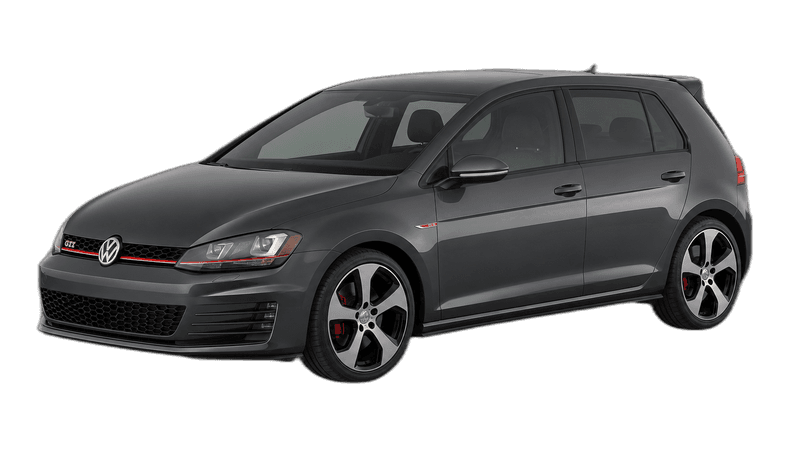
VW Golf GTI (Mk7)
£18,000
usadoIndicative market price, updated periodically.
227cv
Potencia
6.4s
0-100 km/h
250km/h
Velocidad Máxima
£18,000
Precio Usado
Cómo empuja.
La fuerza g máxima en el instante en que pisas a fondo, estimada a partir del 0–100 y la tracción del coche.
VW Golf GTI (Mk7)G de salida estimada a partir del 0–100 y la tracción: una aproximación honesta, no una cifra medida.
The VW Golf GTI (Mk7) is a 3/5-door hatchback by VW, with 227 bhp, 350 Nm of torque, a 0-100 km/h time of 6.4 seconds and a top speed of 250 km/h. Indicative used value: approximately £18,000. Actual values vary with specification, condition and history.
Dream Car Garage Editorial · Edited by José Teo Lorente Vallecillos · Last updated 30 October 2026
Visión General
We have not driven this car. This review is based on published specifications and the sources listed below.
The generation is not a single specification
The seventh-generation GTI moved to Volkswagen's MQB architecture and broadened the gap between the ordinary model and its more focused derivatives. For a used buyer, the useful distinction is not whether every version receives praise, but which hardware and maintenance obligations belong to the car being inspected. We have not driven this model for this article. This desk-researched guide uses Volkswagen's model history and the PistonHeads buying guide, with factory specification separated from reported ownership concerns.
Our catalogue represents the launch-era GTI Performance with the six-speed manual: a 1984 cc EA888 turbocharged petrol four-cylinder, approximately 227 bhp from 230 PS, 350 Nm, 0 to 100 km/h in 6.4 seconds and a quoted 250 km/h maximum. It is front-wheel drive. These are not universal figures for every Mk7 GTI. The generation spans 2013–2019, including a facelift and several different output levels, so its dates cannot replace checking the individual build specification.
Performance means hardware, not just a badge
At launch, the standard European GTI had 220 PS, while the Performance version had 230 PS. Volkswagen identifies the Performance model's VAQ front-axle differential system. PistonHeads also describes its larger brakes. The standard car's XDS+ brake-based assistance is not the same hardware. A software change or a red badge cannot establish that the original Performance package is present. Ask for build information and have the inspector identify the fitted differential and brakes.
This distinction affects the inspection as well as the specification comparison. Request the service requirements and history for the differential system where fitted, not just engine and transmission invoices. A seller may correctly describe a car as faster than standard without it being a factory Performance model. Keep the two claims separate, and make sure any later mechanical conversion has a clear record of components, installation and insurance disclosure.
Facelift cars need their own baseline
The later facelift changed output and equipment. PistonHeads records 230 PS for the ordinary facelift GTI and 245 PS for the later Performance, with a seven-speed DSG on that Performance version. Earlier DSG cars use a six-speed arrangement. The anniversary Clubsport and the two-seat Clubsport S are separate derivatives, while the TCR adds another late-generation specification. None should be used as a shortcut for describing the catalogue's launch Performance car.
Check the build date, gearbox identity and original options before assuming that a digital instrument display or a newer front bumper settles the version. Replacement equipment and cosmetic changes can make photographs ambiguous. Even an accurate registration date does not identify the exact engine output or gearbox fitted. Put the verified configuration at the top of the inspection report so that servicing advice and replacement-part estimates refer to the right car.
Inspect the cooling system before praising the engine
The PistonHeads guide highlights leaks around the water pump and thermostat housing. Ask about coolant top-ups, inspect for residue and obtain invoices for earlier repairs. A receipt should explain whether the pump, housing, seals or associated parts were changed. A washed engine bay and a reservoir filled to the line do not demonstrate that a leak is resolved. Have the system assessed through an appropriate warm-up and specialist inspection.
The guide also discusses oil consumption, fuel-pump faults and reports of turbocharger trouble on earlier cars. These are reasons to investigate symptoms and history, not a measured failure rate for the whole generation. Request a clear account of oil use between services and have misfires, smoke or poor response diagnosed. Do not reproduce an unsafe response to an oil warning by continuing to drive until a later check. Follow the vehicle's warning instructions and obtain help where required.
Do not transplant every Mk6 timing story
This car uses the third-generation EA888, and the PistonHeads source distinguishes its revisions from earlier engines. That does not make every chain or tensioner immune to wear, but it does mean that a story about another GTI generation is not a diagnosis. Have unexplained start-up noise or timing-related fault codes assessed on the actual engine. Ask what was replaced, which parts were fitted and whether follow-up checks were recorded.
Modified examples need the same disciplined approach. Establish software, turbocharger, intake and exhaust specification, together with any supporting clutch or cooling work. The phrase stage one does not define the calibration or prove that it was suitable for the car. Verify road legality and insurance disclosure. A rolling-road sheet describes a test under particular conditions; it does not establish present engine health or change the factory output used for this catalogue entry.
Gearbox and differential records are separate
For a manual, assess clutch engagement, selection and vibration at normal operating temperature. A tuned engine can change the demands on the clutch, so ask why a replacement was fitted and what specification it uses. For a DSG, obtain the maintenance schedule for its exact gearbox and inspect oil-service evidence accordingly. Do not apply one six-speed interval to every later seven-speed car merely because the badge still says DSG.
Test reverse, parking manoeuvres and gentle traffic progress as well as ordinary shifts. The differential's maintenance, where applicable, is a separate question from DSG servicing. A comprehensive file should make those systems distinguishable. Any unresolved drivetrain warning or inconsistent take-up needs an estimate based on diagnosis rather than a seller's expectation that a software reset will make it disappear.
Chassis condition and cabin equipment
PistonHeads identifies rear dampers, top mounts and suspension bushes as checks. DCC adaptive damping was optional, so establish whether it is fitted and whether its modes operate without faults or leakage. Inspect wheels for damage and the diamond-cut finish for corrosion. Uneven tyre wear deserves an alignment and component assessment before another set of tyres is priced. Larger optional wheels may also be a less comfortable choice on the roads you actually use.
Look for water ingress around door seals and any sunroof, and operate the roof where fitted. Test infotainment, heating, air conditioning, locks and the driver's switches rather than assuming familiar Golf ergonomics make the cabin fault-free. PistonHeads discusses heater-matrix and display problems; an intermittently blank screen should be demonstrated and diagnosed, not accepted as an undocumented software quirk. Check both keys and the accessories included in the sale.
Buy the documented version
Use the DVSA recall service for a UK example and ask Volkswagen to check applicable campaigns against the car's identity. Obtain separate estimates for safety work, overdue servicing and cosmetic preferences. Historical source prices are not today's valuation, and no verified production count is assigned to this particular Performance specification. The useful Mk7 decision is between clearly identified individual cars: the correct differential, the correct gearbox, a sound cooling system and a service record that makes their condition legible.
Especificaciones
Motor
2.0L (1984 cc) EA888 turbo inline-4 petrol, launch Performance manual
Cilindrada
2.0L
Potencia
227 cv
Par Motor
350 Nm
0-100 km/h
6.4s
Velocidad Máxima
250 km/h
Tracción
FWD
País
Germany
Carrocería
3/5-door hatchback
Años
2013–2019
Precio Usado
£18,000
Specifications are manufacturer-published figures.
Más de VW
Preguntas Frecuentes
What are the specifications of the VW Golf GTI (Mk7)?
The VW Golf GTI (Mk7) is a 3/5-door hatchback by VW, with 227 bhp, 350 Nm of torque, a 0-100 km/h time of 6.4 seconds and a top speed of 250 km/h. Indicative used value: approximately £18,000. Actual values vary with specification, condition and history.
How much does a VW Golf GTI (Mk7) cost?
Indicative used value: approximately £18,000. Actual values vary with specification, condition and history.
What drivetrain does the VW Golf GTI (Mk7) use?
The VW Golf GTI (Mk7) is configured with front-wheel drive.
What type of car is the VW Golf GTI (Mk7)?
The VW Golf GTI (Mk7) is a hot hatches manufactured by VW in Germany. Production ran from 2013 to 2019.