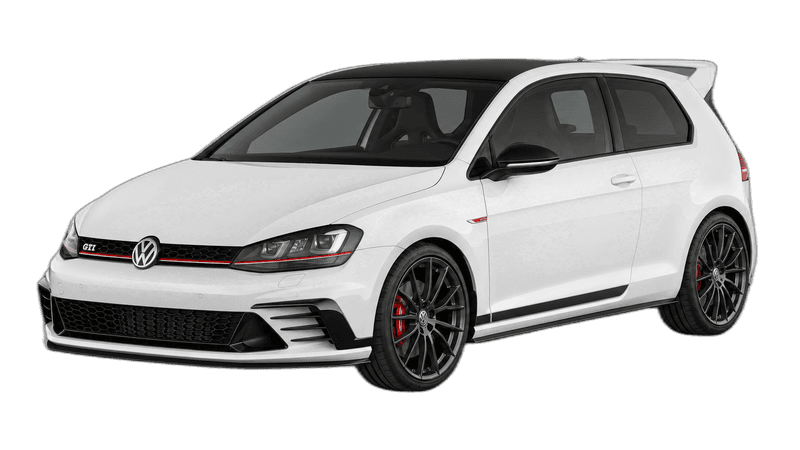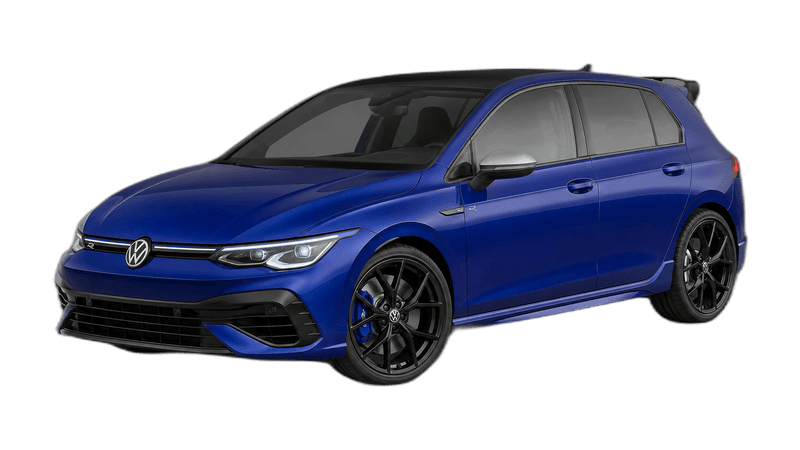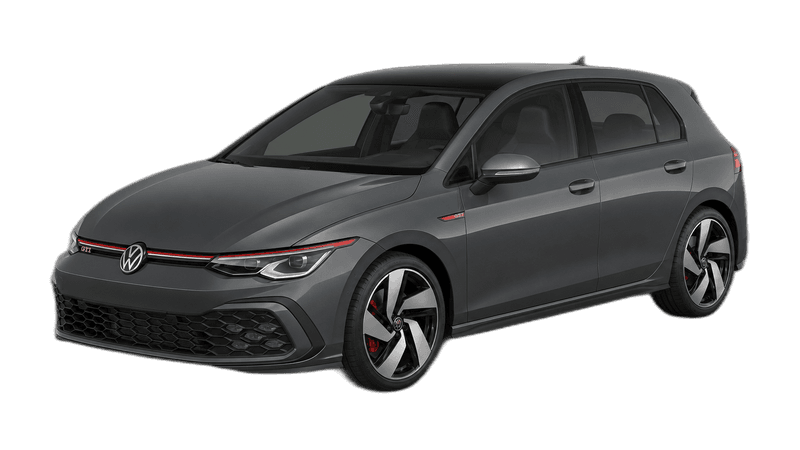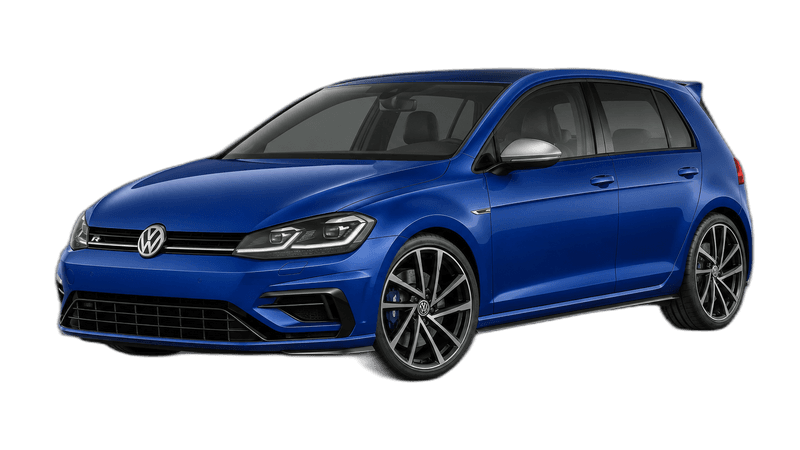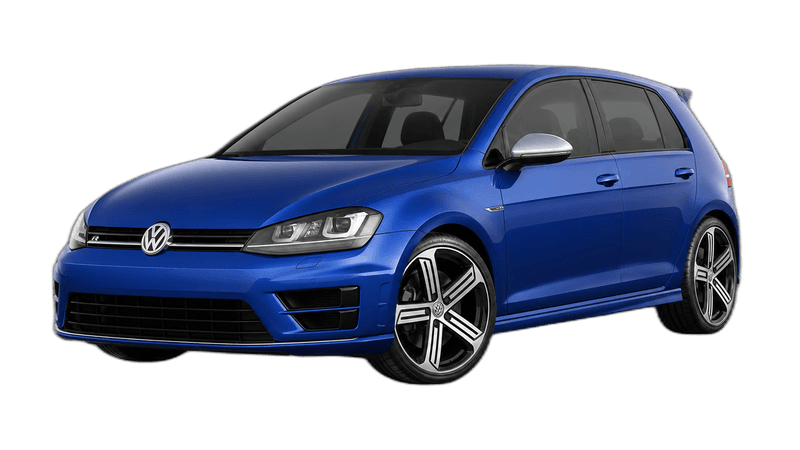
VW Golf R (Mk7)
£22,000
usedIndicative market price, updated periodically.
296bhp
Power
4.9s
0-100 km/h
250km/h
Top Speed
£22,000
Price Used
The VW Golf R (Mk7) produces 296 bhp, reaches 100 km/h in 4.9 seconds and has a top speed of 250 km/h. A representative example is worth about £22,000.
How hard it pulls.
Peak g-force the instant you bury the throttle, estimated from the car's 0–100 time and drivetrain.
VW Golf R (Mk7)Estimated peak launch g from the 0–100 time and drivetrain: an honest approximation, not a measured figure.
Dream Car Garage Editorial · Edited by José Teo Lorente Vallecillos · Last updated 30 October 2026
Overview
We have not driven this car. This review is based on published specifications and the sources listed below.
Start with the pre-facelift car
The seventh-generation Golf R combined the MQB platform with a third-generation EA888 engine and electronically controlled all-wheel drive. Volkswagen's retrospective history records its introduction in 2013; UK deliveries followed in 2014. We have not driven this model for this article. This is a desk-researched ownership guide using the manufacturer's historical account and the PistonHeads buying guide. The later Mk8 discussed in the manufacturer release supplies context, not specifications or reliability evidence for this older car.
Our catalogue baseline is the pre-facelift European hatchback with a six-speed DSG: 1984 cc, approximately 296 bhp corresponding to 300 PS, 380 Nm, 0 to 100 km/h in 4.9 seconds and a limited 250 km/h maximum. It has all-wheel drive. The contemporary six-speed manual is quoted at 5.1 seconds. Do not mix those figures with the later 310 PS facelift or assume that an Estate shares every hatchback performance figure. The body and transmission need to be identified before meaningful comparisons begin.
What the facelift boundary changes
The later car commonly called Mk7.5 received revised lighting, equipment, output and DSG specification. That does not mean a pre-facelift example with aftermarket lights or a newer infotainment unit has the later drivetrain. Check build information and gearbox identity rather than deciding from a front-end photograph. An advert may correctly describe a registration year while leaving the production phase ambiguous, especially around a changeover.
The pre-facelift R's six-speed DSG is a different service case from the later seven-speed unit. Establish the exact configuration at the beginning of the inspection. Likewise, a claimed power increase from software is not the same thing as factory facelift specification. The catalogue retains the original output baseline even when the particular car has modifications. Those changes belong in a separate record of hardware, calibration, legality and insurance disclosure.
Prove the rear axle participates
PistonHeads identifies faults affecting Haldex operation, including pump and electrical issues. Ask a specialist to verify the all-wheel-drive system through an appropriate safe procedure and to inspect the relevant fault information. A car can feel quick in an ordinary demonstration without establishing that every part of the rear-drive system functions correctly. A clean dashboard is useful, but it is not a substitute for checking the system itself.
Request the coupling's fluid-service invoices and the details of any pump work. Establish what was cleaned, inspected or tested rather than treating a generic phrase such as AWD service as a complete record. If the system does not operate correctly, diagnosis should distinguish supply, connections, control and mechanical components. Do not attempt to prove operation through aggressive acceleration or deliberate loss of traction on public roads. The purpose of the inspection is to remove uncertainty without creating risk.
Keep DSG maintenance distinct
The PistonHeads guide discusses servicing of the six-speed wet-clutch DSG. Confirm the appropriate oil and filter schedule for the actual transmission and seek invoices with dates and mileage. Engine servicing, DSG servicing and Haldex servicing are three separate evidence requests. One workshop stamp does not necessarily mean all three were completed, even if they happened to be due around the same time.
Test drive take-up, reverse and gentle progress when cold and warm, together with ordinary shifts. A seller demonstrating only rapid acceleration may not reveal hesitation or poor manoeuvring behaviour. For the manual alternative, assess clutch engagement, slip and flywheel-related symptoms, particularly if the engine has been tuned. A replacement clutch should be identified by specification and purpose rather than assumed to be an improvement simply because it is newer than the car.
Cooling and oil records matter together
The buying guide describes water-pump and related cooling-system concerns. Inspect for coolant residue and ask whether topping-up has been necessary. A previous replacement deserves an invoice showing the actual components changed and whether further checks were performed. Observe a proper warm-up and heating operation. Fresh coolant and a clean reservoir do not establish that a leak has been resolved, especially where the seller cannot explain the earlier repair.
PistonHeads also discusses crankcase ventilation and possible associated seal leakage. Have leaks, unusual idle behaviour and oil consumption assessed on the particular engine. A receipt for a PCV component is not proof that any consequential seal problem was repaired. Ask the owner how oil use was measured between services, and distinguish a documented pattern from a vague statement that all turbocharged cars use oil. Misfires and smoke require diagnosis rather than a catalogue of possible inexpensive parts.
Modifications change the inspection, not the identity
The R attracts software and hardware changes, but a tuning-stage label does not identify the calibration, turbocharger, clutch or exhaust fitted. Ask for a component list and the relevant invoices. Check that the insurer has the correct description and that road-use emissions requirements are met. An advertised rolling-road result is evidence of one test, not a guarantee of engine condition or future reliability.
The source reports some timing-chain and turbocharger problems, but does not establish a universal failure rate. Let a specialist interpret cold-start noises, boost behaviour and diagnostic records on the actual car. Avoid transferring every issue from an earlier EA888 generation to this engine, and avoid the opposite assumption that a later design cannot develop faults. A measured repair assessment is more useful than either reassurance based on reputation or an unsupported prediction of failure.
Wheels and damping can alter daily ownership
PistonHeads discusses damage to larger Pretoria wheels and identifies suspension knocks and adaptive-damper leakage as checks. Inspect the inner barrels as well as the visible wheel faces, and investigate unexplained vibration. Look for suitable tyres with compatible specifications, sound tread and sensible wear across the car. A recently refinished wheel may look excellent without documenting whether it was previously damaged or repaired.
DCC adaptive damping was not a reason to skip a physical damper inspection. Establish whether it is fitted and test its modes, while checking for faults and leaks. Lowering springs, coilovers or altered alignment may suit one owner but change comfort and component expectations. Ask why the parts were fitted and whether the original equipment remains available. Include brakes and suspension mountings in the underside examination rather than letting the engine dominate the whole appointment.
Everyday equipment and the final choice
Operate the climate control, infotainment, windows, locks and seat mechanisms. Check for moisture and examine previous body repairs with the same care as the drivetrain. The R's hatchback practicality is not identical to every ordinary Golf's luggage arrangement, so confirm that the actual boot and rear-seat layout meet your needs rather than relying on a generic Golf description.
Use the DVSA recall service for a UK car and ask Volkswagen to verify applicable campaigns for its identity. Historical prices in the buying guide are not a current valuation, and this entry has no verified production count. Separate safety work, deferred maintenance and discretionary changes in the budget. A good pre-facelift R makes its six-speed gearbox history, coupling maintenance, cooling condition and modifications understandable before the buyer is asked to admire its acceleration.
Specifications
| Engine | 2.0L (1984 cc) EA888 turbo inline-4 petrol, pre-facelift DSG |
|---|---|
| Displacement | 2.0L |
| Power | 296 bhp |
| Torque | 380 Nm |
| 0-100 km/h | 4.9s |
| Top Speed | 250 km/h |
| Drivetrain | AWD |
| Country | Germany |
| Body Style | 3/5-door hatchback |
| Years | 2014–2016 |
| Price Used | £22,000 |
Specifications are manufacturer-published figures.
Compare with
Frequently Asked Questions
What is a VW Golf R (Mk7) worth?
A representative example is worth about £22,000. Actual values vary with specification, condition and history.
How much power does the VW Golf R (Mk7) have?
The VW Golf R (Mk7) produces 296 bhp and 380 Nm of torque.
How fast is the VW Golf R (Mk7) from 0 to 100 km/h?
The VW Golf R (Mk7) accelerates from 0 to 100 km/h in 4.9 seconds.
What is the top speed of the VW Golf R (Mk7)?
The VW Golf R (Mk7) has a top speed of 250 km/h.
What engine does the VW Golf R (Mk7) have?
The VW Golf R (Mk7) uses a 2.0L (1984 cc) EA888 turbo inline-4 petrol, pre-facelift DSG.
When was the VW Golf R (Mk7) built?
The VW Golf R (Mk7) was built from 2014 to 2016.
Is the VW Golf R (Mk7) all-wheel drive?
Yes. The VW Golf R (Mk7) is configured with all-wheel drive.