
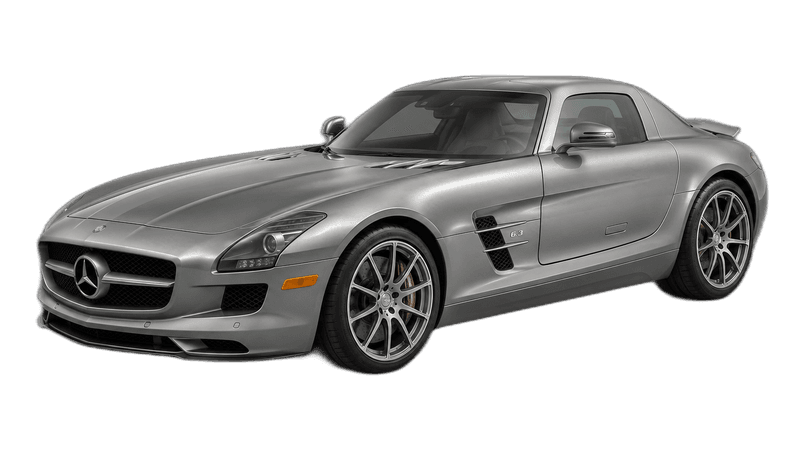
Mercedes-Benz SLS AMG
£250,000
usadoIndicative market price, updated periodically.
563cv
Potencia
3.8s
0-100 km/h
317km/h
Velocidad Máxima
£250,000
Precio Usado
Cómo empuja.
La fuerza g máxima en el instante en que pisas a fondo, estimada a partir del 0–100 y la tracción del coche.
Mercedes-Benz SLS AMGG de salida estimada a partir del 0–100 y la tracción: una aproximación honesta, no una cifra medida.
The Mercedes-Benz SLS AMG is a 2 seater coupe by Mercedes-Benz, with 563 bhp, 650 Nm of torque, a 0-100 km/h time of 3.8 seconds and a top speed of 317 km/h. Indicative used value: approximately £250,000. Actual values vary with specification, condition and history.
Dream Car Garage Editorial · Edited by José Teo Lorente Vallecillos · Last updated 2 November 2026
Visión General
We have not driven this car. This review is based on published specifications and the sources listed below.
A gullwing coupe from the first AMG built from scratch
This guide is scoped to the Mercedes-Benz SLS AMG coupe, the original 2010 car with the 6.2L V8 NA engine, a seven-speed dual-clutch gearbox and rear-wheel drive. The SLS AMG Roadster, the SLS AMG GT, the GT Final Edition, the Black Series and the Electric Drive are different cars. They are covered here only where they differ from the standard coupe, and the checks below should not be assumed to apply to them.
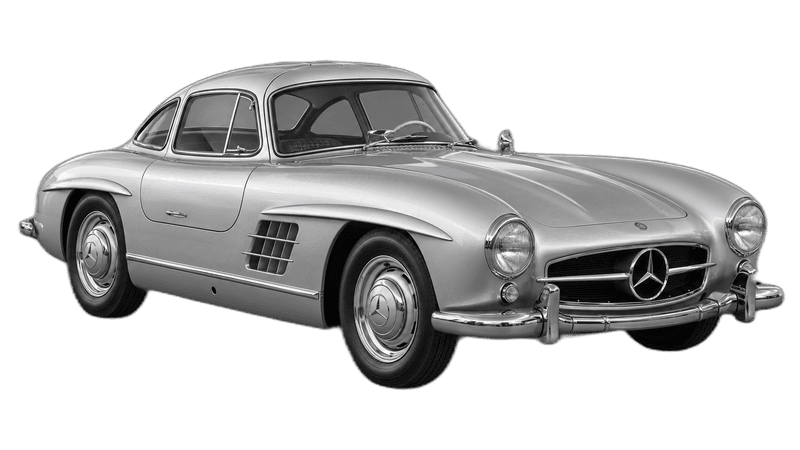
The SLS AMG was the first car Mercedes-AMG designed and developed entirely itself, and Daimler's own brochure says so. It was pitched as a modern take on the 1950s 300 SL gullwing, with a long bonnet, a cabin set well back and doors that hinge at the roof. PistonHeads describes it as a spiritual successor to the 300 SL and notes that it was far lighter than the contemporary SL 63 AMG because its body and main structure are both aluminium. It is a front mid-engined car with a transaxle layout, which means the gearbox sits at the rear axle and the weight is shared between the two ends.
We have not driven this model for this article. Everything below comes from the manufacturer's launch brochure, PistonHeads and the general principles of inspecting a high-performance used car, and it is written to help you ask better questions rather than to replace an inspection by a specialist.
The figures, checked against the maker
The Daimler AG brochure, printed on 30 September 2009, gives the coupe's figures in a single table. The engine is a V8 of 6,208 cc with a rated output of 420 kW at 6,800 rpm and a rated torque of 650 Nm at 4,750 rpm. It quotes 0-100 km/h in 3.8 seconds and a top speed of 317 km/h. The brochure lists a kerb weight of 1,620 kg to DIN, with the tank 90 per cent full and no occupants, and it quotes 13.2 litres per 100 km combined and 308 g/km of CO2 on the prescribed test. Those fuel and emissions numbers are test figures for comparison, not a prediction of what a hard-driven car will use.
Power needs care because the brochure gives kilowatts only. The conversion of 420 kW is 571 PS, the metric horsepower used on the continent, and about 563 bhp, the mechanical horsepower used in the UK. PistonHeads also prints 563hp. So the correct figure in British brake horsepower is 563 bhp, and the 571 figure that appears in some listings is the metric PS number labelled with the wrong unit. If a seller or listing says 571 bhp, they have mixed up the two, and the car has not gained anything. Treating 563 as a PS figure would give about 556 bhp, which is the other conversion you may see, but it starts from the wrong number.
The brochure also calls the engine a 6.3-litre in its marketing copy, in line with the badge on the car, while the actual displacement it lists is 6,208 cc. That is why you will see both 6.2 and 6.3 used for the same engine. A 3.9 second figure that appears in some data sets is not the coupe's brochure time. The brochure says 3.8 seconds, and other SLS models carry their own claims, covered below. All of these are the maker's claims for a standard-specification car, not independent measurements.
Engine and dual-clutch gearbox
The 6.2L V8 NA engine is naturally aspirated, built under AMG's one man, one engine principle, and uses dry-sump lubrication. That lets it sit low in the car, which helps the handling. PistonHeads says the engine descends from the M156 that first appeared in the E 63 AMG saloon, was revised at the top end with a new valve train and camshafts for the SLS, and was recoded the M159. The same page remarks that the earlier M156 became known for head bolt and camshaft problems. That is a reason to ask about the engine's history, not a statement that the SLS version suffers from the same issues, and we found no source that says it does.
On a dry-sump engine the oil level and oil change procedure are not the same as on an ordinary car, so ask who has been servicing it and whether they are an AMG specialist or a main dealer. Look for a full service history with evidence of regular oil changes, and check for leaks around the engine and under the car. A cold start should be smooth, with no warning lights and no uneven idle. Fuel is premium unleaded, which the brochure specifies as Super Plus, so be sceptical of a car that has been run on cheap fuel.
The transmission is the AMG SPEEDSHIFT DCT, a seven-speed dual-clutch unit in the rear transaxle with an integrated mechanical limited-slip differential. Power reaches it through a torque tube carrying a carbon-fibre propshaft. On a test drive, look for hesitation or shuddering when moving off and in slow traffic, harsh or delayed shifts, and any vibration at speed. Ask for evidence of gearbox service work and software updates, and have a specialist read the fault memory.
Body, doors and chassis
The body is an aluminium spaceframe, and the brochure gives the bare structure's weight as 241 kg. The suspension uses aluminium double wishbones at both ends. Aluminium is light but harder to repair than steel, so any accident damage should have been put right by a repairer equipped to work with it. Look for uneven panel gaps, paint that does not match from panel to panel, overspray in the door shuts, and repair invoices. Ask directly about accident history and check the car's record before you view it.
The gullwing doors are the headline feature and deserve patience. Open and close each one several times, from inside and outside, checking that they move smoothly, latch cleanly and seal well. Look at the weatherstrips for damage and at the sills for scuffs from people climbing in over the wide threshold. The brochure notes that the car has a retractable rear aerofoil, so check that it rises and lowers properly and that no warning appears on the dash.
The car sits low and the front splitter and underside take punishment from kerbs and ramps. Inspect the nose, the underbody and the wheel rims carefully. The brochure lists a three-stage ESP system as standard, so make sure there are no stability-control warnings after a test drive, and that the steering feels straight and consistent.
Brakes, wheels and tyres
The standard car wears 19-inch wheels at the front with 265/35 R19 tyres and 20-inch wheels at the rear with 295/30 R20 tyres, so the sizes differ front and rear. Tyres are a significant running cost on a car like this. Check the date codes, because tyres can age out before they wear out on a car that does few miles, and check that all four are of a suitable make and show even wear. Uneven wear can point to alignment problems or kerb damage.
The brakes are either the standard steel system or the optional AMG ceramic high-performance composite braking system with specially painted callipers. The brochure claims the ceramic option is 40 per cent lighter, resists fade better and has a much longer service life. Ceramic discs are expensive to replace, so establish which system the car has from the paperwork, and have a specialist measure the discs rather than relying on how they look. Listen for judder or noise under braking and check the pads for wear.
How the other SLS models differ
The Roadster arrived in 2011 with the same mechanical specification as the coupe and a soft top in place of the roof. PistonHeads says it carries about 40 kg more, quotes a near 200 mph top speed and a sub-4-second 0-62 mph time, and adds that its fabric roof is a triple-layer design. A roof means a mechanism, hood seals and water drainage to inspect, none of which this guide covers.
The SLS AMG GT followed in 2012 with a 20 bhp increase, to 583 bhp according to PistonHeads, along with transmission and suspension changes. A 2013 Mercedes-Benz press release reprinted by Automotive World quotes the GT at 591 PS, 650 Nm, 3.7 seconds and 320 km/h. The same release gives the Black Series 631 PS, 635 Nm, 3.6 seconds and 315 km/h. PistonHeads puts that car at 622 bhp, with a weight cut of 70 kg, a lithium-ion battery, an electronically controlled differential and carbon-ceramic brakes as standard, and says 150 were built.
The Electric Drive was a separate, all-wheel drive electric car, unveiled at the 2012 Paris show. PistonHeads gives it 740 bhp and a weight above 2.1 tonnes, and the Mercedes release quotes 751 PS, 1,000 Nm, 3.9 seconds and a limited 250 km/h. Those are the numbers that sometimes leak into data sets for the ordinary coupe. The GT Final Edition, the last SLS, is described by PistonHeads as mechanically identical to the GT, with 350 built across coupe and Roadster. None of these figures should be used for a standard coupe.
Recalls, history and paperwork
Run the registration or VIN through the DVSA vehicle recall check before you buy, and ask a Mercedes-Benz main dealer to check the VIN for open campaigns, because a UK record may not cover a car imported from elsewhere. We did not find a recall list for the SLS AMG in an official source while preparing this guide, so we are not naming any campaign. Some online lists mention airbag-related actions on this model, which we have not verified, and an empty result from any one tool is not proof that the car is clear.
Pay attention to the car's history. Many were bought as weekend or collector cars and some have done very few miles, so the age of the fluids, brakes, tyres and battery matters more than the odometer. Look for a continuous service record, original keys, the handbook and any specialist invoices. Confirm that the registration documents, the VIN plate and the VIN on the car all agree, and ask about previous owners and any imports.
Pre-purchase checks
Start with the cabin. The standard heated AMG sports seats are trimmed in nappa leather, so check the driver's side bolster and the sill trim for the wear that comes from getting in and out over the wide threshold. Check the COMAND APS multimedia system, which uses a 7-inch screen and hard-disc navigation designed in 2009, so expect dated maps and menus, but confirm that the screen, controls, audio and phone functions all work. The keyless start, climate control, parking sensors and every window and mirror deserve a test.
Next, scan the car. A specialist with an AMG-capable diagnostic tool can read stored faults from the engine, gearbox, brakes and body electronics. A car that has stood for long periods should have its battery tested. Take the car for a long test drive that includes cold and hot running, stop-start traffic and some faster road, and watch the temperature gauges and warning lights throughout.
Finally, budget realistically. The brochure's combined consumption of 13.2 litres per 100 km is a test figure and a spirited car will use more. Tyres, brakes, insurance and servicing are all expensive on a car like this, and its CO2 figure is high, so confirm the current tax band and rate for the specific registration on GOV.UK before you commit.
Buying decision
The SLS AMG coupe is a naturally aspirated V8 supercar with a distinctive shape, and a good one is a rewarding car to own. The checks that matter most are the paperwork and recall status, accident history on the aluminium structure, the behaviour of the dual-clutch gearbox, the condition of the brakes and tyres, and the operation of the doors and rear aerofoil. Prefer a car with a complete history and an independent specialist inspection over a cheaper one with gaps. If you want more power or a roof, look at the GT or the Roadster, but treat their figures and checks as their own.
Especificaciones
Motor
6.2L V8 NA
Cilindrada
6.2L
Potencia
563 cv
Par Motor
650 Nm
0-100 km/h
3.8s
Velocidad Máxima
317 km/h
Tracción
RWD
País
Germany
Carrocería
2 seater coupe
Años
2010–2015
Precio Usado
£250,000
Specifications are manufacturer-published figures.
Más de Mercedes-Benz
Destacado en Carpedia
Best GT Cars 2026
From the 939bhp Porsche Taycan Turbo S to the blood-and-thunder TVR Cerbera Speed 12, these are the ten GT cars that make every journey an occasion.
What Cars Should I Put in My Dream Garage?
A comprehensive guide to building a dream garage at every budget. Five balanced 5-car garages, from under GBP 100K total to unlimited, each covering daily driving, weekends, track days, road trips, and special occasions.
Dream Car Garage on a Budget: 5-Car Builds Under 500K
Four complete 5-car dream garage builds, each totalling under GBP 500,000. From track-day weapons to Italian thoroughbreds, every build uses real market prices and delivers genuine variety.
Preguntas Frecuentes
What are the specifications of the Mercedes-Benz SLS AMG?
The Mercedes-Benz SLS AMG is a 2 seater coupe by Mercedes-Benz, with 563 bhp, 650 Nm of torque, a 0-100 km/h time of 3.8 seconds and a top speed of 317 km/h. Indicative used value: approximately £250,000. Actual values vary with specification, condition and history.
How much does a Mercedes-Benz SLS AMG cost?
Indicative used value: approximately £250,000. Actual values vary with specification, condition and history.
What drivetrain does the Mercedes-Benz SLS AMG use?
The Mercedes-Benz SLS AMG is configured with rear-wheel drive.
What type of car is the Mercedes-Benz SLS AMG?
The Mercedes-Benz SLS AMG is a gts manufactured by Mercedes-Benz in Germany. Production ran from 2010 to 2015.