
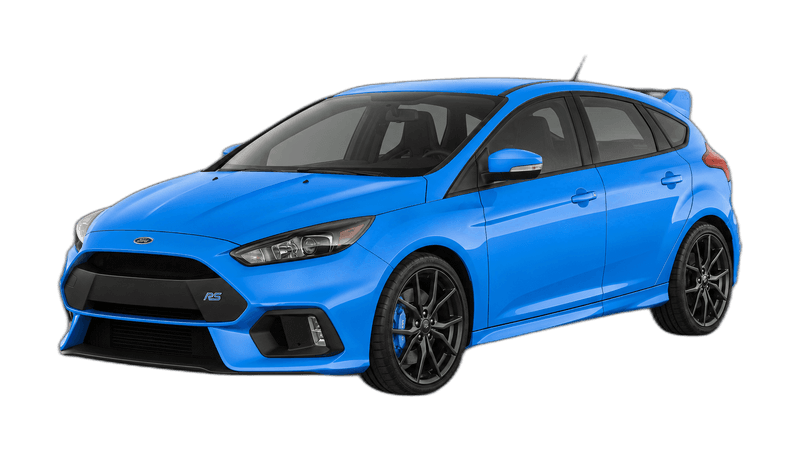
Ford Focus RS (Mk3)
£32,000
usadoIndicative market price, updated periodically.
345cv
Potencia
4.7s
0-100 km/h
266km/h
Velocidad Máxima
£32,000
Precio Usado
Cómo empuja.
La fuerza g máxima en el instante en que pisas a fondo, estimada a partir del 0–100 y la tracción del coche.
Ford Focus RS (Mk3)G de salida estimada a partir del 0–100 y la tracción: una aproximación honesta, no una cifra medida.
The Ford Focus RS (Mk3) is a 4/5 seater hatchback by Ford, with 345 bhp, 470 Nm of torque, a 0-100 km/h time of 4.7 seconds and a top speed of 266 km/h. Indicative used value: approximately £32,000. Actual values vary with specification, condition and history.
Dream Car Garage Editorial · Edited by José Teo Lorente Vallecillos · Last updated 30 October 2026
Visión General
We have not driven this car. This review is based on published specifications and the sources listed below.
The Focus RS Mk3 added all-wheel drive to the hot-hatch formula
The Ford Focus RS Mk3 is a different kind of fast Ford because it sends its turbocharged power to all four wheels. Our catalogue uses the 2015–2018 production window: a 2261 cc 2.3-litre EcoBoost turbo inline-4 with 345 bhp, 470 Nm, 0 to 100 km/h in 4.7 seconds and a 266 km/h maximum, with all-wheel drive. We have not driven this model for this article. This is a desk-researched ownership guide using a GTspirit reproduction of Ford's 2016 Focus RS technical confirmation, the PistonHeads Focus RS Mk3 used buying guide and the DVSA recall service. Their evidence should shape a specialist inspection.
Ford's material confirms 350 PS, 440 Nm and 470 Nm of transient overboost, a 2.3-litre EcoBoost engine, Ford Performance all-wheel drive with dynamic torque vectoring, Drift Mode and Launch Control, and Saarlouis production. PistonHeads records 345 hp, 324 lb-ft with 346 lb-ft overboost, a 4.7-second 0–62 mph time and a 165 mph maximum. Our catalogue uses 345 bhp and 470 Nm, aligning with the metric conversion and Ford's overboost figure. Use that as the anchor, then verify the exact market and specification from the VIN.
The head-gasket and block evidence is the first checkpoint
The Mk3 RS has a known ownership issue around the head gasket and, in some cases, the engine block. PistonHeads references campaign FSA17832 and the need to see evidence of repair or inspection. Ask for Ford or specialist paperwork showing whether the car was checked, whether the head gasket was replaced and whether the block was found within specification. Do not accept a verbal assurance that the issue was handled. This evidence is central to value because a car with the wrong repair history can become expensive very quickly.
Beyond the campaign file, inspect the engine's general health. Ask for oil-change proof, coolant service, spark plugs, coil packs, turbo hoses and any remapping records. The 2.3-litre EcoBoost should start cleanly, idle smoothly and make boost without whistle, hesitation or smoke. Check the coolant expansion tank, hoses, radiator, intercooler and underbody for leaks. A car used for repeated launches, track days or tuning should have invoices that explain how the engine, clutch and cooling system have been maintained.
All-wheel-drive hardware and drive modes matter every day
The all-wheel-drive system is one of the Mk3 RS's defining features, and it should be tested rather than assumed. PistonHeads points to power transfer unit and drive-mode issues. On inspection, cycle through the drive modes, including normal, sport, track and drift settings where equipped, and confirm that the system responds without warnings. The car should pull cleanly from rest, corner without driveline shudder and accelerate without vibration from the front or rear axles. Listen for whining, clunks and binding during low-speed turns.
The gearbox and clutch should match the car's performance. The clutch pedal should feel consistent, and the gearshift should be clean without grinding or resistance. Ask about clutch replacement, flywheel work and any faults with the pedal or master cylinder. PistonHeads also mentions steering sensor reports, so check for warning lights, inconsistent steering weight and diagnostic codes. A specialist scan is sensible because the RS uses multiple control modules to manage its drivetrain.
Tyres, brakes and body finish reveal the use pattern
The Mk3 RS is fast enough to consume tyres and brakes quickly when driven hard. Check that tyres match the manufacturer's recommended sizes and construction, and inspect for uneven wear across the axles. Wheels should be undamaged and correct for the specification. The brakes should feel strong, with no pulsing, fade on a modest test or excessive dust around one corner. Discs, pads, hoses and fluid age should be documented. A car sold with cheap mismatched tyres or worn brakes may be presenting its running costs upfront.
Body condition matters because many Mk3 RS cars have been used as daily hot hatches. Check bumpers, splitter edges, wheelarch lips, door edges, mirror housings and the rear spoiler for chips, cracks and paint transfer. Inside, the Recaro seats, steering wheel, shift knob, pedals and boot trim should match the mileage. Test the infotainment, climate system, windows, locks and all switchgear. A clean cabin does not prove mechanical health, but it helps build the car's overall story.
A specialist diagnostic scan should be treated as part of the inspection rather than an optional extra. The scan can reveal stored faults in the engine, transmission, all-wheel-drive system, steering and body modules that may not illuminate a warning light during a short drive. It is also a useful way to verify that modifications have been installed and coded properly. If the seller resists a scan or cannot explain stored driveline faults, the asking price should reflect the uncertainty. The right car should welcome that level of scrutiny. Ask for the printout, not a verbal summary, and compare the stored modules with the seller's description of any faults or repairs. That extra step is inexpensive beside the cost of diagnosing an all-wheel-drive or steering fault after purchase.
Buy the car with the strongest repair file
The right Focus RS Mk3 should have a clear FSA17832 file, healthy all-wheel-drive operation, no unresolved clutch or drive-mode faults, matched tyres, strong brakes and a body consistent with its use. Use the DVSA recall service to check outstanding actions and verify Ford records where possible. This guide combines Ford's technical specifications, PistonHeads ownership evidence and DVSA recall data. It assigns no exact production count to the derivative.
Especificaciones
Motor
2.3-litre (2261 cc) EcoBoost turbo inline-4 petrol
Cilindrada
2.3L
Potencia
345 cv
Par Motor
470 Nm
0-100 km/h
4.7s
Velocidad Máxima
266 km/h
Tracción
AWD
País
Germany
Carrocería
4/5 seater hatchback
Años
2015–2018
Precio Usado
£32,000
Specifications are manufacturer-published figures.
Más de Ford
Preguntas Frecuentes
What are the specifications of the Ford Focus RS (Mk3)?
The Ford Focus RS (Mk3) is a 4/5 seater hatchback by Ford, with 345 bhp, 470 Nm of torque, a 0-100 km/h time of 4.7 seconds and a top speed of 266 km/h. Indicative used value: approximately £32,000. Actual values vary with specification, condition and history.
How much does a Ford Focus RS (Mk3) cost?
Indicative used value: approximately £32,000. Actual values vary with specification, condition and history.
What drivetrain does the Ford Focus RS (Mk3) use?
The Ford Focus RS (Mk3) is configured with all-wheel drive.
What type of car is the Ford Focus RS (Mk3)?
The Ford Focus RS (Mk3) is a hot hatches manufactured by Ford in Germany. Production ran from 2015 to 2018.