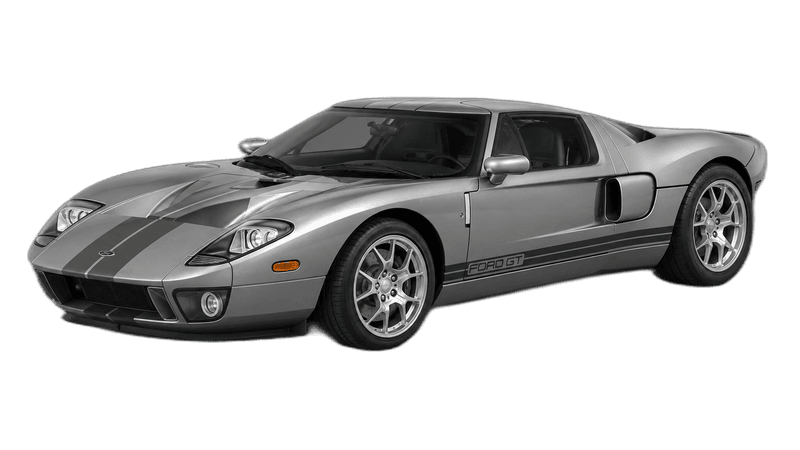
Ford GT 2005
£380,000
usedIndicative market price, updated periodically.
550bhp
Power
3.5s
0-100 km/h
330km/h
Top Speed
£380,000
Price Used
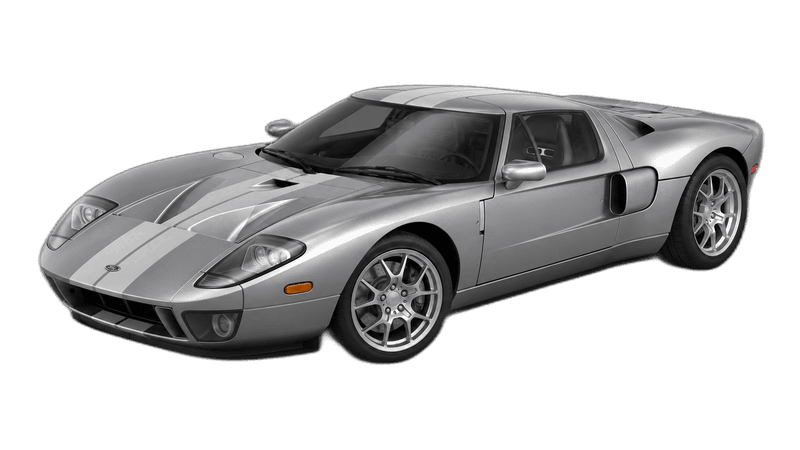
The Ford GT 2005 produces 550 bhp, reaches 100 km/h in 3.5 seconds and has a top speed of 330 km/h. A representative example is worth about £380,000.
How hard it pulls.
Peak g-force the instant you bury the throttle, estimated from the car's 0–100 time and drivetrain.
Ford GT 2005Estimated peak launch g from the 0–100 time and drivetrain: an honest approximation, not a measured figure.
Dream Car Garage Editorial · Edited by José Teo Lorente Vallecillos · Last updated 1 November 2026
Overview
We have not driven this car. This review is based on published specifications and the sources listed below.
Ford's durable supercar, carefully bought
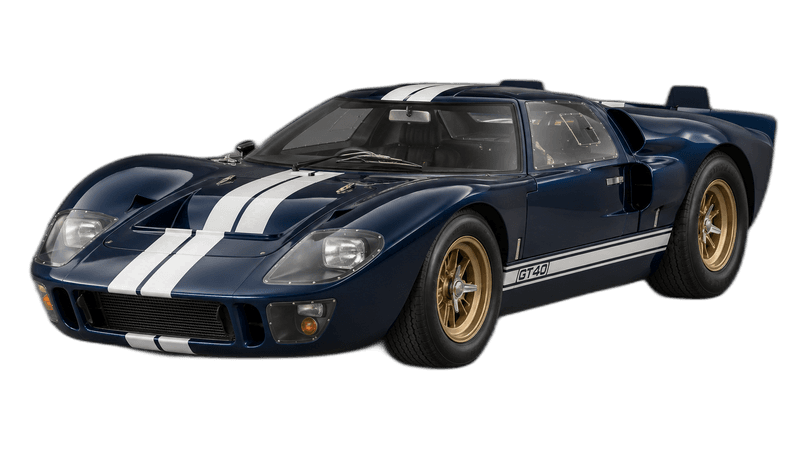
In 2005 Ford unveiled its modern take on the GT40, simply called the GT. Our catalogue covers the 2005-2006 car with a 5.4L Supercharged V8, 550 bhp, 678 Nm, 0 to 100 km/h in 3.5 seconds, a 330 km/h maximum and a mid-engine, rear-wheel-drive layout. We have not driven this model for this article. This guide is desk-researched from the PistonHeads 2005-2006 GT used buying guide, Ford's GT heritage material and the DVSA recall service. On the numbers, PistonHeads quotes 550 hp and 500 lb ft, a 0-62 mph time of under 3.8 seconds and a 205 mph top speed. The torque figures convert almost exactly, 500 lb ft being about 678 Nm, and 205 mph is roughly 330 km/h, so the catalogue and guide figures align. The 3.5 and sub-3.8 second acceleration claims differ mainly by test convention; treat either as evidence of genuine supercar pace.
The guide adds useful rarity context. PistonHeads reports that just 4038 cars had been built when production stopped in 2006, and only 28 were officially imported into the UK, with more arriving since through independent importers. That scarcity shapes everything about buying one. These were never inexpensive: the guide recalls a new price around 125,000 pounds and used values in excess of 200,000 pounds at the time of writing, with particularly low-mileage cars above that. The fundamentals are strong. A supercharged 5.4-litre V8 with an aluminium block and heads sends its power to the rear wheels through a Ricardo six-speed transaxle and a helical limited-slip differential, all hung off an aluminium space frame beneath formed and stamped aluminium body panels, with a carbon-fibre rear deck.
Bodywork and interior
Few GTs have covered enough miles to suffer real wear, so beyond a history check the job is inspecting for cosmetic and underside damage, and checking whether the car's details are correct for its year. There is a useful tell. In 2005 the GT had a mesh grille in the nose; in 2006 it was deleted and replaced with a slatted grille. If the car you are viewing has the wrong grille for its year, it may have suffered front-end damage. Many owners remove the rear bumper for looks; that is reversible, but hold on to the original parts so the car can be returned to standard.
The interior deserves closer attention. The magnesium alloy central tunnel can corrode, causing paint to crack and flake; the only solution is a complete strip and repaint, with no guarantee the corrosion will not return. Floor mats degrade and often need replacement. The Autometer-sourced instruments have a reputation for failing after a few years; check every gauge, and know that replacements come from Autometer or aftermarket maker Speedhut, with repair sometimes possible. Colour matters to value: black, tungsten and blue cars are the most sought after, red was the most popular when new, and Gulf-liveried Heritage cars can command a significant premium. The optional upgraded stereo replaced the standard stowage bin with a subwoofer, making an already impractical car worse; an aftermarket kit relocates it.
Engine and transmission
The powertrain is one of the GT's major selling points: straightforward and strong, with chain-driven cams and no fragile timing belt. Servicing is required yearly or every 5,000 miles and can cost around 2,000 pounds a visit, so a thin file is a red flag. Look specifically for evidence that the bolts holding the gearbox output shaft flanges have been replaced. These had a history of failing, causing the flange to fall off and the car to lose drive, usually at low speed or when moving off. Most cars have been attended to by now, and the fix should appear in the paperwork. Clutches can suffer under the force-fed V8 and the wide rear tyres: expect up to 30,000 miles from a road-use clutch, or a fraction of that on a heavily tracked car, with replacement around 5,000 pounds.
Tuning is part of GT culture and worth understanding even if you want a standard car. Thanks to a stout block, forged pistons and H-beam rods, the V8 tolerates around 800 hp without internal modifications. Most owners opt for a smaller supercharger pulley and a tune to roughly 630 hp; beyond that, a larger blower is needed, and above 800 hp the stock pistons become the weak point, with detonation capable of destroying the top lands. A sports exhaust, commonly an Accufab True X Pipe, gives the car the voice it deserves. Special editions such as the Roush 600RE and Avro Mirage 720 added power, the 720 also bringing better AP brakes and KW suspension. A modified GT is not automatically a bad buy, but you want documentation of who did the work and proof the supporting hardware matches the power.
Suspension, wheels and brakes
There was an early recall for a potential casting issue in the control arms. Ford found a crack in one arm, designed a replacement, and in the interim fitted stronger billet arms, identifiable by their machining marks; 2006 cars received forged arms. This gives you two checks in one. Confirm which arms the car should have for its build date, and treat forged components on a 2005 car as a possible sign it has experienced a hefty impact. Otherwise, with mileage typically low, a cursory check for cracked bushes and weeping dampers usually suffices.
The GT runs 18 by 9-inch wheels at the front and 19 by 11.5-inch wheels at the rear, originally shod with 235/45 and 315/40 tyres developed with Goodyear. Those rears can be hard to source, so owners commonly switch to something like a Bridgestone Potenza and fit the more common 345/35 profile at the back. Budget accordingly: rears on a traction-control-free GT can last less than 6,000 miles, while fronts should exceed 15,000 if the alignment is correct. Braking comes from 355 mm Brembo discs with four-piston calipers at the front and 335 mm discs at the rear, with standard ABS. Problems are rare; just inspect for wear, and know that front discs from a specialist can approach 1,500 pounds a set while a complete set of pads is around 500 pounds.
The buying process
These are left-hand-drive cars with a footprint similar to a Nissan GT-R and poor rearward visibility, so acclimatisation is part of ownership; UK specialists such as GT 101 can source cars and supply parts and support, and the Ford GT Forum is a knowledgeable community. Before committing, commission a specialist inspection that covers the suspension arms against the build date, the magnesium tunnel, every gauge, the output flange bolt history, clutch condition and evidence of accident repair. The guide's verdict is that the GT blends immense performance with reliability and usability; the catalogue's 550 bhp, 678 Nm, 3.5 seconds and 330 km/h sit comfortably inside that story. The right car is a durable, tuneable supercar with a genuine racing pedigree. The wrong one is an expensive restoration wearing a famous badge.
Specifications
| Engine | 5.4L Supercharged V8 |
|---|---|
| Displacement | 5.4L |
| Power | 550 bhp |
| Torque | 678 Nm |
| 0-100 km/h | 3.5s |
| Top Speed | 330 km/h |
| Drivetrain | MR |
| Country | USA |
| Body Style | 2-door coupe |
| Years | 2005–2006 |
| Production | 4,038 |
| Price Used | £380,000 |
Specifications are manufacturer-published figures.
Frequently Asked Questions
What is a Ford GT 2005 worth?
A representative example is worth about £380,000. Actual values vary with specification, condition and history.
How much power does the Ford GT 2005 have?
The Ford GT 2005 produces 550 bhp and 678 Nm of torque.
How fast is the Ford GT 2005 from 0 to 100 km/h?
The Ford GT 2005 accelerates from 0 to 100 km/h in 3.5 seconds.
What is the top speed of the Ford GT 2005?
The Ford GT 2005 has a top speed of 330 km/h.
What engine does the Ford GT 2005 have?
The Ford GT 2005 uses a 5.4L Supercharged V8.
How many Ford GT 2005 were made?
Ford produced 4,038 units of the Ford GT 2005.
When was the Ford GT 2005 built?
The Ford GT 2005 was built from 2005 to 2006.
Is the Ford GT 2005 all-wheel drive?
No. The Ford GT 2005 is configured with a mid-mounted engine and rear-wheel drive.