
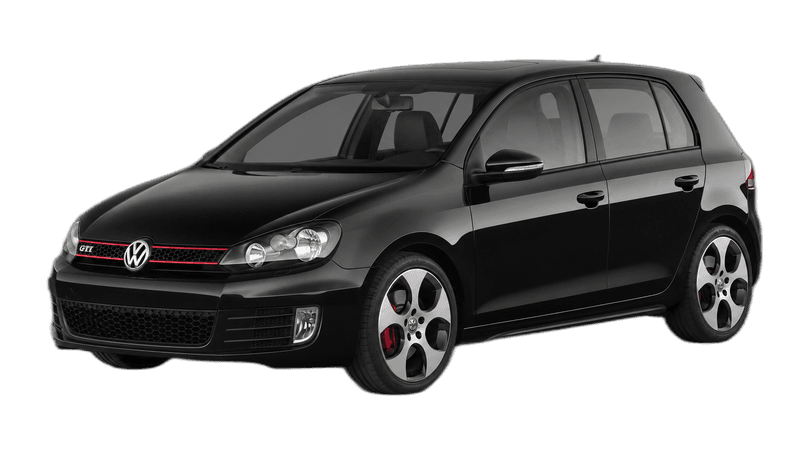
VW Golf GTI (Mk6)
£12,000
usedIndicative market price, updated periodically.
207bhp
Power
6.9s
0-100 km/h
240km/h
Top Speed
£12,000
Price Used
How hard it pulls.
Peak g-force the instant you bury the throttle, estimated from the car's 0–100 time and drivetrain.
VW Golf GTI (Mk6)Estimated peak launch g from the 0–100 time and drivetrain: an honest approximation, not a measured figure.
The VW Golf GTI (Mk6) is a 3/5-door hatchback by VW, with 207 bhp, 280 Nm of torque, a 0-100 km/h time of 6.9 seconds and a top speed of 240 km/h. Indicative used value: approximately £12,000. Actual values vary with specification, condition and history.
Dream Car Garage Editorial · Last updated 30 October 2026
Overview
We have not driven this car. This review is based on published specifications and the sources listed below.
Similar shape, a different engine question
The sixth Golf GTI looks like an evolution of the fifth, and Volkswagen confirms that both use the PQ35 platform. That familiarity can hide the most important ownership distinction: the standard European Mk6 received an EA888 engine rather than simply carrying over the previous GTI's power unit. We have not driven this model for this article. This desk-researched guide combines Volkswagen's European model history with FCP Euro's technical buying guide. The latter is written around North American cars, so its engine-maintenance discussion is separated from European specifications and equipment.
Volkswagen dates the European hatchback to 2009–2012. Our catalogue baseline is the standard European six-speed manual car: 1984 cc, approximately 207 bhp corresponding to 210 PS, 280 Nm, 0 to 100 km/h in 6.9 seconds and a quoted 240 km/h maximum. It drives the front wheels and was offered in three- and five-door form. North American launch dates, power ratings and speed limits in FCP Euro's article are not specifications for this European catalogue entry.
Identify the ordinary GTI before applying advice
Volkswagen describes the European standard engine as the second development cycle of EA888. FCP Euro discusses North American CCTA and CBFA applications, which it calls Gen.1. Those labels should not be merged into a claim that every Mk6 has one identical engine code. Ask the inspecting specialist to identify the actual engine and build information, then establish which service procedures and revised parts apply to it. Registration year alone cannot settle that question.
The Edition 35 is a separate, higher-output derivative. Its 235 PS rating and different engine specification should not be attached to a normal GTI because the wheels or front bumper have been changed. The Cabriolet is also not the hatchback described here. Check original build information when an advert relies on edition names, and distinguish factory identity from later cosmetic work. This matters for both value comparisons and choosing the correct maintenance advice.
The timing chain is the first evidence request
The standard EA888 uses a timing chain, not the routine cambelt arrangement associated with the earlier EA113. FCP Euro identifies the original tensioner design as a serious concern and discusses a revised design. Ask for invoices that identify the installed parts and the work completed, rather than accepting the phrase chain done. A tensioner-only repair, a complete timing-system replacement and an unverified verbal assurance are different things.
Have an appropriate Volkswagen specialist establish the fitted tensioner revision, chain condition and any diagnostic evidence of timing concerns. A quiet start is not a certificate that all relevant parts have been updated. Conversely, an unfamiliar sound should not be diagnosed remotely as certain engine failure. If a car has unresolved timing symptoms, arrange assessment before further use rather than treating a longer test drive as an experiment. The buying decision should include the cost and scope of whatever work the specialist actually recommends.
Cooling leaks can involve more than one component
FCP Euro highlights the water-pump housing and seals, noting that oil leakage from above can affect the area. Inspect for coolant residue, active leaks and evidence of repeated topping-up. Ask what was replaced in any previous cooling repair and whether an associated oil leak was addressed. The existence of an aftermarket metal housing is not a guarantee that every possible cooling fault has been eliminated, and this guide does not prescribe a particular supplier's product.
Observe a normal warm-up, cabin heating and a subsequent restart. A seller's explanation that a small coolant loss is harmless needs testing, not acceptance. Have the system assessed using the procedures appropriate to the actual engine. The purpose is to distinguish a documented repair from an unresolved symptom that has been concealed by a recently cleaned engine bay or a freshly topped-up reservoir.
Intake faults and crankcase ventilation
The technical guide describes intake-manifold flap and actuator faults, including the P2015 code. A stored code is a starting point for diagnosis, not proof that one particular part will resolve every case. Ask for a scan and a repair assessment that identifies the cause. Do not follow suggestions to delete emissions-related mechanisms merely because replacement appears inconvenient. Any proposed repair must remain suitable for road use and the applicable regulations.
FCP Euro also identifies the crankcase-ventilation assembly and explains that faults can accompany substantial seal leakage. Inspect the engine and transmission junction, look for documented previous work and have unusual running behaviour interpreted by a specialist. An invoice for a PCV assembly does not prove that an existing rear-main-seal leak repaired itself. Separate the original cause, any consequential damage and the evidence that the finished repair was checked.
Ignition and modifications need an honest baseline
Coils and plugs belong in the assessment of misfires, especially on a tuned car. FCP Euro sells replacement parts and recommends upgrades, but a commercial recommendation is not proof that every standard car needs those parts. Establish the correct factory requirement and investigate symptoms before ordering components. Request a record of software changes, intake or exhaust modifications and any work performed to support a higher output.
The catalogue figure remains the original European output, not a claimed result from an unspecified remap. Check that modifications are declared to the insurer and that emissions equipment remains compliant. A car returned to standard software may still have a modified history. That history is not automatically disqualifying, but the inspection and maintenance expectations should reflect what is known rather than a reassuring label in the advert.
Choose a gearbox and inspect the complete car
Both a six-speed manual and a six-speed DSG were available. Test clutch engagement, selection and vibration in the manual; assess drive take-up, reverse and warm low-speed behaviour in the DSG. Obtain the servicing requirements for the actual transmission and ask for invoices showing that work. Engine oil changes do not establish that a separate transmission service was performed. Allow time for normal traffic conditions rather than judging the gearbox solely from a short acceleration demonstration.
Check suspension condition, tyre wear, brake operation and the equipment fitted to the particular car. Volkswagen lists DCC adaptive damping as optional, so do not assume that every GTI has it or that every drive-mode button proves the dampers operate correctly. Test air conditioning, locks and windows, inspect for water ingress and examine the underside with suitable access. These ordinary checks remain important even when the engine's timing history is excellent.
Turn the history into an ownership decision
Use the DVSA recall service for a UK example and ask Volkswagen to verify outstanding campaigns for its identity. Keep immediate safety work separate from maintenance and discretionary improvements. This guide supplies neither a current valuation nor a verified production count for the standard European manual. Its practical conclusion is narrower: the right Mk6 has an identified engine, convincing timing-system evidence, a dry and functioning cooling system, and a service file that distinguishes actual repairs from optimistic parts lists.
Specifications
Engine
2.0L (1984 cc) EA888 turbo inline-4 petrol, European manual
Displacement
2.0L
Power
207 bhp
Torque
280 Nm
0-100 km/h
6.9s
Top Speed
240 km/h
Drivetrain
FWD
Country
Germany
Body Style
3/5-door hatchback
Years
2009–2012
Price Used
£12,000
Specifications are manufacturer-published figures.
More from VW

Frequently Asked Questions
What are the specifications of the VW Golf GTI (Mk6)?
The VW Golf GTI (Mk6) is a 3/5-door hatchback by VW, with 207 bhp, 280 Nm of torque, a 0-100 km/h time of 6.9 seconds and a top speed of 240 km/h. Indicative used value: approximately £12,000. Actual values vary with specification, condition and history.
How much does a VW Golf GTI (Mk6) cost?
Indicative used value: approximately £12,000. Actual values vary with specification, condition and history.
What drivetrain does the VW Golf GTI (Mk6) use?
The VW Golf GTI (Mk6) is configured with front-wheel drive.
What type of car is the VW Golf GTI (Mk6)?
The VW Golf GTI (Mk6) is a hot hatches manufactured by VW in Germany. Production ran from 2009 to 2012.