
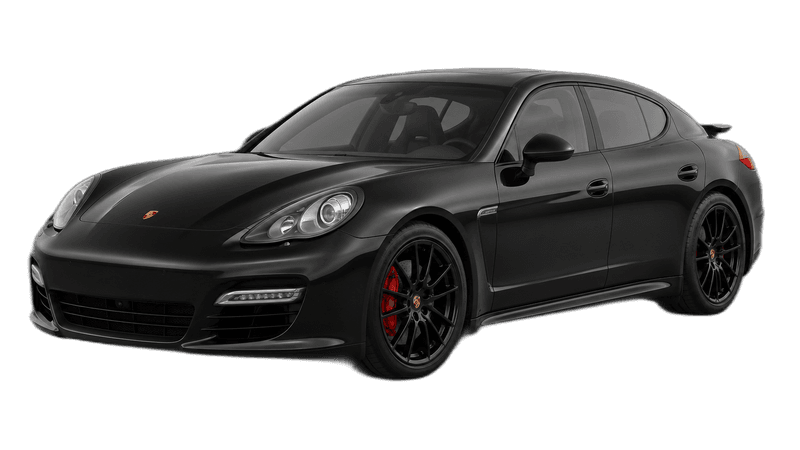
Porsche Panamera GTS (971)
£70,000
usedIndicative market price, updated periodically.
454bhp
Power
4.1s
0-100 km/h
292km/h
Top Speed
£70,000
Price Used
How hard it pulls.
Peak g-force the instant you bury the throttle, estimated from the car's 0–100 time and drivetrain.
Porsche Panamera GTS (971)Estimated peak launch g from the 0–100 time and drivetrain: an honest approximation, not a measured figure.
The Porsche Panamera GTS (971) is a 4-door liftback by Porsche, with 454 bhp, 620 Nm of torque, a 0-100 km/h time of 4.1 seconds and a top speed of 292 km/h. Indicative used value: approximately £70,000. Actual values vary with specification, condition and history.
Dream Car Garage Editorial · Last updated 28 October 2026
Overview
We have not driven this car. This review is based on published specifications and the sources listed below.
A second-generation V8 GTS, not a Sport Turismo
The 971 Panamera GTS uses a 3,996 cc twin-turbo V8 producing 460 PS, approximately 454 bhp, and 620 Nm. An eight-speed PDK and Porsche Traction Management all-wheel drive deliver 4.1 seconds to 100 km/h with Sport Chrono and a 292 km/h maximum for the sedan. The Sport Turismo has a separate 289 km/h figure and should not be used to define this entry.
We have not driven this model for this article. This guide uses Porsche's official GTS announcement, the PistonHeads 971 buying guide and Porsche's VIN recall service. The buying guide concentrates mainly on a 4S, so its ownership observations are generation-level inspection prompts rather than proof of GTS-specific faults. No model-specific production total is established by the cited sources.
PDK behaviour and documented diagnosis
Assess low-speed engagement, parking manoeuvres and shifts through the normal operating range. PistonHeads discusses PDK jerks and an adaptation reset performed with diagnostic equipment. That is not a suggestion to repeatedly provoke the gearbox during a viewing. Ask whether symptoms were recorded, what adaptation or repair was performed and whether they returned.
Request service invoices and diagnostic history rather than relying on a cleared dashboard. The two-year or 20,000-mile schedule described in the guide is useful historical context, but its quoted prices are not current estimates. Confirm which fluids, filters and inspections were actually completed. A warranty or service plan mentioned in an older advertisement does not automatically transfer to the next owner.
Air suspension and rear-wheel steering
Three-chamber air suspension sits 10 mm lower on the GTS, with PASM, PDCC and rear-wheel steering forming part of its available chassis equipment. Confirm the fitted options from the build record before assessing them. Demonstrate ride-height changes and inspect for uneven settling, compressor behaviour and warnings. Do not treat a car parked level after a short stop as proof that the complete system is sound.
Rear-wheel steering and PDCC should be included in model-appropriate diagnostics. Ask for calibration and alignment records after suspension work. Listen for knocks and inspect dampers, links and underbody components without assuming that a noise identifies a particular failed part. The guide's general 971 observations should lead to measurements and a specialist diagnosis, not a predetermined repair list.
Brakes, tyres and chassis specification
The official specification lists 390 mm front and 365 mm rear brake discs. Measure disc and pad condition, inspect hoses and review fluid history. Check wheel condition, approved tyre sizes, dates and wear across both axles. Uneven wear should be compared with alignment and suspension findings rather than hidden by a fresh set of tyres.
Inspect the 20-inch wheels and Sport Design exterior components for damage or incorrect replacements. A recent alignment printout is useful only when it relates to the car's current wheels, tyres and suspension. Record any changes from factory equipment and ask for the technical reason behind them.
Roof, spoiler and body checks
Demonstrate the sunroof and rear spoiler through their complete intended operation. PistonHeads mentions sunroof squeaks, sticking and noises as well as spoiler malfunctions on 971 cars. These are reasons to test the actual mechanisms and inspect seals, drains and mounting areas, not a claim that every GTS will develop those faults.
Look for water marks around the roof and luggage area and ask for previous adjustment or repair invoices. The 971 uses aluminium body panels, so accident repairs should be assessed by a specialist familiar with their construction. Inspect panel gaps, paint and fasteners, and record whether a repair was cosmetic or involved structural work.
PCM, battery and cabin equipment
The 12.3-inch PCM system should be demonstrated with navigation, audio, vehicle settings and phone connections. The guide recommends the latest software updates and discusses battery condition. Check for warnings, battery-support history and any previous module or software work. A reboot can hide a symptom temporarily without explaining its cause.
Test seats, steering-column adjustment, windows, mirrors, cameras, climate control and driver-assistance features. Confirm optional equipment against the build record rather than assuming that another GTS has the same cabin. Rear seats and luggage space are part of the Panamera's purpose, so inspect their belts, folding mechanisms and operation as well.
Recalls, history and inspection limits
PistonHeads mentions a recall for rear anti-roll-bar connecting links. Use the full VIN in Porsche's recall service and obtain dealer confirmation rather than assuming that this GTS is affected or that work was completed. The tool shows open campaigns published on or after 1989; a clear result does not verify unrelated maintenance.
Option identification matters throughout the inspection. Record whether the car has rear-axle steering, PDCC, ceramic brakes, a panoramic roof or driver-assistance packages, then demonstrate the fitted systems rather than assuming every GTS shares them. The build record should also establish wheel, seat and interior equipment. Ask for recalibration or programming invoices after windscreen, suspension, steering or electrical work. A missing option is not a defect, but an undocumented substitute or incomplete calibration deserves explanation before purchase.
The inspection report should distinguish measured findings from equipment that could not be demonstrated. Air suspension height, rear steering, PDK behaviour, roof and spoiler operation can all require suitable conditions or specialist access. Record those limits rather than treating a short viewing as a complete assessment. If a fault is intermittent, preserve its warning and diagnostic history instead of accepting a cleared dashboard as proof of repair.
We have not driven this model for this article. An independent 971 assessment should include PDK diagnosis, air suspension, rear-wheel steering, measured brakes, roof and spoiler operation, PCM, body and the complete service file. Historic prices and first-generation 970 engine anecdotes are not current GTS evidence. No present valuation, future-value assurance or universal failure rate is offered, and the production count remains unset.
Specifications
Engine
4.0L (3996 cc) twin-turbo V8
Displacement
4.0L
Power
454 bhp
Torque
620 Nm
0-100 km/h
4.1s
Top Speed
292 km/h
Drivetrain
AWD
Country
Germany
Body Style
4-door liftback
Years
2018–2020
Price Used
£70,000
Specifications are manufacturer-published figures.
More from Porsche
Frequently Asked Questions
What are the specifications of the Porsche Panamera GTS (971)?
The Porsche Panamera GTS (971) is a 4-door liftback by Porsche, with 454 bhp, 620 Nm of torque, a 0-100 km/h time of 4.1 seconds and a top speed of 292 km/h. Indicative used value: approximately £70,000. Actual values vary with specification, condition and history.
How much does a Porsche Panamera GTS (971) cost?
Indicative used value: approximately £70,000. Actual values vary with specification, condition and history.
What drivetrain does the Porsche Panamera GTS (971) use?
The Porsche Panamera GTS (971) is configured with all-wheel drive.
What type of car is the Porsche Panamera GTS (971)?
The Porsche Panamera GTS (971) is a hyper gts manufactured by Porsche in Germany. Production ran from 2018 to 2020.